Dom: 00:00

Welcome to the Corp Eh! podcast. I'm Dominic Kingston, and I'm joined as always by my fabulous co-host, Lea Lavoie. Welcome to the show.


Léa: 00:09

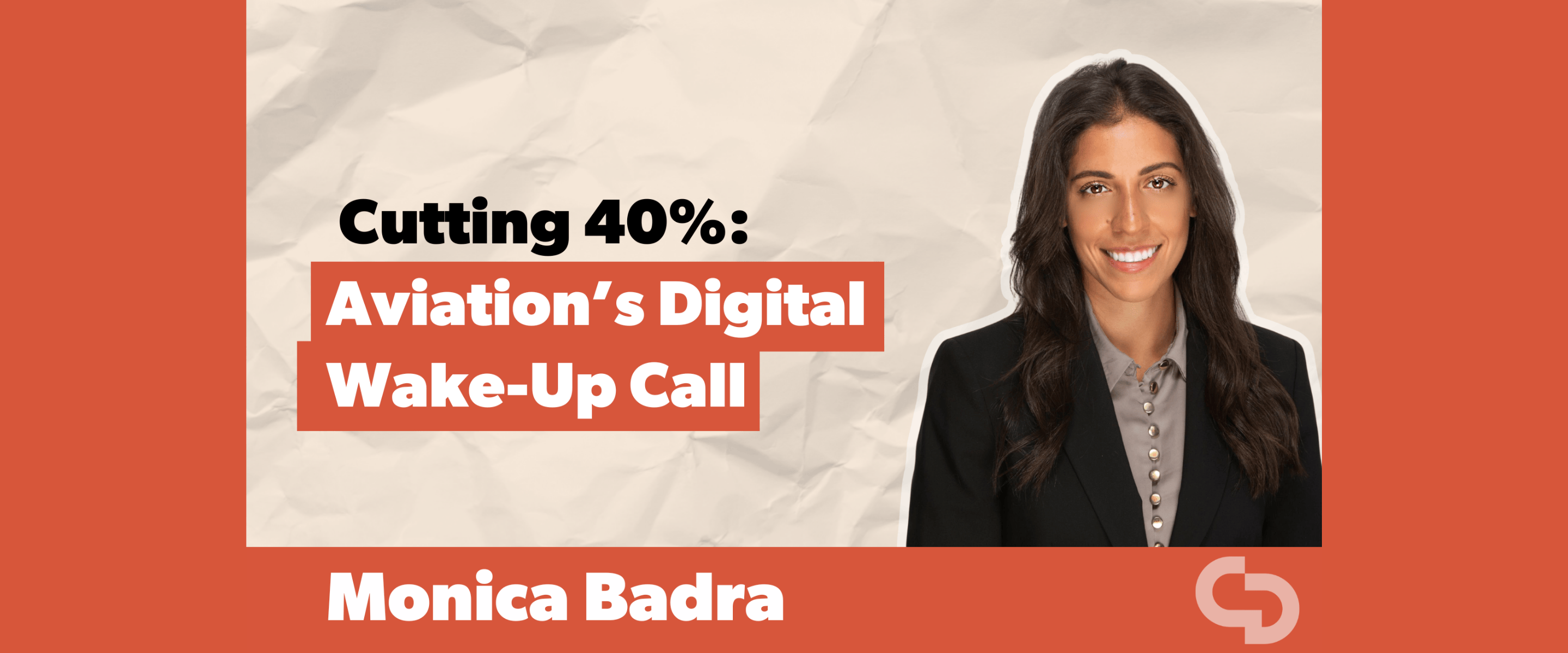
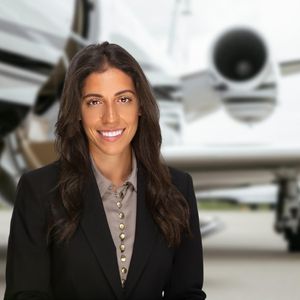
Today we had the pleasure of chatting with Monica Badra. Monica is a first generation Canadian who grew up in a family of entrepreneurs. So you could say business is in her blood. As the eldest of three, she's always carried a competitive, winner's mindset and a drive to lead by example. Her career in Aerospace began at Bombardier, Canada's largest aerospace company, where she went from pricing analyst to strategy and business development chief of staff, supporting the business's jet division's transformation and the launch of 30 plus new products and services and driving record-breaking growth. From there, Monica joined AJW Group, a global leader in the aviation aftermarket, where she led a business and digital transformation for their maintenance, repair, and overhaul facilities, also known as MROs, bringing a competitive edge and efficiencies across all functions and putting the company at the forefront of innovation. In 2021, she founded Aero NextGen, a digital solutions brokerage in the aviation/slash MRO space. Aero NextGen helps aviation companies jumpstart their digital transformation by matching them with the right solutions to solve real operational pain points. Their portfolio of customers spends the end-to-end ecosystem of OEMs to MROs, distributors, parts traders, airframers, airlines, and charter businesses, as well as much more. What makes Monica unique isn't just her track record. It's her rebellious streak. Her appetite for challenges and problem solving and her love of disrupting the status quo. She's proved that being bold, restless, and relentlessly curious can lead to real innovation. Let's get into it.


Léa: 01:40

Okay. Hi Monica, welcome to the show. How are you doing today?


Monica: 01:44

Hi, Léa. I'm good. How are you guys?


Léa: 01:47

We're good. We're good. Where are you joining us from?


Monica: 01:50

Uh from Montreal, Canada.


Dom: 01:52

So, Monica, welcome to the show. This is the second time I've had a show with you. Uh, the first time was strictly aviation. Now this one's more aviation and business. So aviation is typically a stayed sort of traditional industry. Things aren't typically move that fast. And you got tired of the political BS. And given that, what's the one thing you disrupt in the industry given your current business?


Monica: 02:15

First, I want to start with a bold statement where I think that every single aviation company, whether you're the airframer, airline, maintenance repair shop, can easily, with their eyes shut, cut 40% of their indirect cost structure. How? One, uh data cleansing exercise, the number one roadblock in every single aerospace company is garbage in, garbage out, garbage out. Everybody knows that. So that blocks every single single project. So one huge data cleansing exercise. Uh, two, document every single process in the company, every single function, even the way you do reporting. And then three, figure out how AI could either using conversational AI, AI, or agentic AI, how to automate all of these and pro different processes, business analytics, and so on. So, yeah, back to the one thing that I would disrupt right now is figuring out how to use AI to automate and cut at least 40% of my indirect cost structure.


Dom: 03:16

And that's across the board for any any airline, any business in aviation. So from MRO to airline to manufacturer.


Léa: 03:24

And how does Aero NextGen help with cutting that 40%? Is it with the first thing you mentioned, the second, or is it, you know, cleaning the data? Is it really on AI? Like where does it fit into that solution of yours?


Monica: 03:37

So traditionally, Aero NextGen, what we were was mostly a broker. So we have 40 plus partnerships with different technology providers. We understand the pain points of the executive of an aviation business, and all we do is matchmake you to uh the solution provider that could solve your pain point. Now, what we're building is we're automating a little bit uh the matchmaking process where you don't actually have to speak to us. You run a survey on our platform. At the end of that survey, you'll receive a short list of all the systems that were purpose built to your type of operations and your type of pain point that you're trying to solve for.


Léa: 04:12

Wow. Is this too far of a metaphor? If I say it's like hinge for aviation businesses, where you really get to like decide what kind of things you're interested in, what you're looking for.


Monica: 04:21

You know what I did when I first started this idea? I went on uh Google Ads and I put Tinder for Aviation Solutions as like as an ad and it actually worked.


Léa: 04:32

There's some great like marketing potential, Tinder for aviation. Like I'm just getting a bunch of initials right now. Call me right after the awesome ad. Yeah, pretty much. So starting off as a broker, how was it building those relationships in the aviation industry, considering that I'm sure, or I'm assuming a lot of the players, the big players in the aviation industry have been there for quite a while. I think it's quite high barriers to entry. You need to have, you know, a lot of facilities, a lot of experience to actually go into that space. So, how was it, you know, you as someone young, starting your business, going and really getting those proper relationships to then have that trust to be a broker?


Monica: 05:10

Uh, the relationship building started mostly when I was really working in the industry. So I started at Bombardi, later joined AJ Walters and led digital transformations for different companies. So through that process, we always went through a do we want to build in-house versus buy something off the shelf in the market? And through that, I got to gain a network of many different uh technology and service providers, even the consultants themselves, even if we were a consultant, they kind of became uh partners to us as well. So through just running digital transformations, I built a network and then ended up leveraging that uh into my own business.


Léa: 05:46

Wow. How does the like the work culture in aerospace compare to like the entrepreneurship culture? Is aerospace really just like we're clocking in, we're clocking out, we're doing things the same way they've they've always been, whereas you're coming in clearly from your energy alone, I can tell like you're disrupting, you're changing things, you want things to improve. Like, am I correct in assuming that aerospace is kind of just slower to change, very set in their ways?


Monica: 06:11

So if we think about aerospace, aerospace is the foundation of aerospace is really engineering, and engineers are designed to test, test, test, test, test, test, perfect, perfect, perfect, perfect, perfect, and not release anything into the market and cross your fingers that when you do, people are gonna be using it, there's gonna be a market for it, and so on. Whereas in the tech world, it's the complete opposite. You're scoping something that's this big, you're building it with the end user in mind, you're releasing feature by feature by feature, which releases value by value by value, and it's an unit's a not a perfect product, and you're iterating. So it's a completely different methodology than the traditional engineering, building an aircraft and so on. So I think that in itself uh is the reason why aerospace is super slow, but you have to, otherwise, you don't want to have an aircraft that's half half-ass built, right?


Dom: 07:05

Safety plays a factor, right? Because you got this, so you sort of have to have an end-to-end solution in order to ensure that the safety of that solution is gonna uh fit industry standards as well, I think.


Monica: 07:17

So when you come from that background, it becomes very difficult to change that mindset and become innovative and release new products, different technologies, automate internally, and so on. So, yeah, that's where we come in and just not interrupting we're thinking that out and change everything.


Dom: 07:35

So we're what have you found from an adopt from an adoption rate? So they're coming in with a sort of more of a disruptive mindset, we want to change things and reduce, say, the 40% indirect cost. How receptive is the market to that idea?


Monica: 07:49

Uh I think the market in itself, since COVID, this has become a huge topic: digital transformation, how to implement AI, blah, blah, blah. But in terms of actual adoption, unless there is someone internally who has the energy, has a bit of the experience of leading and so on, uh, it's actually where all projects fail is then within the adoption and implementation of any sort of new technology. So we're still at the very base of it all. But I think with the next generation coming in, companies are seeing that there's no other way of hiring new people without changing the traditional mindset internally. So yeah, that's still one of the biggest pain points that we have. Um, but our job is really to find the guy, the high performer inside a corporation that is willing to make a change and act as the champion for that change and lead uh the developments of the projects.


Léa: 08:44

Finding someone who's an early adopter and like willing to, is it usually like someone who's younger because they're like, well, I haven't been doing this the same way for a long time? Or am I like wrong in assuming that? Because I mean, I'm just like guessing that, you know, if you've done things the same way for the past 40 years, you're like five years away from retiring, you're like, okay, well, I'm not gonna change the way I think I've always done things, right?


Monica: 09:06

Yes. I don't know if it would be the youngest person, where it's the person who's the most pissed about how the current business is running, and where they just see obvious areas in the business to become more efficient, to make more money, and so on. So uh I think it's a match between someone who has the experience, but also somebody who has that energy, the energy, the enthusiasm, the know-how of other uh similar industries in actually uh running these sort of these projects.


Dom: 09:36

And then would you say there's like a specific like take MRO versus an airline versus a manufacturer? Is there is there any difference in appetite based on their sector within the mediation?


Monica: 09:47

I would say it's more financial. Uh like the the factor would be more financial. So a parts trading company, for example, probably has more um capital to put down versus a maintenre facility. So funding is one thing, also uh size of company. So if you're looking at an airline like United Airlines, they'll probably get funded by the government to do XYZ sort of RD innovation projects. So that's another reason, but also way slower for uh those companies to actually move and deliver anything versus smaller uh businesses. So I think across the industry it's becoming very popular, and and people want to find different ways to implement technology, but uh obviously capital, resources, time, size of business is yeah.


Dom: 10:32

Okay, so let's jump into how did you get to where you are? So that's what the what's the backstory? Go back to childhood, let's go back to the family, let's go back to the roots of this.


Monica: 10:42

Okay, so my background, uh, both my parents, so my dad was born in Egypt and uh grew up in Lebanon. My mom was born in Lebanon, and uh my dad came before my mother to Canada. He lost his parents at the age of 16, 17 years old, uh, came alone, although he has three brothers, but they all were in separate places. So I came to Canada with practically nothing, had to learn French because we live in uh Quebec. And then my mother later on, at the age of 17, left the Civil War in Lebanon. So that's my background in terms of my parents. And then I was raised here, born and raised in Montreal. I'm the eldest of three. Um, I have a brother and a younger sister. And for some reason, in the back of my mind, although my parents are not like they don't talk about their childhood and all of that, I've always had this weird sense of if I look at them not as my parents, but just as people, it's not fair that they had that sort of upbringing versus what I had, which is like a happy childhood, friends around us, a safe neighborhood, an education, and everything that we wanted was handed to us. So I always had this tough, like I was always super tough with myself because I felt like I owe it to them and to myself to do something of my life. So that was kind of the the base of my mindset for pretty much everything. Yeah, that's your driver. Um, and by the way, we're Arabs, so we don't really get into emotions and stuff like that. So this is not like a topic that you really can bring up much. But uh yeah, so that was the driver. And then what I wanted to do, so I studied finance. Um, my my both my parents were entrepreneurs. My mom, at the age of 40, went to school, became a gemologist, and now she has a jewelry business that's fully online. My dad delved into different things from uh like mining to uh having a construction business, getting into real estate, having a clothing uh ink shop, and so on. So uh I knew that I was I had it in me somewhere.


Dom: 12:45

Obviously, you have an entrepreneurial you have an entrepreneurial uh genetic.


Monica: 12:50

So I knew it was somewhere in me. But what I wanted to do growing up, uh, after watching a lot of movies about like stock trading and stuff like that, I wanted to sit down on a beach, have my laptop, and just trade stocks for the rest of my life. But I knew in order to gain some sort of credibility, um, I needed to actually understand what it was to work in the corporate world and get some experience. So I joined the co-op program in my university. My first internship was at McKesson, and then the second one was at Bombardier. And at the time, uh Bombardier was starting to do a business transformation of their business jet center along with McKinsey. And uh I basically did everything in my power, which I had none of, to join that transformation office. And I was in a team of just super smart, smart people, and I was like a sponge. I sat with each one of them individually and tried to learn every single thing from the business. And plus, being at Bombardier, you're have the airframer side, but then huge in the aftermarket with the maintenance and parts trading and leasing and cost by the hour programs, blah, blah, blah. So it was a huge school of learning for me in aviation. Um, and then after that, I just became addicted to the industry and knew too much to leave. It would have been a shame to leave the industry. So I stayed. I later joined AJ Walters and led their strategy business development. And after some time, I noticed that every single business or digital transformation is actually the same recipe on repeat. So I wanted to do it for as many custom companies as I could, and that's basically how Aero NextGen came into play.


Dom: 14:25

So how long have you been running Aero NextGen? Like how old is the company?


Monica: 14:28

Four or five years now.


Léa: 14:29

So that's like pandemic. So how were you how did you decide, okay, now's the right time to launch myself into this? Because it's just like, you know, I feel like during the pandemic, a lot of people were maybe laid off or unemployed, and it was just like that drive on of entrepreneurship was huge. That being said, I would assume that like the aviation industry maybe wasn't going so great. You know, people weren't traveling weren't traveling as much. So what made you decide, okay, this is the right time? You know, you're still very young. I actually had this conversation with one of our guests a while back, Geoff. And I was kind of asking him, I'm like, when's a better time to like get into business? Because like, is it when you're younger, you know, and you're just starting off your career, you have a lot of drive, or is it after years and years of experience? So I'm curious to hear from you because you're the youngest person we've had on the show so far. You know, how did you decide now's the time? I'm ready for it. I have the energy, I have the drive.


Monica: 15:16

Whoa, loaded question.


Léa: 15:18

Sorry, yeah, quite a long question.


Monica: 15:20

Lots of okay. So I think to me, the corporate world was just not my thing at all. Like uh I really love problem solving, and I could not care less for the politics and whoever bangs their fist on the table the loudest is the strat the strategy of the business shifts in that direction for the flavor of the day, blah blah blah. I could not stand any of that. And mixed with the fact that everything was just too slow, like I was like the one with the energy, uh and every it's like I'm just dragging and dragging and dragging weights and weights. So that to me, I knew I wasn't gonna stay um in the corporate world that long anymore. But I also got what I wanted out of it, and it was like I learned everything I needed, so I was ready. Um, and then through COVID, I was also part of the management team trying to see how to keep the business operating um during COVID. So, you know, seeing if it makes sense for people to go on furlough versus keeping, and then how do you make the the machine run with the leanest amount, like the leanest structure? Um, and through that, also digital transformation just became a thing.


Dom: 16:33

So if I think if you take that into what your new mission is around using a Gentech and AI to further create a digital transformation, the natural outcome is work shifts. Whether or not people become unemployed is maybe a different story, but work's gonna shift from one department to another.


Monica: 16:51

I just thought it was yeah, it's real, it was just ripe, like digital transformation is becoming a huge thing. Um, I'm the type who can't do the same project twice. And I felt like at the companies that I worked at, I I maximized every cool new initiative that I could do. So there was nothing more that that could offer me as is in terms of experience. So I was ready to start my own thing and I think it just made sense. Well, part of the reason why I started this brokerage was if you look at the industry as a whole, brokering like parts is maybe one of the most profitable things you could do in the industry. Brokering parts or doing teardown of aircraft and so on. So I tried to how do I um use that same methodology, but for something that I'm actually interested in, which was the technology. So now I just broker tech. And I also have the experience parts, not stocks on heat. Exactly. So I also had I also had the experience of building, like developing uh in-house systems. And to me, it was just like if somebody has more funding and more resources and or more specialized in this function, why am I gonna build something from scratch? And then through the network that I had, uh it's just more fun to learn more things than to just do one thing, in my opinion, or for like my type of character. So yeah, just getting my hands in all different sorts of projects and technology was more interesting to me, hence the brokerage.


Dom: 18:13

So, how long did it take for you to spool up the brokerage? Like to get it from this is an idea to actually you would have like a middle-band platform, let's say, that you could broker from. Because you're basically creating a two-sided market, right? You sort of have a two-sided market, you've got the supply side and the demand side. So it would take a little while to put that marketplace together, I think.


Monica: 18:33

So at the beginning, I would say it took us probably two years to go from we're a consulting firm, and you as a consultant, you don't have the capacity to do more than two, three projects at a time. And then after when I hit a point of okay, now I I'm very confident in this. How do I scale it? That's when we started building this whole ERP finder concept and matchmaking hinge, whatever we want to call it. But so that was just recently this year at MRO America's, we launched uh that platform. So it took us at least two, three years of just basic consulting work to then uh launch into this new platform.


Léa: 19:09

But Monica, what were like the biggest challenges for you when you were starting to build Arrow NextGen? It can be like personally or professionally. I mean, clearly entrepreneurship is the right fit for you. You're someone who likes disruption, you like things to be fast-paced, ready to go when you're ready to go. But was it difficult to kind of balance your personal life and your professional life? Because you definitely strike me as the type of person who's like, okay, like she's working all the time. Like if we're going somewhere, she's got her laptop, she's on top of things, you know, having a hard time slowing down and maybe prioritizing, you know, self-care and resting. Cause I know like entrepreneurship burnout is such a thing, even though you seem to have so much energy now. So maybe you have my Yeah.


Dom: 19:47

Do you just sleep?


Monica: 19:50

Well, that that's actually such a good that's one thing that I'm really bad at. Balance is not uh in my vocabulary. Um, I do work a lot, but I If somebody asks me what's my hobby like a loser, I'm literally going to answer, my hobby is my business. Like I love it. I love working on my business. I love learning new things. I love automating stuff that I'm doing on a day-to-day. So I kind of found a place where I love what I do. So it just becomes my, you know, I don't mind 16-hour days or whatever it is. Something I will not give up is my sleep. That's this one thing that if I don't have my seven hours of sleep, the next day I'm not functioning. So there's no point in in uh um like hurting that. But yeah, personal life, I'm not much of a like I have my friends and we go out, and when I go to events, I try to extend it so that I go travel. I love traveling by myself.


Léa: 20:41

And I mean it makes sense, like if you're so passionate and it's what gives you energy to work on your business, like you don't need to be out playing pickleball or going rock climbing or being part of a run club or whatever. Like that's just for people to supplement, right? To like give them something to keep them going. But if your work is so passionate for you, like that's amazing. Um, I do have kind of a question for both of you, actually. So, Monica, you said you have ADHD. Dom also has ADHD pretty bad, and he even has a philosophy behind it. So I'm kind of curious to hear how you guys feel that ADHD comes into being an entrepreneur, right? Because Dom, what's the stat again?


Dom: 21:15

I think somebody with ADHD is like 4.7 times more likely to be an entrepreneur. So it's a it's a big delta, right? If you think of what percentage of the population has ADHD, it's growing a bit just because I think people can diagnose it better now. But it's relatively small. So if you think of the population set against the the likelihood that that person is an entrepreneur, it's an interesting dynamic. So I I got diagnosed late in life on on uh you have this ADHD issue. I think had I recognized it sooner, I would have probably had a bigger business sooner because I would sort of move on. I get bored with them and I'd move on too fast, right? I'd be like, oh, this is another shiny penny would come up, and I'd go chase that shiny penny. Um so I think that's hindered me on the one side, and the other side would be I didn't build systems and processes in place to kind of accommodate it for it. So awareness allows you to say, okay, I have this awareness, now I can be more proactive as to how I manage it. So I just thought it was like, and people would say attention would be like hyper hyper attention deficit, and I'm not and I'm not that hyper. So I'm like, well, that can't be me. And I can focus really well. But now looking back on it, I'm like, yeah, it's been a superpower because I get paid to come up with ideas for clients. So it works really well for that because I can synthesize different points of view, different like different subjects, I guess. But focusing to get something done has been a challenge, right? So that's had I learned that maybe younger in life, I would have been further ahead, I think. So that's my personal experience on it. And it seems like most of my clients have ADHD.


Léa: 22:48

That's actually really interesting. Do you have any like ADHD traits that really stick out for you, Monica? Is it just like the really creative brain? Do you have a hard time focusing? Are you always like thinking ahead, chasing the next thing? Or is it kind of more like Dom, like you have a really good focus, but you kind of tend to move on quickly, which it kind of sounds like you were saying, you know, like you want to go into every part of the business, learn everything, and then like, okay, thank you. Next, like I'm ready for the next thing. Thank you.


Monica: 23:12

Next uh I think all of the above, yeah, where um yeah, 100% shiny object. I I remember my managers would always tell me, stop chasing the next shiny object, just finish this one project. It's like no, uh so that a hundred percent uh get bored super quickly. If I ever have to do the same thing twice, I'd rather pull out my hair, like there's nothing that bothers me more in the world than doing the same admin sort of uh thing twice. Um, I also think I have hyper focus, like I could sit down and just get something done for hours, but then I also have this okay, if an email comes up, I'm kind of distracted by people who go and sit, I'm envious of people who could go work at a cafe. I could never, if somebody, if the coffee machine starts going off, I'm I can't concentrate. If somebody opens the door, I can't concentrate. So I lose concentration super quickly. But also just in business, I feel like well, there's there's two things I I wanted to add here. Um, in business, when you're closing a deal or just meeting other entrepreneurs or or business people in general, I feel like your ability to think about so many different factors, you could you cover things in your head before the person even finishes his first line. And I don't know, in some weird way, although sometimes I feel bad because I'm not paying attention to what he's specifically saying, but I'm trying to get to where's his end, like where is he trying to reach at the end of this? But you kind of cover all fronts before they even have, you know, before they even finish their argument or why they shouldn't get into your uh buy into your product and blah blah blah. So bad in some ways, but also good and just like overall argumentative type uh methods. Another thing that I've just joined about two years ago is, and probably you guys probably have this also in Calgary Dom, um, entrepreneur organization. So this is a yeah, it's like an organ, it's a community of people. Every city, every country has its own chapter. Um, and I'm in a forum where like we're the only English-speaking forum in Montreal, or 10 people, I'm the only girl out of the 10. And all ages, we have some 60-year-olds, 40-year-olds, 20, 30, blah, blah, blah. Everyone is in different stages of life with kids, engaged, single, and so on. And all of them ADHD. Like, there's no one in that room that does not have ADHD. It's crazy. Like, you can't get yeah, yeah, it's wild. We try to organize when is gonna be the next session we're gonna have together, and someone is, then we go into these rabbit horrors, blah, blah, blah. But uh, I think I've I've I don't know. I I when I see in that it's so obvious to see somebody else who has ADHD, and it kind of helped me learn how to better structure myself and where I'm trying to get to and just be aware of it. But I see it as a superpower, like it makes us all interesting people, you know.


Léa: 26:08

Yeah, helps our work.


Dom: 26:10

So are you left-handed or right-handed?


Monica: 26:12

No, I know you're left, yes. You're left, eh?


Dom: 26:15

Yeah, yeah. I'm like severely handicapped, and so much as like left-handed, right? So it means right brain dominant, so creative that way, and then you add DHD on top of it. But I think from uh a business point of view, and I think maybe people with ADHD have a bit more propensity for risk as well. I think they're like a bit more because you're seeking dopamine, so you're gonna let more likely take a risk, so like back to closing deals. That's a huge dopamine hit when you're close to deal, right? So you have that sort of business development, you get the hit out of building the business. So I think there's a question the other part that drives people that have ADHD in business because you have a high-risk environment.


Monica: 26:52

And I think also the mindset of just everything, I use a term that doesn't really exist, but everything is figure-outable. Like there is nothing like I yeah, there's nothing that you can't figure out how to do. I've always had managers that were never um like local to me. So I whenever they asked me to do anything, I could never go to them and say, Okay, do I do this or show me how to do it? That YouTube, uh figure it out on Google, blah blah blah. But just having this mindset of nothing is impossible and just you could figure it out, just try. As long as you try it, like start somewhere, the rest will come. That's another thing I see a lot in uh entrepreneurship.


Dom: 27:32

Yeah, I think a lot of it is like just have an imagination. Like if you have an imagination, you can sort of find new ways to solve a problem. And I hate that think out of the box terminology, but it's a bit of that. As long as you come into it with like we can figure it out, you'll sort it out. It's just a matter of picking the locks in the way.


Monica: 27:51

And that's another thing in aerospace, you have a lot of because we're engineers, there's a certain way that it has to be done, but then that's a good mix with the entrepreneur who is like, oh, but what about this? That for them doesn't make sense in their process, but somehow at the end when you test it, it does.


Léa: 28:07

No, that makes sense. And speaking of like challenges and points of tension, I have two that I was kind of curious to take your take on to hear your take on. Um, so the first one is obviously aerospace is a male-dominated industry. I did a bit of research and I found a statistic that in Canada's aerospace industry, the percentage of women varies obviously by role, but it's estimated that women make up maybe 20% of the overall workforce. Does that statistic resonate with you? Do you feel like obviously you've been more on the corporate side of the aerospace, but do you feel like it's still really male-dominated?


Monica: 28:40

When I go to trade shows, for example, the 90% plus is always male. And when I deal with just this week I was in Calgary visiting a customer, if there's 10 people in the room, there's maybe one like I'm the only female. Anywhere above 10, maybe there's another. So I would say it's more 10% of people and sitting in the room making kind of decisions or influencing are um female. But I don't, I'm not really one of those, like, oh, how do you feel about being a female? Blah, blah, blah, blah. Like, I don't really, I always grew up as a tomboy, so to me, it's kind of indifferent. Although I do think it stems really from as kids, what do you give your daughter versus your son? Your son gets, you know, a a car and a and a dinosaur and a plane versus the girl gets a doll with a comb and some stupid shit that I would wrap up and kick like a soccer ball. So I think from a young age, you're kind of uh wired to think that planes are a guy thing. So you see less and less girls going to school to study uh aeronautic or whatever. Uh, but also there's a huge shift now in just more women working, more women in leadership roles, more women, you know, getting into engineering, software development, and all of that. So I think it's a matter of time where that 20% will increase, uh, just in the way kind of society is evolving as well when it comes to women in the workforce. So yeah, I have faith.


Dom: 30:08

We're in the program. Can we can we talk about the evolution of your business? So if you started off as a brokerage and you just mentioned that the last or the latest pivot is AI and Agentec. How long have you been pursuing that? And how does that all this is it plays into digital transformation? But tell me a bit about like when you started working on that and how you how is it going?


Monica: 30:26

Okay, so the shift that we did is really from a um traditional matchmaking, we make our commission and then uh leave the engagement, versus now we have a platform called the ERP Finder. An aviation company runs a uh survey and then gets matched with the systems that are purpose-built for them and so on. Um, really, the next evolution of that, I don't know when this is gonna air, but we are working on an acquisition of another company, which is gonna be released at MRO Europe. So that's gonna help us scale into not just the ERP providers and M ⁇ E systems, but the global uh aviation software space. So that's our first kind of next move. Um, and we're really we're becoming a lead generation. We're trying to flip the way uh the whole RFP process and implementation and down selection of vendors in the aviation space happens. Like we're taking it away from being a bureaucratic 400 pages of an RFP fill out into this is really designed for your type of business, for your pain point, blah, blah, blah. Here. So we're flipping that on its head a little bit.


Dom: 31:34

And then so going back to you've got this AI um offer that's coming to market early next year then?


Léa: 31:43

October 15th. Probably gonna be before this episode airs. That's really exciting. Um, I'm just gonna take us back a little bit. Um, I had another challenge that I kind of wanted to ask you about. So obviously, I'm assuming that you're working with a lot of international brands. What would be, what would you say are the biggest global challenges? Obviously, like there was a lot of things. There was COVID, I'm sure that affected procurement. Now there's the taffifs. If you even want to touch on that, I get if it's too too annoying of a topic, I'm sure it's something that's coming up all of the time for you. But yeah, just like what were the biggest challenges working with those global brands?


Monica: 32:15

I think it's mostly the challenge is understanding the different cultures that exist. And I know now before getting on a call with any of these companies, what to expect in terms of a sales cycle, how many demos or conversations I'm gonna have before somebody who's a decision maker is gonna talk to me. So it's more understanding, you know, how effective certain uh regions are in actually doing closing deals and actually implementing anything.


Léa: 32:44

Um, just as we start to wrap up the episode a bit, Monica, to kind of bring us to a more positive note, um, you do a lot of board work to help advise other startups. So a couple questions on that. You know, what I know you touched on, you know, your ADHD group and that board work, but you know, what are the kind of startup groups that you're looking to work with? Do you have like, is it really just startups in aviation? Are you open to helping any kind of businesses? Is it tech? Like, what's your bread and butter of like a business where you're like, okay, no, like I get it, I can help you, I can give you advice.


Monica: 33:14

Uh so it's twofolds. Most of the time, it's startup companies that want to solve something within the aviation space. And I have at least three, four companies that I'm an advisor for that I help them build out their entire strategy, go to market, uh, a strategy, um, their marketing sales, and and so on. And then on the other side, you have some legacy systems that are super successful in other industries that want to get into the aviation space. So I also help them mold uh their solution to solve real pain points in aviation. So those are the two types of advisory services that I do, uh, which is a side thing to this whole ERP finder stuff, but keeps me engaged and see what's happening in the industry and you know, put my nose in where uh different things are happening. So yeah, it's always fun.


Dom: 33:59

And if early stage, are they like back to like are they like pre-seed seed? Are they are they funded or are they sort of um getting funding? Like, would you help to what degree do you help them start and grow?


Monica: 34:11

One of them was pre-seed and going into their series A. Uh, another one is going through a spin-off from the group company. So they have a bunch of capital in the group company that's investing into uh that spin-off. It could be in any sort of series, but the ones that are most interesting to me is really the startup pre-seed ones, where you know you have to help put an investor pack together, sell a vision to the board and so on. So yeah, that's my the sweet spot that I like the most.


Dom: 34:42

So before we end end, how do you spend most of your time? Like if you took like if you're 16 hours a day and took all the functions of the business and your ADHD nature, where do you spend your time and where do you like to spend your time?


Monica: 34:57

Uh I spend my time with my customers. Like I love just talking to my customers, seeing how I could add more value for them. So I probably have 10 meetings back-to-back scheduled a day type thing. I'm I'm one of those crazy people. But when I don't, I love I I love to look at my business as if I never worked in it and just if I was an outsider, let me go through every single process of the business. And I do this super regularly where it becomes like a sickness at one point. And I try to identify where is there cleanup needed? Where can something be automated? How do I reduce the amount of manual and just administrative nonsense that goes on in the business? So I I make it a mission to just automate, automate, automate. Networking is another I network like a ton. So yeah, that's another.


Léa: 35:49

I can see your future retired on a beach doing consulting work here and there, completely revolutionizing some businesses.


Monica: 35:57

I'm gonna what I'm gonna retire when I'm dead. Yeah, no.


Léa: 36:05

So, Monica, thank you so much for joining us today. Um, we do like to wrap up the show with three key lessons that you'd like to share with our listeners. So these can be things that you've shared during the episode or things that you take from your personal life. You know, just three actionable advice that you would give to any innovator or entrepreneur.

Monica: 36:21

Okay, three key takeaways. So, one, uh, seek mentorship. I think my mentors have really allowed me to scale quickly and learn a bunch of the just giving me opportunities to learn a bunch of stuff, but also learn when you've, I don't want to say outgrown, but when you it's time for you to leave this mentor and learn something new from somebody else. So that would be number one. Uh, number two, network, network, network, network. It's always super important to know what's happening in industry. Just talking to different people gives you different ideas of how you could scale, how you could uh move, or and so on. And then three, never fail to listen to your intuition. I think I would have been better off if I would have followed my intuition for many things and people dealing with certain sorts of people and getting into certain deals. So yeah, your intuition is always yelling at you. You just need to listen to it.

Léa: 37:20

That's good. I like the knowing when you've outgrown a mentor, like when you can keep someone as a friend, but just you know, it doesn't mean it's just  because you have a mentor that you can't be looking for someone else to, you know, as you're growing with your career, so should your network. Um, so thank you so much, Monica. I really enjoyed our conversation today. Is there anything that you would like to plug before we end the episode? Obviously, you know, Arrow NextGen. We're gonna be looking out October 15th for the new acquisition. Anything else you would like to share?

Monica: 37:45

Go around the survey on the ERP Finder and find your short list of systems that are filled for you. Thank you guys. This was awesome. Perfect. Thanks.

Dom: 37:54

Thank you.





 Twitter / X