Léa: 00:00

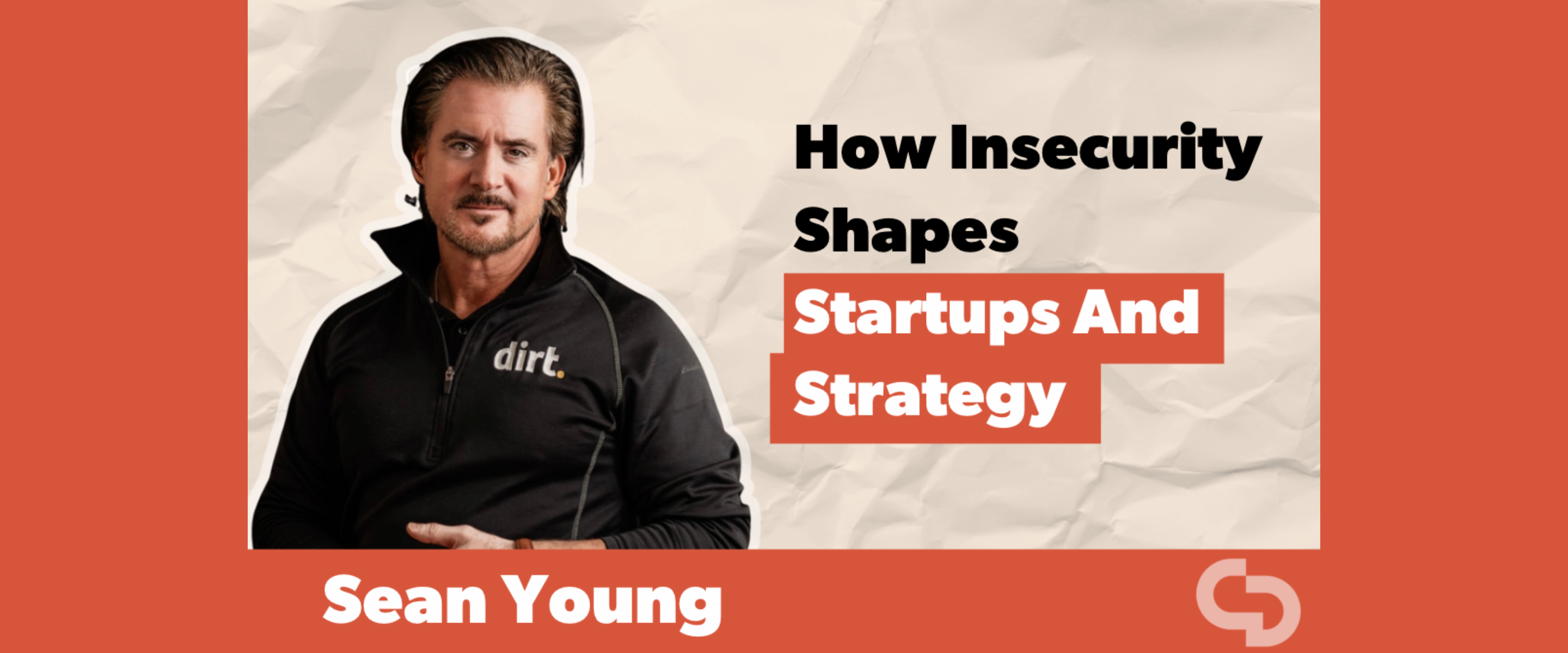
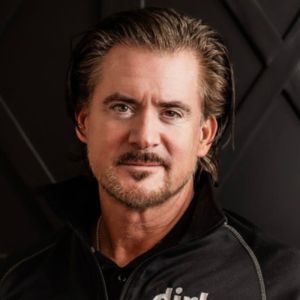
Welcome to the Corp ADM show. I'm Léa Lavoie, and today I'm joined with my co-host Dominic Kingston. Today, we had the pleasure of talking to Michael Sean Young, who is a serial entrepreneur, whose career spans three decades in multiple industries, from early dot-com innovation to modern AI and design systems. He founded Service Intelligence in the 1990s, pioneering one of the first web-based customer experience platforms. The company scaled across North America, earned multi-million dollar revenues, and placed him among Canada's top 40 under 40 and BDC's entrepreneur of the year. After the sale of that venture, Sean shifted towards advising founders and min-market companies, developing frameworks to link leadership psychology to operational performance. His thesis is direct. Most entrepreneurs aren't building companies. They're unconsciously trying to meet unmet emotional needs. When those patterns are understood, business strategy becomes therapy in motion. Today, Sean leads ventures at the intersection of architecture, data, artificial intelligence, translating decades of entrepreneurial insight into the design of better communities and smarter systems. His current work builds on a single conviction that the health of an enterprise mirrors the inner life of its founder and that the transformation of one leads to the transformation of the other. Let's get into it. Hi Sean, welcome to the show. How are you doing today?


Sean: 01:12

I'm well.


Dom: 01:27

I forget exactly what it was, but I get a free coaching session. I've never had a coach before. I'm gonna go to this session. And I'm a marketing guy by trade. And so I sit down, explain to Sean the business that I'm in, and he saw a unique value proposition in the app that I was building that should have been obvious to me, and it wasn't. It was forest trees syndrome. So at that point, I'm like, oh, this guy's pretty switched on, he's smart. So I'm like, okay, I need a I need a coach. And that was the start of it. That's how we became friends and uh quite had some coaching over beers since then. And the part I appreciate about Sean is still an entrepreneur, but has that coach's mindset. So it's not just an entrepreneur mindset, but when you combine it with a coach's mindset, you end up with interesting leadership skills and and insights. So, Sean, welcome to the show.


Sean: 02:12

My comment on Dom's story about how we met is is simply that I've had a chance to I've uh I've been uh the beneficiary of coaches over the years quite a lot, starting from I think the first Anthony Robbins seminar that I traveled to Toronto for when I was a 17 or 18-year-old


Sean: 02:30

kid. Uh, but I've had individual coaches throughout the years and had a chance to to kind of turn the tables and and operate in that role and be taught by some of the best coaches in the country on on how to be able to do that. And it was instrumental, I think, in my entrepreneurial journey, both sides of that coin. Um, and uh so I learned from both um being a coach and being the recipient. So uh yeah, that is that's kind of how we met. And it's and there's a sort of a forced intimacy that takes place when you get into coaching work with people as well, because you strip away pretty quickly a lot of the veil and some of the some of the the social personas that people hold up, maybe in more informal conversation. And so you you kind of get to jump in a little bit fast with people and get to know them. And that's that's kind of a nice benefit, quite frankly.


Léa: 03:13

Yeah, you have to be upfront straight from the beginning, right?


Sean: 03:16

Yeah, and if you're a good coach and or if you're working with a good coach, they have really good tools to be able to strip the to strip away pretense right away. And I think that's you know, some of what we did pretty early on.


Dom: 03:26

I think you asked me, like, what issue I think the question was like not what issues or shortfalls do you have? And I'm like, I have none. And that's how it started. And then after I came to learn that I had a few.


Léa: 03:37

Yeah. As most of us do, as most of us do.


Sean: 03:40

I always ask the question, what do you regret? Because that's really helped somebody. It's not only an empathetic measure that's really important in job interviews. It's actually the most most important question if you're interviewing somebody to understand um who you're gonna hire. But understanding people, the nature of people's regret is actually a great window into their self-perception and their self-awareness and the journey they've had to date. So I'm pretty sure that I asked you that along the way. And I'm pretty sure you said I don't have any. Oh boy. That was your first answer. I still contend that. I think you revised it since then, but uh I believe that was the first answer, and it's not an uncommon one. I understand.


Dom: 04:13

So given this intro, what is the trap that most what's the psychological trap that most entrepreneurs in your journey


Dom: 04:20

would fall into?


Sean: 04:23

I would take the position that uh that the entrepreneurial journey is the journey, is the emotional journey of maturation of the entrepreneur. And I don't think most of them fully appreciate and understand how the degree to which every one of us as entrepreneurs are in our own way, and that if we focus a significant portion of our time on our self-evolution through the process, the business results come.


Dom: 04:47

So, two questions on that. Why is that and why would enter like are entrepreneurs different in that sense of, say, just somebody who's a business person but has a you know in a in a corporate environment?


Sean: 04:59

Yeah, entrepreneurs in for the most part, I think are unique in that in this way. This affects everybody, right? Your your ability to be effective in whatever you do is going to be a function of the your emotional maturity uh to small or large degrees, depending on the nature of your profession or circumstances. I believe that entrepreneurs have uh this this is true to a large degree for entrepreneurs, because of some research and some understanding that I developed around why people get into entrepreneurship in the first place. And typically uh one one of the reasons that surprised me, uh there's lots of different reasons for sure, but one of the reasons that was characterized by a major publication years ago, uh, an entrepreneur magazine of some type, uh they had a top 10 list. And and right smack in the middle of that top 10 list in order of priority as they saw it, was something that I was surprised by. And that was um they characterized deep-seated uh insecurity as a primary driver of entrepreneurial success, of entrepreneurial participation. Uh and that was interesting to me, and I had to reflect on that quite a bit. And I think there's there's no there's not a truer statement, and it relates to how I sort of introduced this segment about what I think is going on for entrepreneurs. They are self-selecting as people that have something to prove, that are deeply insecure in lots of interesting ways. Those insecurities manifest in their business in very specific ways over time, and oftentimes people around them and close to them can see it. Um, and often the entrepreneur is the last one to see it.


Dom: 06:30

So what I'm hearing is people or people become entrepreneurs because they're chasing some sort of trying to solve some sort of deep-rooted insecurity, and that insecurity becomes the blocker to their success. Is that somewhere in the right vein?


Sean: 06:44

Yeah, it's I I I think that that that is probably one of the most important truths of the entrepreneurial journey for people to grapple with, no matter what stage uh that you're at, whether you're at the beginning of the journey or near the end, because it is there and it's having its impacts, even if you're able to produce some results, um, the likelihood that those results are sustainable and deeply fulfilling to you are handicapped by this circumstance. Or if you're at the beginning of the journey and you're struggling to be able to land a value proposition in a sustainable economic environment and you just can't seem to get there and you're going in circles. Uh I I would focus on the same thing for just different reasons.


Léa: 07:21

So if it's insecurity, would you say it's a lot of emotional drivers for entrepreneurs more so that because I would always think it's financial, right? You're getting into your own business, you want to make money out of it. But insecurity was surprising to me because all the entrepreneurs I know always strike me as very confident. I feel like you have to have a lot of confidence in yourself when you're an entrepreneur too, if you're asking someone for money, but maybe that's all external, right? Whereas inside you're actually insecure. So I was actually really surprised to hear that.


Dom: 07:46

I know like uh several really successful entrepreneurs who would have had less than perfect upbringings. Like started off, you know, alongside the tracks, or pretty poor households, or um not a lot of family support, let's say. So it's interesting that you say that because that the seems like the more broken the home, for lack of a better way of determining it, the more success they had.


Sean: 08:09

I I think that's a factor, but I would I qualify that observation with the idea that that the human journey is universal. And regardless of the circumstances that we come from, um, the it is inevitable by the time that we emerge from young, uh from adolescence and into young adulthood, we are damaged and broken, and the healing process would take often takes a lifetime. And that is the same whether you come from a perfect household or whether you come from challenging circumstances. Yes, there are advantages inherent, but you can never judge somebody else's journey and know how they experienced it and what it caused what it caused them to have. I I I know a young lady, she would, she was not an entrepreneur, she went to a career position, but I can recall um uh my observation of her as a young adult was that she came from an incredibly loving and supportive family, well regarded in the community. Uh, everything about her upbringing, upbringing and her life was was really storybook in a lot of ways. And her greatest insecurity uh was that uh she couldn't relate to other people and that her life was just too perfect, and everybody expectations were placed upon her because of this, and she had it too good. And why did she get this? And other people didn't. So she was carrying around a particular burden. So it's it's all very dynamic. Everybody's interesting. There's an alchemy associated with um with entrepreneurship or really the the human journey at large, and it is you know, brilliance comes in all kinds of interesting and complex ways from every different type of background that there is. The only thing universal about it all is that every one of us is is broken and challenged. And unless we recognize that in our 20s and begin to work on it, if we kick that can down the road, it is nothing but suffering that tends to grow in in terms of its the size and the persistence of the consequence.


Dom: 09:52

So do you think uh choosing a path of being an entrepreneur versus an employee path, does that change the pressure cooker, change the dynamic of rate of learning or need to learn? Like do you think it creates a different pressure cooker for someone to be an entrepreneur versus, you know, be more in a stable position or corporate position?


Sean: 10:11

Oh yeah, I would think so. Uh I I chose this path starting when I was 15 years old, pretty much consistently with a couple of small exceptions throughout my life, specifically because of the learning opportunity. I mean, if I was wearing a t-shirt right now, I would say grow on it, uh, because that's sort of that's one of the things that I value the most in life. It's one of my core values, is is growth. And I will have looked for opportunities to place myself in difficult and challenging circumstances so that I would be forced to step up or step out, and I would earn the consequence of whatever my limitations put into the circumstance. And I have done that probably foolishly uh more than a few times. Um and but I value both the outcomes that you get from a purely, you know, business and financial perspective, as well as uh all of the intangibles and personal growth that comes with it. So I I may have taken more risks. We're really talking about risk-taking behavior here, is that you know, do employees take as many risks as entrepreneurs do? And I think that overwhelmingly you could see universally people would say no, that's that's that's generally not the


Sean: 11:15

case. Um it doesn't have to be if you're an employee. There's lots of opportunities to be highly entrepreneurial and take a lot of risks, and people do that. But I like the entrepreneurial journey because it allows all of us to be able to test ourselves and to and to come up against our limitations. You know, can you make 30 cold calls a week or a day if you need to? Can you can you deal head on with uh customer challenging uh the pricing that you're putting in in front of them uh and refusing to pay the price that you want to? Can you deal with uh an employee who refuses to sign their management contract uh for reasons that they think are valid but you think are crazy? How do you how do you deal with every one of these circumstances in a way that uh is optimal, that is truly optimized? Can you be the best version of yourself or anybody in in any given moment, given the diversity and the extraordinary complexity of circumstances that entrepreneurs find themselves in? That's a that's a wonderful journey. It's an amazing journey, and it's a fascinating one.


Dom: 12:14

So I think that's a segue. So just to be talk about how you get started.


Léa: 12:20

So


Léa: 12:20

um actually I kind of want to talk a bit more into what you're currently doing now and then backtrack. So you're currently at E2 and Associates. Can you tell me a bit about what that company does, how you found yourself there?


Sean: 12:31

Well, I I mentioned there were a couple of gaps in my in my career progression or my entrepreneurial journey. And one of those was a decision. Uh my wife got cancer back. Um it's been about 15 years now, and that was one of those moments where stepping out of the feast and famine cycle of uh of of that journey as an entrepreneur just made sense to us as a family. So I I took a position with a company uh for uh a few years until uh she successfully went through treatment and uh et cetera. And we kind of came out on the other side of that, and uh I went back into some of the other things that I was doing after that, and she returned to work and everything else. And um, so it was it was a good news story. And uh I, out of that experience, I worked for uh a wonderful couple who had uh Kathy and Randy Evans, who had an architectural firm, a small regional architectural firm with a sort of boutique specialty. And and I'd always wanted to be an architect as a kid, and as a technology entrepreneur, they saw me as somebody who could really help them with the digital transformation that was becoming a necessity uh that they could see. So I went to to do work for for them to really help to transform the business and ultimately help them to prepare to sell it. And so that that stint as a as an employee, uh rare opportunity as an employee for me, uh, where I have to sort of switch gears a little bit and and and fall in line. It's not just reporting to shareholders and clients now, now it's reporting to the boss, and the boss is. But uh from that experience, I had the opportunity to come back and I was switching from sort of startup mentality into exploring, you know, kind of buy and renovate businesses. And when they put their business up for sale back in 2018, I was the first person to have a conversation to say, hey guys, I I love your business. I I I know that I I helped you do some things that have really improved it, and I would really like to talk to you about acquiring the business. And um and I brought some uh front friends and colleagues together to help finance it. And um uh E2 uh was and is a terrific business. We've we've tripled it, um almost tripled it, uh since we acquired it and um back about seven years ago now. And uh it's a wonderful business, and so I got involved in that because I knew the principles um and I I had the opportunity to acquire it, and uh I knew that it had a tremendous number of growth vectors attached to it. So I uh I went ahead and uh and I organized uh the resources and the people to be able to make it go, and uh we you know we made our way through the terms and completed the sale.


Léa: 15:14

Wow. Okay, that's quite the story. Um so now that we know where you're currently at, can we backtrack a bit? You mentioned that you think you might be the youngest person to ever file bankruptcy. I would love to hear that story.


Sean: 15:29

I um I started out as a kid pushing the lawnmower before I could drive a car in the neighborhood. So I I don't know where I heard about this idea of being your own boss or because I had jobs as a kid and I I'd make a little bit of money and and I decided one day the light bulb went on, and I recall I recall that I didn't sleep, I didn't get a full night's sleep for probably


Sean: 15:50

15 years, starting when I was 15 years old, because I was so lit up by this idea of of being my own boss and creating something and going out and and sort of building an enterprise. So that that idea just grabbed a hold of me when I was 15 years old. And as a 15-year-old kid, when you know absolutely nothing, uh you just look around and you see whatever opportunity you can find. And it was a lawnmower and door knocking and a bunch of customers. And so uh, you know, I ended up with a reasonable income pretty quickly. Um I built that over the next couple of years. Uh I had a partner here and I and a and a and then and then I had a car and some staff and and I've you know, I was going to school, of course, as I'm a kid, but I and I I very quickly progressed to um uh we had a building that we leased, we had I had a fleet of trucks, I had dozens of staff. I mean, I was going to high school.


Léa: 16:46

Dozens of staff in high school, that's crazy.


Sean: 16:48

Yeah, and I had a giant Motorola cell phone that I I I I'm absolutely sure that teachers had no idea what to do with a kid who brought a cell phone to to class at that time because it would literally ring when I was in class, this thing, and I would go to the back of the room and uh you know the deal.


Léa: 17:03

And like it's a business call, guy guys. I can take it.


Sean: 17:06

Well, actually, no, it's my secretary uh was you know, who would often come times call me for something. And so, you know, and I get these teachers with these bewildered looks on like, what am I gonna do with this kid? Is getting default calls from a secretary in class. And they're like, Well, can you if you have to do that, can you go, you know, out into the library or something? Anyway, it was just funny and and um it was good fun to to to do that. Some of it a little bit of it was pretentious thing. I'm sure I didn't need to take a call in the middle of class, but it was just fun and this good story. But I I I built that up, and you can imagine when you're going to school and you're juggling all of these things, and I I moved out of the house at that time as well um to be independent. And uh and I had a business partner at the time who was sort of full-time in in the business, and we simply grew too fast. You can be a victim of your own success pretty quickly. We had a great brand, uh, you know, student lawn was riding the lawn care wave of the college uh the way the college pro painters had established for high quality service offerings from uh from students in various in various areas. And so we created this brand and we just we had so much work we didn't know what to do with it. But when you're when you're that young and you're that inexperienced, you don't realize that having sales and customers is actually becomes a problem at a certain point. And now cash flow becomes your primary issue. So if you have that many customers, yeah, you've got workflow issues and staff issues, so you're trying to deliver well. But if you can do that, you're gonna hit some big cash flow issues because now you've suddenly got the receivable gap against your payables, you're paying your people, you're trying to collect money. We were a victim of that gap. And I learned some things about managing finances pretty carefully and slowing growth in the process at that time. But um, we dug, I dug quite a big hole for myself in that process and and the result. Could I have negotiated with suppliers and could I have made some other arrangements? Yeah, maybe it just seemed like it was I would the suggestion that I had at the time was, well, you should go bankrupt. Uh it'll be off your record in a in a few years, uh, and it probably won't affect you that much anyway. Um so I I was I was I I don't think I had yet turned 19 when it was clear that this rocket that we had lit uh was suddenly gonna uh gonna claim a victim uh in terms of my financial situation. So I I had to do a little bit of a restart. Uh I don't know how exactly, but oddly it didn't really impact me because I very quickly got right back into business again. And I was a few months later, I had taken the most profitable part of that venture. I learned something about business models, um recurring revenue. Uh I took the lawn spraying component out of it because we had lawn spray trucks, one of those big tankers. I took the lawn spray component out of that because I saw a long-term recurring revenue model within a service delivery context. And in fact, that's where I learned how much better that kind of revenue is than project-based revenue. You're doing landscaping construction and some other stuff. Um, that work is it carries a huge burden associated with distribution costs and other things. So I learned about recurring revenue and I saw it within a service context. So I did that for another couple of years and sold it off to one of my customers. But that's kind of where I got started. That's that was the bankruptcy story. I really should go back and just verify the dates and everything and see if anybody can beat me on that one. But I I've got a couple of firsts, and that's I that's one I can think of.


Léa: 20:25

That's a great two truths and a lie, being like one of them is I've been bankrupt before. I would love to be able to say that. Not really, but as a joke.


Sean: 20:32

I still have to bring it up every time I get I go to a financing with a with a chartered bank, they still ask. Uh yes, it comes off your record after I think it's whatever it is, five or seven years. But uh, but they always still ask. You know, have you been da-da-da? One of those things is uh is so I get to retell the story, at least on a form on a periodic basis.


Dom: 20:50

So is the service business fund lawn care? Was that the precursor of service for service intelligence, which I think was your is that the next for me?


Sean: 20:59

Yes. Um I learned a couple of really valuable lessons. Uh I learned about business models and recurring revenue and and how critical it is to be able to organize the delivery of services in a way that's highly standardized, highly replicatable, and highly simplified, because that's the only way that you can really have strong sustainable margins there and allow and then uh delegate to other people all the key activities in the business. But the part of it that I loved more about that was and this kind of gets back to the emotional model a little bit young people go through an emotional journey for which service to others becomes a really important part of their identity. And it's part of a wound, and it's it's it's there for very specific reasons, it's part of a um a particular archetype in a in a model that I've developed. But regardless of that, I just love the idea of being of service to other people. I got a tremendous amount of personal emotional satisfaction. Of helping people and seeing them be really excited and enthusiastic about what and how we did things. And even to the point where I said, well, I really like the idea of teaching and instructing and helping organizations to be more effective at service delivery. And I took that basic idea and I was thinking, maybe I could, you know, I'd sold my lawn care business and I went, okay, well, I want a big boy business now. I want to get into a business that maybe is business to business, where I can develop


Sean: 22:30

a large-scale corporation and I could do some interesting things about it. I had some big dreams. And I I started to look around for I love service, I love this idea. Could I do a training company? Is there some way that I could do this? But I hated the business model. I didn't like it at all. So I came across what would become the idea that lit the fuse on the next, well, about a 10-year cycle that I would have next. These are roughly 10-year cycles. I I people I I like to think of businesses in seven-year cycles. So maybe it's closer to that. There was roughly a seven-year cycle with the lawn care, and then there's another roughly seven-year cycle from 93 to um to 2000 uh for service intelligence. And that business really revolved around some incredibly good timing and some luck, which is a central feature uh in all entrepreneurial success. A substantial amount of luck. So I had some timing luck around being in a business that I loved and was excited about, but I hated to operate. And we d we did mystery shopper audits. We sent in anonymous consumers into local stores and restaurants initially to just be able to monitor service behaviour um uh for for management to be able to align the needs of the business with what what the staff were doing. And um, it was a very rudimentary idea, and I can remember uh quick story, I I looked for a city to do this in because I was in southern Ontario when I when I did this this lawn care business, which has a nice lawn growing season. You're in that business from March to November. What is it? Much better than Niagara in Niagara. So I was doing that and I and uh and I started writing to um to city economic development offices across the country, you know, Montreal, Winnipeg, Victoria, Calgary, everybody. Even looked in Toronto in the area. It was close for me, but I I looked at everybody. And and Alberta had a reputation of being uh an entrepreneurial province, and Calgary was at the sort of center of that ecosystem by reputation, and I think, I think rightly so, having worked in Calgary now for most of my life for for 30 uh or so years, I would absolutely agree there is something unique about Calgary and uh entrepreneurial culture. And I decided ultimately to come here, but I my quick story about Calgary is that that, and they probably still do this, they sent out a package to me, which gave me all this information about how great Calgary was as a place to start a business and to live, et cetera. And I remember there was a weather document in there. And it showed the uh they decided to present their weather data on the basis of average temperature throughout the year, which is a really great way for Calgary to present its way its weather because we have these incredible swings here in Calgary because of the Chinooks that come in during the wintertime, where it can go from minus 20 to plus 20 overnight.


Dom: 25:11

Yeah.


Sean: 25:11

So they showed average temperature and they did not show how far down it gets. And when I decided uh that Calgary was going to be the place that I would launch the next cycle, uh that fall we hit minus 40 in October, and it was it was painful to breathe, and your eyelids would would freeze together. And um, and I was starting to wonder if I had made made the wrong choice, but obviously I've stayed and I've figured it out.


Dom: 25:35

I climatized. I totally did. So was it was there a secret sauce in that business that you brought to it other than doing shopper audits? Like how did that without going into a ton of detail, like how did that business take off and how did it where did it end?


Sean: 25:53

Well, there's a little bit of secret sauce in um, and I'll I'll answer this question in two ways. I'll answer it on sort of how was I maturing and growing as an entrepreneur to be able to be effective here or what I did wrong. Maybe that's probably a better lesson. Yeah. But I'll talk about


Sean: 26:10

the business pieces first and then I'll talk about the personal journey that underpinned it all. So I I was always deeply afraid of losing customers. And it was an extension of my deep insecurity. So I had this pleaser need. It made me really good at service because I wanted to please, and I wanted our us as an organization to please. And I was even teaching organizations how to please other people. So boy, was I really all in on this idea. And so that's fine. But I mentioned to you guys earlier when we were prepping this conversation that you can oftentimes look at a P ⁇ L or trend patterns of economic performance in organizations. If you want to see what what a what a what a real pleaser looks like who's trying to overcome the false belief that they don't belong because they're somehow inadequate and they're doing all kinds of things, like from people pleasing to perfectionism and every other way in which that manifests itself, you your PL looks like strong strong capacity to innovate because the ability to empathize, understand, listen to other people, and give them what they want is inherently part of that posture. And the secondary part of that is you want so much to be of service to them that you're not a hard negotiator on the price and the margin. So you end up having a pretty strong growth curve, revenue, revenue, revenue. And so you got a lot of customer activity in there, but your margins and your profitability are minuscule, are minimal. You'll go out and get raise like capital from investors and find other ways in which to try to make the economics work because you're just so personally emotionally driven to acquire new customers, get new revenue, because that's validation. So you end up experiencing, you end up actually literally crafting a business model, a go-to-market strategy, and all of the componentry that is a part of entrepreneurial decision making, you end up making decisions for reasons that you don't understand for to try to give you something that you don't understand that you need, and you think that it's some kind of wisdom uh in what you're doing, but you're making all kinds of mistakes, and ultimately you have a business who's on fire revenue-wise, it's a cash flow problem. You don't have the margins to be able to support that cash flow. So you end up either borrowing a bunch of money or finding outside capital to try and bridge that. And that's exactly the situation that I got into. We were on fire. We were a rocket. We were 150% plus compounded annual growth year over year over year. The internet shows up and suddenly I got a huge problem is that I got, again, I got another target tiger by the tail, but I don't have enough profitability and I can't, I don't have enough emotional sense to slow it down.


Dom: 28:46

So you're chasing the validation of growth that it's feeding you, right? Yeah.


Léa: 28:51

It all ties in together.


Sean: 28:52

Yes. So then what happens? So that phase, and I'll I I'll I reverse the order here. I talked about the emotional journey of that one and and I tied it in a little bit. But I learned about I I I loved entrenchment, I loved recurring revenue as as business concepts. And soft so I uh another first was the internet showed up in the middle of that journey, by the way. I started it, and suddenly um you can log in with a 14.4 baud rate modem, and you can get on the internet, the world wide web, and I logged on for the first time and I went and I typed in, somebody told me to type in 411.com into the URL. And there was only a handful of commercial websites that were even available at that time, and this was probably in early late 94, early 95. So a little more than five years ago. So uh so I typed this URL and I see basically someone took some portion of the white pages and they put it online. And you could you could put information in, you could type a name, and you could query something and get a result back out. And in an instant, I don't know why it was so clear to me, in an instant I saw the digitization or the digital transfer transformation of our business and a ton of others in a split second. I could see very easily, because that's my entire business, is I right now I'm distributing thousands of remote workers into communities where clients have physical locations and they are making observations and reporting those back, and I am simply this is what I'm I'm just moving information around. And I could do it instantly. And and and it was currently a process that involved mail and telephone and faxes and a horrific workflow. So I instantly saw the benefit of this, and it didn't take me long at all to find a computer programmer. After a dozen companies told me, by the way, that it was impossible to even build what I was looking at, and that there was nobody that had the skills to do this, maybe three people in San Francisco could, but it was way too early. But that didn't deter me. I found a kid who literally was going to school for robotics, and he's like, Yeah, I know how to do HTML, CSS, uh, I know how to do CGI scripting, I can set up a database, I can build you a little app. So I actually went to, I didn't have any money at the time. I had this business


Sean: 31:10

that was doing extremely well, but I had 35 customers, and we were going like gangbusters, but I didn't have any money at the end of the day for the reasons I described. So I went to my largest customer and I said, Michael, I was Petro Canada at the time, their downstream retail operations in Western Western Canada. It's one of our larger clients, we were probably the largest client we had. And uh we were helping them monitor service performance across their net their network. And I said, uh, I got an idea and I kind of laid it out to them. And I said, um I read somewhere that software development is is five percent of the total cost of software development is the initial development and launch. 95 is all the follow-along. So I pitched him on the idea that I'll pay the 95 if you pay the five, and I asked him for geez, I think it was ten or fifteen thousand dollars. And then I went to this kid Shannon and I said, Um, Shannon, I've got half that. I need some cash. And right, because I'm gonna keep the other half. Uh because I need some working capital. Uh so I told him that this is how much money that I had, and I said, Can you do this? And then we scoped it up together. And he said, Yeah, I could I can do this. So I literally uh we we registered a dot-com domain, one of the first at the time the Internet was giving away free domains. You could register any domain in the in the world that you want, business.com, Google, whatever you wanted to, you could register it for free. An unlimited number of them. There was no invoicing, no tracking. They had no back office administration behind the Internet because the internet had just been commercialized, and registering a dot-com domain was a novel notion. So I registered one of the first 300,000 in the world as a dot-com. And I immediately we spent a couple of months and we launched an application in the second week of March of 1996. We launched the first software-enabled service application on the planet, effectively recruiting and deploying remote workforce to monitor and report on service performance in this case Petro Canada downstream.


Dom: 33:05

You'd be ahead of the dot-com one bubble, I would think, right?


Sean: 33:08

Yeah.


Dom: 33:08

Telling wise, you'd be ahead of that.


Sean: 33:10

Yeah. We were so early that we were teaching people how to get online and get a dial-up account to be able to access. And and I was I remember getting on the phone talking to a professor in Nanaimo, British Columbia, who's like, I'm a retired professor and I'm struggling to figure out how to get online and do this stuff. And I was helping him through it. He finally got through the other side because we had actually set up some interesting online testing and some we had some really innovative ways of screening people. So he fight he finally got through. We we taught all these people to get online. So we needed to get done hundreds of individual visits by the end of March. When we launched in the second week, so something it was close to the middle of the month, um, because of you know bugs. We managed to recruit, I don't think it was hundreds, but it was at least dozens and dozens of people that were getting online for the first time. We trained them, deployed them, gathered the information, reported it, compiled it, and handed it back to the customer in two weeks flat, and we beat the end of the month and I went.


Dom: 34:06

I got some snare.


Sean: 34:09

Yeah, there was a moment where it was like like shit, this works.


Dom: 34:14

Yeah. And you raised money for this business, didn't you?


Sean: 34:17

I think at that time, that was the uh I raised the money from a customer because I didn't have any. But you like did a bigger raise for Yeah, well, obviously we had something. I went back to Petro Canada and they went, we should do this across the country because this is really unbelievable. So we did. So we went national right away. Um, and then we and then I picked up the phone and then it was Burger King in Fort Lauderdale, Florida. Because I'm like, well, these guys are big. Who else is next? And we just started going through the top QSR, quick service restaurants, retail, uh, because we could do cheaper, faster, better, pick three. We blew away a model that was delivering imperfect information in weeks or months. We could suddenly do do high-quality information with screen trained people, and we could deliver it. In fact, we had to slow it down because we put somebody uh somebody in there to monitor service delivery, and they can be identified if that information gets right back to the company within 24 hours. That's a problem. So we went, we completely changed that industry. Nobody else was even thinking about online at the time. And we went, again, same problem rocket one place to the next. Um, and this time we we there was a friends and family round next. Uh I went I passed the hat. You know, we got $70,000. Um, my business partner, uh Doug, I I had probably approached him. He was a customer at the time, and I and I kind of brought him in to help me with you know what I anticipated as


Sean: 35:40

a great growth curve, so he helped me to put some money in there. Anyway, we raised $70,000 from friends and family at the time, and uh, and we got this application deployed, and uh, of course, we were blowing everybody away. You know, even in Petro Canada, I remember one of the VPs has bifocals on at the end of his nose, and he looked around the room at his IT guys that were managing POS operations and their private network and the kind of inf infrastructure that corporations had back in the mid-90s. And he's like, Okay, this kid just showed us this stuff. He demoed it live, what they're doing, it's working. Like, is this for real? And he looks around the room. He's like, What the hell is this internet thing? And is this legit? So here I am on like teaching Petro Canada retail operations about what the internet is and how they could harness it for just even one aspect of many that would come to follow. And so we did that in one boardroom after another across Canada and the United States. And ultimately, we went, uh, I know Doug was a little smarter than I am. Uh we're like, we're gonna need some capital. And at that time, um, it was, you know, the the it was capital was was was at a fever pitch for companies that were involved with deploying new and innovative business models from the internet because it was, you know, 1998 was the peak of that whole bubble. So we were out there at that time raising raising money. And it didn't take us long at all to find VCs. Like I was pitching Sequoia Capital and Austin Ventures and and uh uh Moderna and and all these names that are so well known right now for their early investments in the dot-com world. And I was in their boardrooms, you know, pitching, and we we got some pretty big checks uh pretty quickly. And um, you know, then you learn the next set of lessons.


Léa: 37:25

So this is in like mid-90s. So how did you end up wrapping that up? Like you said, the seven-year kind of period that you were working at service intelligence. How did that wrap up? How did you end up selling it? And what was your next project?


Sean: 37:36

I'm sure I wrapped it up. It went, it kind of wrapped me up.


Léa: 37:38

Okay.


Sean: 37:40

So the next set of lessons. The next set of lessons for somebody, you know, there's there's sort of four emotional stages of of maturation. And and the first one is is really there's sort of an archetype of the victim saboteur that you're really getting into the into the entrepreneur into the entrepreneur space is just pause for a second.


Dom: 37:59

And this is this what you're describing now is your model, right?


Sean: 38:02

This is that you've both to your coaching practice and yeah, this is a model that I've developed, and it's a way in which I see the journey that to help myself and others. And and and I went through phase one with this sort of victim mindset that, you know, the world is against me and and I can't get anywhere uh because for all these reasons that I can't control. And that that kind of mindset I was I was was was fortunate in a way that I was one of those kids with a lot of kind of piss and vinegar, and I, you know, I I became convinced of my own worth through circumstances that I can't describe to you. Um I don't know why I believe that I was worthy enough to even do anything that I was doing, to be able to step up and knock on the neighbor's door and say, I'll cut your grass. I don't know why how I got past the first gate. Because that gate is a is a potent gate, and I'd say that 60 to 70 percent of the population suffer with not being able to get through that gate into the level of ownership that it takes next. Well, ownership and sense of their own worth to get to the next gate. But without going into too much detail on that piece, the the the belonging and inadequacy gate, who's really archetype is the pretender, was the next major gate to try to get through. And the first one you can't formulate and maintain intent, you can't focus on one specific outcome well, you keep changing your mind, you can and you pretend that you're being blown around by the world around you, but in fact you're doing it to yourself. The second one is is you can't you can formulate intent, but you can't get yourself to deliver consistent action to be able to do it. So those are you know ADHD and all kinds of different focus things. Um sorry, that's that's a little that's a little bit more the the first one. The the second one is you cannot get yourself to consistently act on your intent. So you might know exactly what the goal is that you have, but showing up every day, procrastination and lots of other things kind of get in the way. So you know where your goal is, but you can't do this. It's one of the handful of different things that plague entrepreneurs that are suffering acutely for from that component. But with the my world at the time went from okay, serving customers and wanting to uh you know prove that I was capable, adequate, and I would belong as a result. When venture capitalists come along, well, they actually belong to the next group. So if if if the first group, if that group that I just described is prey, group three is predator, and it's the mirror mindset of the innovator who's looking to please, and this mirror mindset is a predator mentality. And and I don't think it would be a surprise for to for to anybody to say that that the world of venture capital is attracts a measure of predators, of people who have a value set that's not looking to please other people, but is in fact looking to try not to give and create, but to take and to uh to profit. Value creation and not capture is here, no value creation, but capture is here. Now, those are extremes and they don't characterize any individual, they don't cast aspersions on an entire an entire group of people, but there's a preponderant posture. You're not gonna find anybody doing venture capital and finance work that doesn't have some aspect of a lion in them. So if you have a strong prey mentality and you step into the lions, Dan, you better be prepared. And if you're not, then the cycle, the five to seven year cycle is gonna end on you. And I learned about how


Sean: 41:30

VCs have very structured programs to understand how to exit founders. Founders only survive inside of funded organizations in the VC world where they, typically speaking, have scientific or technical knowledge that's profoundly important to the long-term viability of the corporation. They can be placed in that role successfully, or the unbelievably rare one that's able to level up to the kind of executive management thinking and strategic work that's necessary to make it go. It's unbelievably rare. Replacing the founder at the time was the ubiquitous standard. So so I one of the first questions I got when we uh after the term sheet was signed is well, how do you feel about hiring an outside CEO? Right out of the gate. Like we we don't even know you. We don't even know what you're capable of. We see what you built so far, but what do you think about bringing in uh an outside CEO? It tells you just the mindset that was there. So exit the existing founder, you know, and it was part of a fairly standard playbook that I would say I believe has matured as well quite a bit since those early days when when venture capital was really nascent and and and so it's a much more diversified playing field of both approaches and people these days. But at the time, you know, we was very much the lion's den. And if you were a founder that was a little, I was 29 years old when I had uh a um evaluation of 35 plus million dollars, and um, and we were we had a a pile of capital and we were really we were really flying along. But if you're not spending your time emotionally recognizing where you are and how to be able to deal with that, you're gonna be on the losing end of some aspects of that situation. So I would characterize that cycle as having been uh a suboptimal exit for myself and others. You know, we did well in certain ways, but it was not optimal relative to what it could have been for the whole story if I had a more complete emotional makeup and I could show up as, you know, the the the perfect version of the of whoever could optimize the circumstances.


Dom: 43:30

So you victimize from the point of view based on where you were at the time on the journey.


Sean: 43:36

You know, did I do the best that I could with what I had at the time? Absolutely, and I believe that that's what everybody does. And but if I had to do over again, I understand very clearly you know what would be different about the about that stage. But it was another cycle.


Dom: 43:51

Yeah. So continue to where you're now. So I know because I know the quadrants is like four of them. So you just described some combination. Of two and three. So how do you get to four? So describe four, and then how do you get to four?


Sean: 44:08

So the each of these sort of I I describe sort of four archetypes and four stages, and and I would say that it's important to understand for all of us who are on this journey that we never completely give away and close the door on the victim saboteur. They they live within us always. Or the pretender who is looking to belong. Or the know it-all who's power seeking. We never give those up completely, but it's really understanding it's very important to understand that they exist and they're based on a lie, every one of them. The first is that I'm not worthy, and the first is that I don't belong, and the last is that I'm not powerful. And when you come to realize the truth that you are worthy, capable, and powerful, you start to begin to heal and you understand the pathway of which you can diminish the potency of the insecurities on which that that those things weave into our lives. And when you can reduce the potency, you never give them up, they're always still there, and they can resurface from time to time due to stress and circumstance. Um but hopefully, if done well, real, meaningful healing is long-term sustainable. We begin to transcend those three potent insecurities, and ultimately the fourth condition shows up on its own. It is the absence of the fear, the deep-seated fear that's based on an implanted guilt and shame that we are not worthy, not adequate, and not powerful. The reduction of that allows for the last, I believe, the final stage of our emotional journey and evolution to emerge. And I always think of it as a as a pie chart. To what extent are we experiencing any of these four things at any given time? And optimally, we want each of the each of the these three fears to st to be present to some extent, because they never go away completely, but in balance and low to allow the fourth one to emerge. So the question that you have right now, and and probably anyone listening to this, is asking you is okay, well, what what is the fourth stage? Why is that like what are you talking about? So really it it I'm almost hesitant to even mention it. Because when I used to to train and coach and do like group sessions on this on this work, this framework, the construct, I would find that when if you gave away the punchline too early, you took away people's ability to self-assess. Because ideally, you want people to try and be introspective and ask yourself to what degree are you experiencing either of those three fundamental fears? And by the way, here are all the signs that you can look at. What kind of car are you driving? How do you align yourself and affiliate yourself? How do you show up in this situation? Let me see your PL and let me examine your business model and let me help to put this whip score together for you worthiness, uh, inadequacy, and powerlessness. That whip score tells me a lot about where you're suffering and where you can make dramatic improvements in your business if you


Sean: 47:20

can make transformational changes in your life. If you give people the fourth quadrant, they immediately self-assess that the preponderant experience for them is in the fourth quadrant and that they don't really even have these other experiences. They went from zero to an utter absence of any form of fear and insecurity, and they hold on to that idea tightly. And I've been to many places where that is the case. Well, it is a lack of self-awareness. Yeah. And we, as entrepreneurs and as human beings, we see the world as we wish it was. We do not see the world as it is. And that story reflects that reality specifically. So I'm hesitant, but if you tell me that you want to know, I'll I'll give you the outline because it's not particularly it's not it's not shocking. Trevor Burrus, Jr.


Léa: 48:08

Is it different for different people, or is it kind of okay, then I want to know?


Sean: 48:12

No, it's it's the universal condition that pre-exists when at innocence, before the fall, before our individual fall, into the three-headed dragon that I illustr used to illustrate that these three primary fears. When the dragon goes to sleep, that that part of us, that the aspect of us that pre-existed, it's it's it's its birth and its growth and emergence from the first time we were separated from love as a small child, all the way through into young adult life, through all the pain and circumstance that's inevitable, as I described earlier in the human journey. We get to come back to what we were like as childlike. There's a form of innocence that um that emerges, but it's it's one that is tainted with equal balance with love and wisdom. And and the personification I've kind of given it the label as the advocate. And and and you asked me the question earlier about uh I was asking you a little bit about what your motivations were around some of the things you were doing work-wise. And and you said, well, your my social entrepreneurship and my focus on community building, contribution, and you know, both business and society building was something that resonated with you. And I said, Well, what was the interesting question for you would be, well, what's the reason for that? Like what do you what can you imagine the reasons are that underline that? Because there's two there's two possibilities. There's one possibility that it is what it is what I suffered from, and which I think I think the majority of entrepreneurs suffer from today. They're in that, you know, uh hidden uh anxiety around their own adequacy and capacity to to belong, and they're living that out in the form of the pretender, which is which is a term that we use politically now as well, to say that that you know we are um you know, virtue signaling is a direct expression of of the pretender, attempting not to create a result or an outcome ultimately, but to be seen as though they're doing so for themselves and others. And that is obviously corrupt. And anything that you create from the corruption that is that is seeded by the fear on which it is based will ultimately be unsustainable or unfulfilling. It will crumble, it will fall apart, it cannot stand. You'll know by their works what happens because if you create almost exactly the same thing, but you do it from a place in an absence of fear, you can create uh the advocate is there to serve and to contribute and to find mission and and the expression of that which matters most to themselves in a more pure, non-fear-based way. And everything that is created in from that mindset has permanence. It has the sustainable, fulfilling nature, and you will only be able to really tell over the long term if the reasons why you did something were virtuous or fear-based. And when I say virtuous, I really mean it's not to suggest that anything about this is non-virtuous. A better term might be if it is the express a true and pure expression of love and wisdom, or if it is an expression of some form of fear. You'll know it by its sustainable results and how and and people's response to them over time.


Léa: 51:27

Aaron Powell So when we chatted earlier, you said that your view on social interpretership had greatly changed over time. Is that one of the reasons why? Because of the different motivators?


Sean: 51:37

Aaron Powell It's exactly the reason why. Okay. And it is it is you can desire to do good, but if you come from a place, a place where you are not whole in your desire to do good, like there's all all kinds of talk these days in entrepreneurial


Sean: 51:50

circles about creating community. It's almost like it's more important than the PL or customer acquisition or a dozen things you could think about that are essentially like like blood flow to a corporation. You know, that's not a goal in itself, is creating community. The purpose of my business is not to create community, but a lot of people have been convinced that it is, or that's their secret agenda in the process. And I would observe that a lot of that is coming from not all of it, because we're all an expression of these four things simultaneously, right? We're not just a ball of fear all the time. We're an expression of all four of these aspects. But I would say there's a preponderant likelihood that I am expressing community building as an objective within my business or or professional context out of this insecurity. And the nature and the way in which I both go about it and the results I'm trying to create are likely not to be not to generate results, to not have sustainable results, and to not create the benefit that we expect that those results will provide. And so there is an inherent corruption that unfortunately is a part of that posture that if we can heal and grow and transcend from it, the ability for us to see without, as Jordan Peterson said uh in his first book, 12 rules, the windshield is filled with bright, shiny objects. And you cannot tell the real world from the from anything else. You can't even see properly out the windshield because of all the shiny objects that exist. And I would say that our emotional wounds are super bright objects in that windshield. And as they diminish in their potency, you get to see the world as it really is, and now you can make decisions that create long-term, real, sustainable value that benefits everybody, that does not contain the inherent corruption. So, my view on should a business have a strong social mission, if you are young and you want to be on mission what you're doing, I strongly encourage that. I think it's great. But but if you don't have a level of self-awareness to understand how you are going about doing that and what you're trying to do, is it gonna be something that is truly beneficial, create meaningful results for others, be economically sustainable and viable in the process and all of those things? The chances of that actually being the case are not high. It's still possible. And I frankly encourage people to really get on purpose when they when they have a business. Having a why, a potent why is a is a is a is an incredibly important driving factor because it keeps you going. However, it also has tremendous risk around it. And that's where mentorship, that's where coaching, that's where introspection and personal growth can help us to see through the windshield past the shiny objects to what's really out there and plot a course towards what is really an optimal way to express ourselves in whatever way we've decided to do.


Léa: 54:47

So do you have like a business or brand that you find is doing this really well?


Dom: 54:53

Other than your own?


Léa: 54:54

Yeah, that that isn't one of your own.


Sean: 54:58

You see, that as businesses grow and they become and brands become more popular and known, you will find that the decisions that those businesses made are now an aggregate of the decision makers and influencers, like the executive committee and the C-suite, and and all the way down to the culture they've created as an expression of their aggregate experience. You dilute dramatically the influence of the entrepreneur. Right. So, you know, if you look at, so let's take Starbucks, for example. So David Schultz, David Schultz? I got that right. I believe that's the founder of Starbucks. I'll take him for a minute. Hopefully I got his name right. Hopefully I and he was in the news again recently. Howard Schultz Howard Schultz, thank you very much. It wasn't David. Howard Schultz. So so so take Howard and Starbucks, for example. So I perceive, and and and I I'm cheating a little bit because I can look at Starbucks and go, well, it's become a big success. But I look at at if if I was, I would love to um I have done a pile of work where I try to do a whip score on celebrities and people that you know, and I because I would do it on everybody that I knew. I would look at the expression of their life or their business, and I would try to put a number on on the on the w on worthlessness, inadequacy, and powerlessness as an expression. And like I I make I gave a hint, or I actually have a checklist, a spreadsheet of 70 or 80 characteristics that I began to work on as a model to be able to actually calculate a whip score for somebody and was going to put it online before I got distracted with the next acquisition. But that whip score is really important to understand where where your bias or prejudices or blind spots are in your decision making. And I would apply it to different people. And so if I did that exercise with a kind of early Howard Schultz, I would say that he looked to me like in terms of emotional health, I don't see the evidence of what, because of what he created, that he was suffering dramatically from any of these three things. No, that could have been from good upbringing or fortunate circumstance or just radical good luck. Who the heck knows? But as a guy who started the business, I he didn't make a ton of mistakes. He didn't get, you know, he was focused, he was a good negotiator, he managed to hold on to a significant portion of the company despite uh, you know, using a lot of outside capital to grow dramatically. Um, he's built a brand and an empire around it. I think it's a good example of a brand where uh frankly, an emotionally healthy entrepreneur was inspired to be able to do something. And for the grace of God, they had uh an alchemy that met the circumstances. And I would say that the lower your whip score and the and the great and the and the lower your insecurity is not necessarily a straight line to you're going to be a successful entrepreneur. Absolutely not. Because you have to somewhere in there have the fire to take the risks and step into the full to do what a lot of other people wouldn't want to do. So there are, I think that most of us entrepreneurs are driven by some form of insecurity, something to prove, something to do, some, you know, there's some place in that, in that equation for us where we're driven. But our ability to harness that productively through self-knowledge and guidance first and then mitigate the risk of the blind spots


Sean: 58:30

and ultimately steadily, slowly over year heal those underlying wounds so that the panic and the manic expression of these things that are almost inevitable becomes a calm, balanced, experienced person who can look back at every version of themselves and tap in at will, at any any version of themselves that they need to be able to pull upon to be able to execute intention, action, and outcome in one seamless action, one seamless step.


Léa: 59:02

Wow. So that kind of like reminds me of Ben and Jerry's. I don't know if you guys saw, but recently I can't remember if it's Ben or Jerry, left the company. So the ice cream company, yeah, because of like they're owned by Unilever now, and I don't remember the exact details.


Sean: 59:14

So a slime of values as I understand it, yeah.


Léa: 59:16

Yeah, exactly. And I mean, I feel like to me, I was like, well, that's a success to some extent. Like he's a super successful entrepreneur, they have this huge business, and he has the maturity and maybe even the security to be like, okay, well, this business no longer reflects my values. So I don't know, it kind of reminds me what you were saying as far as like it's hard to actually stay true to your social purpose, especially the bigger the company gets, the richer that it gets. Um, but speaking of Ben and Jerry's, I have they're great partners, and I have one kind of last topic I wanted to touch on with you. I kind of want to hear your takes on starting a business with a partner versus without a partner. Because when we chatted before recording the podcast, you told me that about 75% of the businesses you've started were with a partner. If so, is that something that you would recommend? Obviously, there's advantages and disadvantages. It depends on who you're in partnership with. And also what kind of people have you started businesses with? Were they friends, strangers, business acquaintances, spouses, etc.?


Sean: 01:00:13

That's a lot.


Léa: 01:00:14

That's a lot. It's a load of questions.


Sean: 01:00:16

Yeah, no, that was a lot, but I I think I've I understand the question. And um, let me uh let me give you a layered answer. So um partnerships is an interesting topic, and I will relate this back to what I was describing a minute ago. So and I'll relate this back to my personal experience as partners a little bit, too. But you can imagine that if you are contemplating uh a business, you are you may already be thinking to yourself very clearly that this is a solo effort, I'm gonna do this thing, I've got this idea in my head, and I'm just on fire for it, and I'm gonna make it happen. And, you know, people are either gonna help me or get it out of the way, and I'll marshal whatever resources I need to do to get it. Cool. And for some people, that's a solo journey, and then they get it, and it's super clear to them. Is that a good idea for that person? Don't know. Because for that person, there's a measure of self-awareness necessary that says, Do I who is exactly the right partner? Why do I need a partner? So you have to look at this objectively, right? So there's an emotional decision on making and on forming a partnership, and most of my decisions for partners have been emotional. They're not all emotional. I sit down and I create a great rationale that I can tell people, but I'm looking for a security blank and someone to be in the fight with, and I'm willing to give away my, you know, a reasonable part of what I have consistently in the past. I have given away so much equity and so much large chunks and not asked for anybody to earn it because I wanted to feel as though uh I was in the fight with somebody else.


Dom: 01:01:59

Right? Actually, VC firms technically will often find or will often invest in partners instead of solos for that reason. This is a as an aside.


Sean: 01:02:10

But yeah, if it works, and there's certain partnerships that will work well. So if you have somebody like me that historically has looked at partnerships on the basis of personal need and rationalized uh the uh doing so, uh, because you know, our our intellect that that what I described earlier about the the emotion the emotional journey, our intellect will line up really. If if we have if we have an emotional need that we're trying to get met through the execution of our business, our intellectual mind will line up pretty quickly and go, this is the right decision for our marketing program, or our pricing, or our whatever the decision is. And and it's heavily biased by our emotional posture. We're really good at doing that. And I don't know, I'm no different. So I've created some great rationales for for myself and and and other people, um, like my spouse, perhaps, on you know, why a partner and what it's gonna look like, etc. You got to know who you are and you gotta know why you need a partner. And I described sort of predator and prey a minute ago. And if you want, you know, the worst partnership arrangement possible, you find somebody with a potent insecurity around inadequacy and belonging and partner them with somebody with a potent insecurity around powerlessness, who is actively engaged in power-seeking behavior to help to convince themselves that they are powerful when the lie is telling that they're not. You put those two people together and you want to see a fight happen. You want to see for reasons that have nothing to do with intellect, nothing to do with personal choice, and everything to do with just complete ignorance and a lack of understanding of what I need and what other people need and how we're going about doing this, you'll get it if you pay if you pair those two up. So um there are good partnerships and bad partnerships. I do think that the model I was developing that I alluded to earlier around giving people some kind of an idea of a whip score can be extremely helpful in helping to judge what kind of decisions should you be involved in. There's certain types of people that should be involved in business model and margin decisions, and it's not the pretender, it's it's probably the know-it-all. Uh, but it would the people that should be involved in the innovation activities and creating customer value and listening to the customers, that's certainly the pretender. That's the way the innovator lives. So these archetypes actually apply themselves quite well in roles, but they can be in real conflict in partnerships. So my personal experience was, as I described earlier, that I had I made partnership decisions um on a significantly emotional basis. Willing to admit that. I think that's all of us. And the result of the failure on my part to be able to fully see and understand the the reasons why I was doing so planted the seeds of corruption that ultimately ensured that the sustainability and the fulfilling outcome that I alluded to earlier would manifest itself within those partnership arrangements. I've had some really successful ones and I've had some that have not been very successful, so it hasn't been all negative. I would say in some ways I got lucky in some places. And in some ways, I made decisions that were had a predetermined outcome already lined up. And I own that entirely, and I encourage anyone listening to this to consider the concept of ownership and everything that I have described. That's not to say that other people don't own their own experience and their own decision making and what may have happened. Either I'm talking about as partners of mine or any any business relationship that that might have not worked out well. We all need to own our part in participating in it and uh in some cases as best we can take responsibility for even other people to be able to try to assess where they are and what what the fit is. So I want to just add that ownership piece into the end there because in no way is this I don't I don't live a day of my life not looking for complete and total ownership of every Circumstance because it's only by having it that you have the ability to do it differently or influence influence it next time around.


Dom: 01:06:06

So the notion of extreme accountability?


Sean: 01:06:11

I have a problem with accountability as a term because it's been it's been hijacked by those seeking to punish and hurt other people. Uh so it means the it means a combination of ownership, personal ownership, and the nature of that expression, and it also means the nature of punishment and consequence. And we just have to be really careful about how we use those terms these days and how we and what they mean. So I'm I'm sometimes a little bit pedantic around that at Dom. So for forgive me, but I I I love radical ownership as a concept because I think it more purely expresses it's less burdened by um by some of the corrupt power orientation that can come with with you know with people that all of us know that can't stop talking about accountability for everybody else but themselves. And it really gives a clear demonstration that that this is only about power dynamics and it is not about true ownership that leads to the uh responsibility for self and outcome.


Léa: 01:07:07

I like that radical ownership over accountability. Um I feel like that's a good segue to wrap up our episodes. We like to ask our entrepreneurs three key takeaways that anyone listening to the episode should take from our conversation today. So you can take from what you've said, it doesn't have to be very long, just three key lessons, and I feel like you definitely have more than three here, but the top three.


Sean: 01:07:25

Three key lessons. Okay. Well, I'll reiterate the key theme, uh, and that is the self-awareness on the emotional journey and how we as entrepreneurs are getting in our own way on every single front. The knife is in our own back, and we need to be able to figure out how to get past it with mentorship and support and self-awareness and practices that assist in healing. So every one of us are impacted by that. So I would say that that's a key key takeaway. Um we didn't talk about this, but I know that this idea resonates with Dom, and it's become the most important idea for me over the last few years. And it's on my mind every day and almost every moment, and it has been essential for resilience and clarity in the midst of storms and setbacks and all of the things that are inevitable on the entrepreneurial journey. We'd love the chance to talk about it more, but in brief, everything happens for us and never to us. Everything. And there is opportunity and there is light in every single version of a setback and what we I'm done interpreting this is good, this is bad. Someone said to me yesterday, I had an appointment, are you having a good day? And I said, Every day is a fantastic day. There is no such thing as a bad day. It's always good, no matter what, because I'm not going to be like, oh, it's good, it's bad, I got good news, I got bad news. I I just I've stopped being that guy. There is no judgment on this is good, this is bad, because everything is good. Everything that is happening to us is there for us. It's either directing us, it's learning us, it's opening up doors and opportunities. And if you're willing to see the world in this way, that maybe this is rose-colored glasses, and I'm willing to accept that possibility. But it is transformative if you're really truly dedicated to be able to seeing everything that way. And you can be an extraordinary leader to the people around you when you bring that perspective to everything that happens. Like, oh my God, this is terrible. So and so happened. I'm like, let's hear it. What's going on? Let's examine what the what what I'm not gonna label it as good or bad right now, and I'm probably gonna go, this is fantastic. Let me tell you what I see. And then suddenly we completely shift everybody's perspective. So I would add that. Um side story to that.


Dom: 01:09:53

Sean's right ahead of me. I was having one of those days, and he's just in a good mood. I'm like, what's going on? And you know, when I have an understanding of like where the business is at for Sean, he's like, everything happens for me, not to me, right? And within the sort of the first hole, I was like, I was in a much better mood.


Léa: 01:10:09

Yeah, it's a great mindset shift.


Dom: 01:10:10

So it's contagious, too.


Sean: 01:10:13

That was that was a fun game. Wish we had to play longer. Yeah. But uh so I say that's movie number two. Uh is there a third? We just touched on this idea ever so briefly in our conversation, and it is it's also something that has opened up, it's opened up healing for me in a really transformative way, um, especially when it comes to the third most difficult, the, that, the, the mirror, the mirror of inadequacy, which is, which is fet, which is fundamentally based on resentment. The the storage, the shame that we store is projected on others when we move from two to three, because our frustration and our anger with our lack of ability to to reap the harvest that we have created ultimately can generate significant resentment. And through circumstance, that resentment is then projected on everybody else and not ourselves. And we become, we engage in a form of justification, like moral entitlement to hurt somebody else because of the resentment that's feeding our emotional decisions, we make intellectual judgments around, I'm gonna hurt somebody because they deserve it. The ability to heal through all of these gates, including that most difficult one on the on that last piece, is anchored, in my view, on the fundamental notion that everybody is doing the best they can with what they've got at any time. And when you can start to see yourself and everybody else in your journey, from your parents to your business partner that didn't work out, to any difficult circumstance that you have, that if everybody is doing the best they can with what they've got and you're able to see into their circumstance, not only is there tremendous empathy and understanding involved in that process, it's true because nobody is the villain in their own story, everybody is the good guy, and they're only trying to do their best. And when you truly understand that and you can accept that I and my parents and everybody else were doing the best they could with everything that they had and every circumstance where they were, because they had limited visibility out the windshield, they didn't have any self-awareness, they were, in some sense, a victim of the life that they have been programmed into up to the point in which you the light bulb suddenly goes on, you realize there's something different out there and other choices you can make. That is a key to unlock a door that lets you get through the gates to move and live in that fourth quadrant that I described earlier. So I would say the third piece uh is is that one is that everybody, ourselves included, are doing the best they can what they've got, no matter where they are and what their circumstances are.


Léa: 01:12:41

That's a great note to end on. Thank you so much for your time today, Sean.


Sean: 01:12:44

Thanks, Sean. It's my pleasure, guys. Thank you.






 Twitter / X