Painting Until Your Arm Goes Numb

Jamie 0:00


We would paint until our arm like lost all the blood and went numb and then we'd have to switch. Oh my god. Another person would paint until their arm went numb.


Léa 0:07


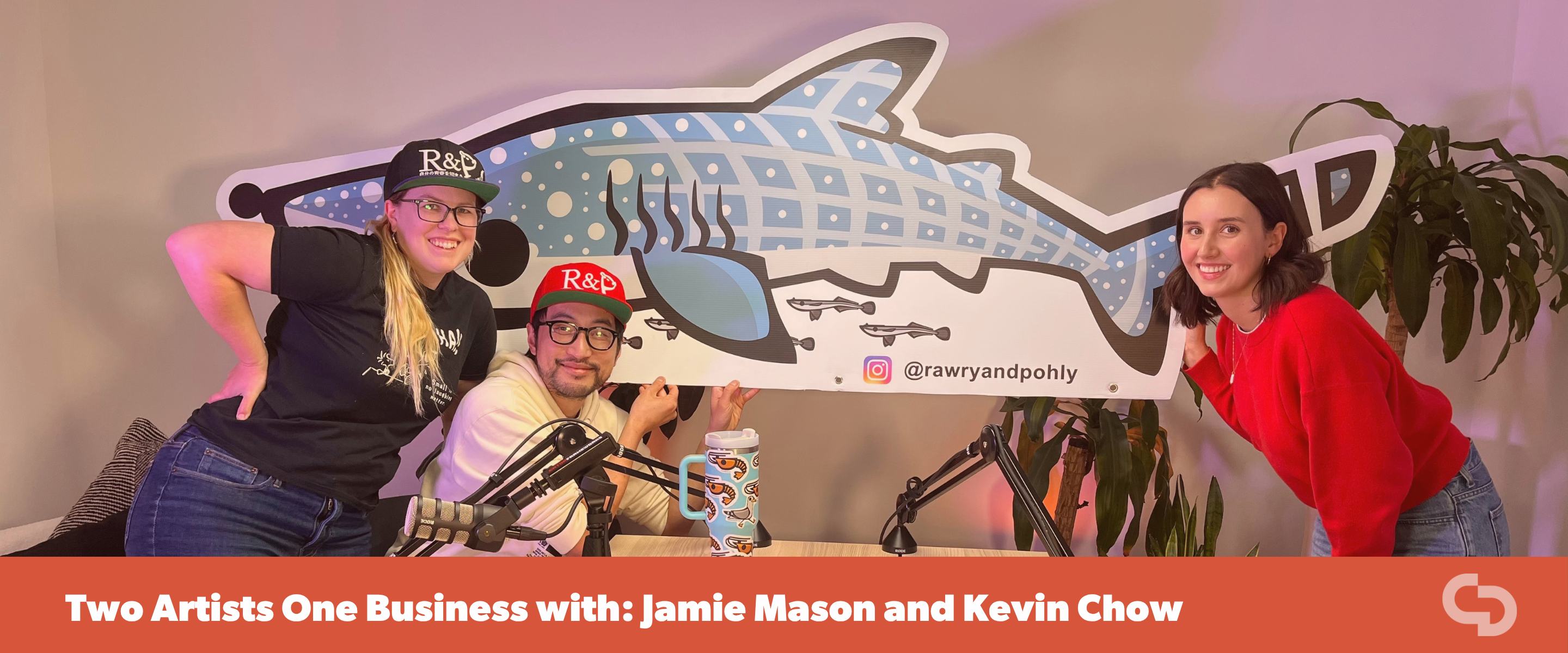
Welcome to Corp Eh! Diem, where we speak to Canadian entrepreneurs. I'm your host, Lea Lavoie. In this episode, we're talking to Jamie Mason and Kevin Chow, the co-founding artist partners behind Rawry and Pohly. Since blending their visual styles in 2015, the Calgary based duo has built a distinct pop art language they call Contemporary Saturdays, geometrically shaped characters, bold vibrant colours, and fartial names, all rooted in themes of conservation, the natural world, and animals. Kevin Chow began his artistic journey and the animation program at Sheridan College for earning a diploma in business marketing from SIAST in Moose Jaw and a Bachelor of Arts in Marketing from the University of Virgina. His work is the intersection of animation and fine art, bringing a sense of dynamic character and energy to the duo's creation. Demi Mason is a self-taught visual artist and storyteller. She studied English and education at the University of Virginia and her background weaves the narrative depth of emotional resonance found in their collaborative works. What started as art projected onto a wall in the University of Virgin Art Wing grew into a national touring practice, then a pivot to public art and murals during COVID. And now a growing roster of collaborations with zoos and aquariums across North America, plus public art commissions like the Grey Cup 2022. Um, illuminating sculptures and multiple Chinatown murals in Calgary, along the way they got married, moved provinces, hand-painted or screen painting over 10,000 canvases. And now we're navigating a hard pivot into the digital printing after injury forced their hand. Their motto, celebrate your inner inner child, is an invitation for viewers to tap into their sense of wonder and playfulness. Let's get into it. Hi Jamie,


Meet Rory And Poli Founders

Léa 1:45


hi Kevin. I'd like to first of all welcome you both to the show and thanking you for taking the time to come with us today. How are you guys doing?


Kevin 1:51


Oh, caffeinated and awake, so yeah. Great.


Léa 1:54


We like our guests awake. Yeah. Um, so this is pretty exciting for me because not only is it my first time flying solo as a host, but it's my first time interviewing not only a married couple, but business partners and business founders. So I'm really excited for the conversation today. Um, my first question is what came first? Business partners or a couple?


Jamie 2:13


Well, a couple came first. So we uh I was going to the University of Regina at the time, doing a double degree in education in English with a minor in history. And uh it was actually we met on my birthday. Um I was having a really low-key birthday that year, because the year before I had a really busy birthday with a lot of people, so I just wanted to like not do anything for that person.


Léa 2:36


Like that's a sign of maturity, you know. It goes, I'm like, I want a huge party to let's go get coffee.


Jamie 2:40


Yeah, I was just so tired. Um, but like me and my cousin were just drinking um in our living room in the dorms, and he was visiting my roommate, and I was like, Oh, you know, come down, roommate, come have some drinks with me. It's my birthday, they're on me. We have like a thing of beer, and I was like, bring your friend, like you guys can come down and like have free drinks. And he ended up staying, we chatted, and uh that was how we met. Um, and that was I think four years before we started doing artwork together. Yeah.


Léa 3:12


Okay, wow. So you guys have been together for how many years? 16. 16. Yes, 16. Now that is a flex. Oh wow, guys. So I was gonna hold off on asking this until later, but I I've just been dying to know what makes you good business partners? Because I feel like I've felt this way about like friendships and stuff too. Sometimes you know you can be like, oh, this is my best friend, but we could never travel together, we can never live together. I feel like it's kind of that way with some couples too. Like I see some couples and I'm like, ooh, if you guys had to work together all day, like that'd be really rough. So, what kind of qualities within you guys, or what specific things made you be like, okay, we should get into business together, you know, while protecting the couple.


Kevin 3:48


Uh the biggest thing um I've learned throughout the years was communication um and patience. Um, and that patience comes in in so many different ways. For example, how one communicates to the other. Um, the nuances when you can pick up that sometimes they have a difficult time in saying certain things because it just makes them uncomfortable, but they need to say it in their way and you might interpret it a different way. So the patience comes in understanding what is being communicated as well. Uh, and that only comes after just years of getting to know that people that person or the group of people and then finding your own way of working within that dynamic.


Léa 4:22


And I guess when you know someone so well, like usually you don't know your business partner like that personally. I guess you can kind of you know how they're feeling, you know what buttons to push, which ones not to push. Um so, Jamie, could you share with me how you guys do the division between your work life and your personal life? That is, if there is a division, you know, how do you turn it off when you're, you know, you live together and you work together?


Jamie 4:44


I think it's


Marriage Plus Business Partnership

Jamie 4:45


really uh difficult to mitigate that when you're in a business, especially in like the startup phase, because you're going through like a lot of long hours trying to get the business into a place where you can take more time. Um, I think initially we we were working so often, like 12 to 15 hours a day at really random hours. Um, and when we began, I had a full-time job still, and then I did, I was doing Rawry and Pohly on the side. Um, so it was like I would work all day, and then I'd have like an hour or two for like supper and at home and then be working into the evening. Um, so I think that we we kind of tried to find time where we could, weekends where we could, and then we travel a lot for work as well. So we try and book like an extra day or two in those locations, not just so we can have some rest, but also so we can explore together and see things together. And we both really love traveling. We're both big foodies, so we have a lot of like intersecting uh things that we enjoy to do together. Um, so that really helps when you have those things. Um, but definitely as we've gotten uh a bit bigger and had a little bit more help with our workloads, it's been interesting because we have a little bit more time. So we're starting to carve out that time that we can spend together and watch more movies and do more things outside of work. So it's really like a constant navigation, I would say. And it's dependent on what kind of projects you're working on, how close the deadlines are, things like that.


Léa 6:15


Yeah, like I bet there's some period where it's just it doesn't stop. It's 10 p.m. You're in bed and you're like, wait, I just had a great idea for the project, like and writing it up. And um, but now that I kind of have a bit of an idea about you know how you guys work as a couple, I was wondering, Jimmy, you kind of shared with us, you know, what you studied, how you started off, Kevin. What I'm thinking of like 20-year-old Kevin, what did he see his life being? Did you have an idea of what you he wanted your career to be? Did you study in anything that was related to art or entrepreneurship in any way?


Kevin 6:41


Yeah. So in my 20s, I was, I like to tell myself I was a I was in university and colleges for probably too long. Um, um, and that student loan bill did rack up quite high. Um, I I jumped between art school and business school.


Léa 6:55


Oh, I went to business school. Oh, yeah.


Kevin 6:57


Which school?


Léa 6:58


Um Alberta School of Business.


Kevin 7:00


Nice, nice. Um, and it was it was fun because the primary way of seeing the world at that time for me was I wanted to be creative. Um, I wanted to try things that may have not been done before, or try things that I saw on a Super Bowl commercial and see if I could replicate it at a smaller scale with a nonprofit I was working with at the time, or just try again, be creative. And so art school was the epitome of that. However, finding a stable career after graduation would have been a challenge because art is very freelance-based. Um, it's well, freelance-based that comes with a non-reliable retirement fund. Um, you always have to find that next opportunity once a project is over. And so my parents gently nudged me towards, you know, something more stable, like business perhaps. Um, there's marketing, you can be creative there. Um, and then I went through school of marketing. Um, even though it was creative, I felt it wasn't as creative as I wanted it to be. Um, and I didn't know what the world had to offer. So I just went back and forth between this art college and then this business college. And then eventually I settled down and got my diploma through uh a college in business in Mooshaw. And then I met Jamie when I was for furthering into my BFA in marketing uh at the University of Regina.


Léa 8:14


Wow, okay. So you're originally from Calgary?


Kevin 8:17


Oh, uh Saskatchewan.


Léa 8:18


Saskatchewan. So you're both from Saskatchewan? From Regina, both of you?


Kevin 8:21


Moose Jaw myself. I was born and raised in uh in an entrepreneurial setting. My parents had an ice cream shop. Um, and so every day after high school, I would walk down to the shop and just work until close and then go do my homework. Um but when I look back now, I I realized what that was was just I was delivering a product to people to make them happy. And it just felt natural. It felt right. It was worth the long summer hours, going to festivals, um, leaning into and scooping ice cream. Uh, I can tell you all the nuances of that. I'm having a chance to taste everything was a blast, which is probably why I'm lactose intolerant now.


Léa 8:56


I was gonna say, you just you shared you were lactose intolerance and hearing that your parents um had an ice cream shop is crazy. But I feel like I've never been someone who's been able to work in customer service or seeing people's faces directly. I feel like you get a lot of energy from that too, and just seeing the impact that your business has directly onto people. Um, and I do always find it interesting to hear from entrepreneurs if they were exposed to entrepreneurial to other entrepreneurs when they were younger, because some people, you know, their parents were business owners and they just saw them working so hard and the hours, and you can immediately tell, oh, I love that lifestyle, kind of like you, Kevin. Or you can be like, ooh, never I'm doing I'm doing a nine to five. I want some balance. Jamie, did you have any exposure to, you know, business owners or entrepreneurial people in your life when you were younger?


Jamie 9:35


Um, my grandpa was actually a business owner um and an entrepreneur, but I was quite young during that time. And I, you know, I didn't really do any work for him or get too much exposure to his business, but I did get to see him uh at his store, interacting with his customers, and get to see a little bit of the behind the scenes. Um, but I I myself didn't really understand a whole lot about the entrepreneur side of things, but I've always been really uh interested in like innovating inside workplaces. So whenever I worked somewhere, I would try to find ways to like accelerate the practice, make it easier, make it more repeatable. I really like repeatable things. I like making manuals. So like I I found ways to improve every business that I worked at that would make it easier for me and easier for the future people working there. So that I think that that cross


Creative Careers And Early Entrepreneurship

Jamie 10:30


skill really helped out with those things. But also having an education degree, um, and when you're a teacher, you're doing a lot of that kind of work in the long hours, anyways. So I think that there was a lot of like cross-prep that brought me to that position.


Léa 10:44


Were you then, because you mentioned that you were working full-time when you first started your business, were you teaching full-time?


Jamie 10:49


No, so I actually had been working for the Regina Downtown Business Improvement District Um for I think about five years when I graduated. So I had for the entirety of my double degree, I had been working for them. Uh, and as soon as I graduated, they made a job for me. So I had been working up from like the lower, I think I started as a skate rink attendant, and then I slowly like worked up to different positions. And by the time I graduated, I was the program coordinator. So the the new position that they made for me was fantastic. I really loved it. I love that workplace. Like, shout out, they were great.


Léa 11:25


Um, so my for my next question, I want to get a bit into Rawry and Pohly, which I'm hoping I'm now pronouncing correctly. Um, so that's your business. Not only are you guys the first couple we've interviewed, you're the first artist. So I'm wondering if you guys can tell me a bit of the origin story, starting off with what came first. Was it you guys creating art and doing these drawings, or was it the idea for the business?


Jamie 11:47


So we were both creating artwork separately um for our whole lives. Like we've we've been creatives our whole lives. Um, but the we we both were kind of like bouncing ideas back and forth for like doing different uh artwork like things that we wanted to pursue. Um, I do a lot of writing and uh some visual work, and then uh Kevin was doing a lot of visual work, which you can talk about.


Kevin 12:13


And it was it was a very fun thing. So, like we were in university when we were dating and we moved in together and we started amalgamating our creatives as fun little side projects. The idea of a business was not on the table at the time. Um, and then uh we we painted some characters um based off the video games and shows that we liked, hung it up in our living room, people would come by and visit our dorms, our uh our dorm space at the university, and like, well, we like that. Can I get one too? Um, so of course we made some for friends, and but then those requests kept on coming. And so we realized, okay, what if we just did the local Comic-Con? Um, and we did that. And then after we did a whole weekend of sales, we're like, oh my God, uh students, like, this is a lot of money. So we went and bought a big screen TV. We're like, we're gonna play video games, we're gonna watch all the movies now. Where are we gonna put this thing? Um, and then we we we went through a whole year and then we that the show came around again. The sales were higher because we had more of a presence and we knew what we're doing now a little bit. Um, and then we're like, well, we don't need an art TV. Let's the relationship was a little more serious at the time. Like, let's after we're after those expenses, let's let's pay off our student loans. Maybe it was just me because I had that very that got so mature.


Léa 13:25


You went from like, I want a huge TV to maybe we should pay off the student loans.


Kevin 13:29


Yeah, and then so we were aggressive on that um and and started putting that money back because like we had a standard of living that we weren't in like increasing, we didn't need any extra stuff. We we liked uh the food that we liked. It was very discounted and cheap because as students, you just you just have that mindset, the scrappy mindset. And I think that was a very big part of success of our business when we did start. Um, and then after that, we just kept on doing more shows and it came automatically.


Jamie 13:55


Actually, the the first show that I ever went to was in 2008, uh, when I was 18. So I'm aging myself here, but um, it was uh Anime Thon in Edmonton, which I shout out Edmonton, yeah. Shout out Edmonton. I love Animaton. Um, but it was such a fun experience, and I've always been really into like anime and uh like artist drawings, and I loved going into the artist alley and seeing people's interpretations of the characters, and I felt like going into this like really cool marketplace. Um, so I just when when we started doing the artwork in our home and then we thought about going to the conventions, I was like, oh man, like I loved loved that convention. I would love to like go to them and be at those conventions. And we didn't really realize that you could do this as like a thing, like go full time or like travel everywhere until we were at one uh convention, these two vendors were talking to each other, and they're like, Oh, you go into this place next weekend, yeah, I'll be there, I'll see you there. How about this one next? Oh, yeah, yeah. And I was like, Oh my gosh, like they're like traveling around, going place to place. We could totally, we could totally try that.


Kevin 15:03


Like, yeah, like I remember going up to them and asking them, so like business to business at the time, um, you guys are selling eight dollar trinkets, if you will. Um, and you can do that full time, and you're like, Yeah, and I was like, but you're two people, like I'm like, like I'm understanding the economics of it. I was like, but it's eight dollars. And he's like, now just multiply that by enough times so that you can do it full time, and then you have the beginning of something that you can look at. And we were still in university, um, we were just like, What? You can do this, and I remember that first year, we're like, let's go to Edmonton uh from Saskatchewan, and that's an eight-hour drive. Um, we stay at a friend's house, um, we do the show, and we're like, that was amazing. Wait, so there's Vancouver, there's Toronto, there's Montreal, and then it opens up in our mind that there's opportunities, and we're like, okay, we're just too scared to take a leap of faith yet. We're still graduating soon. We want to at least try the jobs that we're we're finding ourselves in the industry that we had these jobs lined up already, Jamie.


Léa 16:03


You invested so much with, you know.


Kevin 16:05


Yeah, and then so like after graduation, uh, we had our jobs. So I had an office job, Jamie had a great office job, um, but we kept on painting for fun on the side. Um, and we would spend so many hours in that paint studio um that we were doing like 80 hours plus a week.


Léa 16:18


Like everything painted by hand.


Kevin 16:20


Yeah, everything painted by hand. Over 10,000, uh well, I think 15 or 20 now, like it's quite a few. It's it's a lot. Um, and these are multimedia things, it just takes a lot of physical labor. But we the the the the I guess when you when you put this art in front of someone and they give you cash because they like it, and you can reinvest and repeat that process, and you see that happiness when they say, Oh my god, I love how you visualize that familiar character. Um, are you able to do this next? And then it's like, so what do you mean this next? Like, well, I have a dog. Um, and I would like a commission. Um, and then we start doing a little bit of those. Um, but they took up so much time that we had to step back from that where we are now. But it's just the journey to be a full-time artist is you take up any opportunity. Um, because in that you figure out what you like doing, uh, what makes the most sense and what gets your name out there. Uh, everything has like a pro and a con, I guess. And you just evaluate it as you get bigger.


Jamie 17:18


Well, and it really took off when um we, I think we had done it for one year when when you were laid off. And then at that point, I was like, okay, I still have you know this full-time job. I can help to fund this. Why don't we actually try like really focusing on it? So instead of applying for a bunch of jobs, um, just like put put the effort into it, and I'll come in after you know my work day and we'll just like really see if it can go somewhere. Um, and that's when you know the the focus kind of shifted into making sure it could become something larger than it was.


Léa 17:54


So, like since you got laid off, you haven't worked like at a like an office job since it's been roaring poly since okay. I feel like that's often like the kind of the push that you need to actually start a business because it's so hard to leave that security.


Kevin 18:05


She was my sugar mama for a long time. So there's that.


Léa 18:09


No, and I feel like that's another perk of also being a couple is that not only because Jamie, you're like, okay, yes, I am supporting Kevin, but he's supporting more of our business, and that balance is really interesting to to hear about. So, where in the story did the name Rawry and Pohly come from?


Kevin 18:24


Well, there's a name before. Oh, yeah.


Jamie 18:26


Oh our first name


From Dorm Art To Conventions

Jamie 18:30


was uh um a little bit not that great. It was called multiple Nerdgasms. Uh and we uh we realized pretty quickly we didn't want to have a name that was going to cause issues when we were working with kids. Yeah, that was going to be sensitive. Like, how do you explain the Nerdgasms part? We just thought it was like a funny edition. That's a very like 20-year-old name. Yeah, it's such a 20 year old name. It was like all memes, right? Yeah, I was like, oh my gosh. Um, but then after I think, I think we only had it for about a year and a half under that name. And then we were like, okay, we should probably rename this because we want to do like some kids' workshops, some like teach kids how to draw stuff, and I can't be telling kids my name is Mommy, what's a nerd gasm? Oh gosh, no.


Kevin 19:14


I was like, And you googled it, you got weird stuff. I can tell you right now.


Jamie 19:17


Yeah, I also didn't it wasn't Googlable, is a really good for SEO, yeah. So we were like, okay, let's rethink what we're gonna name this because we really want to be intentional with the name. Um, now that we're actually getting more serious, because this was also about the time that we were getting more serious about it. Um I think it was putting more of the time in. Uh, so we were like, okay, what do like what kind of name do we want? Do we want to like name it after like something that's you know, like real, like pens and swords or you know, whatever?


Kevin 19:45


Um Kevin Jamie, you know, yeah, or Kevin and Jamie.


Jamie 19:48


But uh then we were thinking about so we Kevin has a teddy bear from his childhood. Do you want to talk about your teddy bear?


Kevin 19:54


Yeah, so I was gifted a bear, uh a teddy bear when I was born. Um, and he's with me everywhere I go now as an adult. And his name is Pohly. And so Polly was at the time I couldn't say polar bear. And so my parents told me that's why you called him Pohly. He's just always poly for some reason. Um, and so when we first started dating, uh, I was in Moose Jaw, she was Regina, it was a half-hour, 45-minute commute. Um, she would be like, Can I hold on to Pohly? Because you bring him everywhere. And then I was like, Of course, new person I'm dating. I'll ask them what you do.


Léa 20:22


I bet that was kind of hard tough. Yes, it was.


Kevin 20:25


Eventually, like, well, where's my little buddy who's been with me since college, through nightmares, through every any trial in life. Um, and so I gifted her exact same model. Like, hey, here's a teddy bear. I want mine back.


Léa 20:37


Give me mine back.


Kevin 20:38


Yeah, it's the same thing. Um, and then she named him Rawry.


Léa 20:43


Oh, that's I actually I love that. I had one too. His name was Tato, which I don't think that makes quite as good of a business name. But now he's sitting in a box in like my house, and every once in a while I'll go through my things. I'm like, I'm so sorry, you're suffocating in there. Oh no, I forgot you, but that's really sweet, and it's cool that it's like both of you came up with a piece of the name, and now combining it just makes so much sense and it's unique. Um, okay, so I'd like to kind of like circle back a bit because you were saying your first convention and like selling a lot of things there. How was that? Were you prepared? Did you already have like the paintings done? Did you sell a lot and then paint it? And like what's kind of that process of preparing to sell at a convention and especially your first one, you know, like how did what was the aftermath of it?


Jamie 21:26


Oh, I I know we were super nervous about like how many of each thing to you do you bring to a show? Like, because you've never done one before. So, like, what what is the number, the magic number of how much you should bring to sell? Um, and at that time when we first started, all of our artwork that we were making, we had just like a projector and we would project onto the wall, and then we would like paint them by hand by like kind of tracing the image that we had. Yes, well, we would take issues on the top. Yeah, like we would paint until our arm like lost all the blood and went numb, and then we'd have to switch. Oh my god. God. Another person with paint to learn what.


Kevin 22:02


Oh, we go and do push ups off to the side and okay, ready to go for another round of it.


Jamie 22:06


Oh my god. Oh my gosh.


Kevin 22:07


But you were young and we were able to do that.


Léa 22:08


You're like, I don't care if my shoulder breaks now. I hope you don't have any repercussions or any physio appointments to go to now for that.


Jamie 22:14


Oh, I do. Um, but we so we we kind of like just came up with we looked at the attendance size of the show, and then we're like, okay, you know, it probably this percentage of people would buy. So we should probably make like this many, um, which actually ended up not being enough. Uh it was more successful.


Léa 22:36


You always I assume you always want to sell out. I guess that's the goal, yeah.


Kevin 22:40


But is there always that that angst of if I don't bring enough, I'm lending myself down or didn't sound like I couldn't be able to do that. And so you overprepare and then it doesn't detriment to your inventory count afterwards and your effort going into that. Oh, I can do the details.


Jamie 22:52


Definitely a double-edged sword because you do want to sell out, and it does. When you sell out, it feels really great because it's like, oh, my stuff is desirable, it's fantastic.


Kevin 23:00


It's also signaled to the customers.


Jamie 23:02


How many more should I have brought? You know, like you, it's it's that like temptation to never sell out, but it's you can't like make infinite, you know, products or artwork. Especially when you're hand pleating and you're making artwork.


Kevin 23:16


Like, like like at our scale, it's it's like okay, we have a palette. What goes on that palette?


Jamie 23:21


Now now we have a palette. Back then we couldn't have even imagined having a palette. We were like, what can fit in the car? Yeah, you know, never mind an SUV. No, no, little guy. And then we our first show, um, we made our booth out of just like trash we found in a dumpster.


Kevin 23:38


We dumpster dive Walmarts.


Jamie 23:40


You're like, this is actually art.


Léa 23:41


Yeah, it's an art piece, it's an art installation.


Jamie 23:44


Yeah, no, we actually like we painted the backdrop and made like cute little mountains out of this, like because we like cut up some core plasma stuff and then we like made it into because the colors were just whatever they were already. So we're like, we could make these into mountains. We cut it this way. Yeah, and then we'll see. Birds and crafts, 100%. Yeah, yeah. Yeah, it was super tough coming up with the the numbers of how much to sell. But from that point, after the first show, it was way easier because I I'm a very like math person um sometimes. Uh I don't I don't know why. Like I sometimes it's art brand, sometimes it's math brand. But um both worlds. A lot of people wish they had both, me included. It does it doesn't function when I need it to all the time. But um, we I would take like the kind of the the amount that we sold and the attendance numbers, and then I would just do a bunch of calculations for the next place for the percentage more that we we would need to make a percentage less. So I was able to like at least come up with like a base point to work off of for the next shows. Whereas for that first show, it was so terrifying because it's like I don't know, I've never done this before.


Kevin 24:50


Okay, we have eight hours until then the the show opens again. How much can we paint before we need to sleep?


Jamie 24:54


Not how much, yeah. Oh my gosh. But we did have some like fantastic mentors when we were first starting, where we would ask questions and be like, How do you know how much to bring? What's a good number? People that you met at these conventions. Yeah, people that we met at conventions or people that we messaged online that we knew went to the conventions, and you know, it was like, hey, yeah, you know what? Not a lot of people want to share that information, so you have to be really gentle when you're asking because it's you know, it's it's a lot of stuff that you get through experience and through work, and they're not always wanting to create more competition in their, you know.


Léa 25:25


Now that you're more in a position of, you know, you guys have been doing this for so many years. Do you have any people who you're mentoring or any people who you see? Are you still doing trade shows? Yeah. Like now that you're like, Oh, I thank God I had, I don't know, Bill when we were starting off and he told us all this, or the guys who were talking about all the conventions, you know, it's kind of like spreading the word and helping out the next generation too. Yeah.


Jamie 25:43


Yeah, we've actually mentored quite a few people. Um we're we're pretty good at uh we'll we'll give you what we can for info um about things that we need that we're good at or that we know about. Obviously, if it's like a different area of business, it's like, I don't know. Yeah. It may point you in the right direction, but I'm not sure how it would really answer that question. But for a lot of the people who have come to us and asked questions, especially about grants, I get a lot of questions about grants um because I do a lot of grant writing. Um, and I'm always happy to talk about, you know, how to go through grant writing and what the process is like and everything. And I've been writing grants for, you know, way longer than AI has existed. So I'm I'm pretty good at like spinning out a grant pretty quickly.


Léa 26:24


It's really interesting to hear, especially coming from you, Jamie, because I know Kevin, you did a bit more business school and you kind of had more of that side. And I feel like that's maybe something that makes, or I would assume is something that makes artists hesitate to actually start a business because like, ugh, if I have to do my accounting, I'm gonna cry. I don't want to do this, or I don't want to think about the numbers. And so like the fact that you're interested in both of those is really, I'm sure, so beneficial. Uh Kevin, did any of your experience in business school were you like, are you taking any specific parts of the business? Are you, I don't know, doing more of the marketing since that's what you study and then Jamie, it sounds like you're very like organizational-minded and you know, strategic strategy and all that stuff.


Kevin 26:57


Well, the business schools uh that I attended and I and I finished was really interesting because it showed me the value in preparing and having a goal in mind. Um, you don't have to necessarily have to know how to get there. Um, that's that's the trials of life. Um, but uh that helped a lot. So a business plan. So I don't physically write down a business plan. My ADHD is, I can tell you're not gonna do that, but I run through those mental practices in my head, and then at 4 a.m., I'll be like, Jamie, I have this idea.


Léa 27:26


There's that work-life balance, right?


Kevin 27:29


Um, and then she's like, uh-huh, uh-huh, great. And I'm like, great, I have values, and I just go back and I just refine it. And then over time I realized I really am passionate about marketing, brand development, value propositions, um, how do I can work with the next group of people? For example, um, here in Calgary, uh, Jam and I are always downtown doing stuff. And one day I looked up and like the Calgary Tower, and I'm like, Jamie, I want to work with those guys. And she's like, okay, cool. I'm like, then it just sat in the back of my head for about a year. And now


Naming The Brand And Scaling Smarter

Kevin 28:00


we work with the Calgary Tower. Um, we do some stickers and children's t-shirts with them. Very introductory ways of working with an institution of that caliber. And then from there, once you build a reputation and a form of trust with the people behind the scenes making decisions, you can say, Well, I have another idea. Um, and this is what I space off of my other experiences, other collabs I've done. Would you be of interest in working with these people? If I brought in this group and this group, and you as a venue, for example, what could happen of that? And then you're like, Oh, that's interesting. And like, that's what makes this so fun. As artists, we are able to bring an idea into the real world after respecting logistics, the management, the accounting, according to Jamie, and everything involved. And that's why us as uh as an entrepreneurial couple has worked so well. Um, we get each other. Um, I don't have to say the complete scientist, and already Jamie sees what needs to happen next, and vice versa.


Jamie 28:53


And actually, I would say that's one of the things that you're really fantastic at is the like um to the moon imagination. It's like, what what if I had no restrictions whatsoever? And that's a lot of like what you're imagining is we could, you know, we could go all this big, huge thing, and I'll be like, okay, okay, what are the 50 tiny steps I need to get to that big thing? And how can we start that? And what is the timeline? So we often like when we're spitballing ideas back and forth, it'll be like me like breaking it down into little little pieces that we can follow, and Kevin will be like, okay, and then this, and then this, and then that, you know. And so it's like it's a fantastic back and forth because sometimes I'm a little bit more uh careful or conservative because I'm always I'm kind of like a nervous person sometimes. More pragmatic, Kevin's more of a visual.


Kevin 29:46


All on red on the roulette table.


Léa 29:49


Yes. But it's good because I bet that's some of those like the ideas Kevin gave you, you're probably like, oh my god, Kevin, that's never gonna happen. And then maybe it did. You know, even the Calgary Tower. I mean, to me, like if I was starting my business, I'd be like, that's huge. You know, like that's when you're thinking of Calgary, that's such a big landmark, right? Um, I'm kind of wondering what was the first partnership that you guys did because you started off just selling the art that you're painting. You're I know you were saying anime characters, movie characters, video game characters. What was the first partnership where you're like, let's make art for you, selling it kind of like you did at the Calgary Tower? Um, and how was it shifting your art into okay, I'm not just creating things that I want and things that I have in my head, now I'm creating things for a specific purpose. What was that shift like?


Jamie 30:26


Like the first so like the first artwork that we made as Rory and Polly uh were those pieces that we made for a living room. Um, so the it was kind of like a lot of the stuff that we make is things that I really like. Yeah.


Kevin 30:42


So like some of the collabs uh that was really interesting when we worked with an institution to illustrate their uh mission, their reason why they were there was Tracy Avery. Um that's in Salt Lake City. Um, so we had a layover on our way to Florida for vacation. Um and we had like a six-hour layover. It's like, what do you do in in the airport? There's not much. And we were like, Avery, we have pet birds. And so instantly, like, oh, I would love to go see some birds while we're waiting in Utah. Um, and then we walked through their experience and then went through to a gift shop um at the end of the tour, as you always do, and realized like, where are all of the species that we just saw in the institution? And then when we asked them, they're like, Well, we're only limited to what we're able to buy with the MOQs, and they started to explain the pain points of their specific industry on the retail side of the of the uh gift shop. And this is the marketing coming in now. And I was like, Well, we do a lot of art shows with stickers and this and that of people, and that energy you get at those shows or why we're able to do this full time. I don't know how getting that same energy here. And as Jamie mentioned, when we travel into Toronto or Montreal, we always take days off at these cities just to explore. And museums, gift shops, science centers were always like the places we ended going. Um, and we started to see a pattern within the retail side of these institutions. Uh, it did have that raw energy that you got everywhere else. And in fact, they were very consistent in what they did, and it had you travel to each city, like was like the same gift shop. Um, the same merchandise, the same this and that.


Léa 32:06


People have the same wants.


Kevin 32:07


Yeah. And then even then, you could find the same products in the mall at another relevant gift shop that had knickknacks. And so we approached them and says, like, how about we we do the same? We'll draw birds, no cost whatsoever, no commitment to buy a thing. Let us present to you from a list that you would give us of the species that you want champion that you've had never found stuff for. And then we can take that and make it into stickers and no MOQs. I'll sit on that inventory, but I can then sell it at the art shows that I go to, so I can you know you didn't order so many as when you work with a supplier. Um, but I don't need to extend that MOQ onto you, which is a pain point. And so now we have this package whereas they give us a list of animals, um, we all design for free, no commitment to work for us. And if you do want to work for us, there's no minimum order. Um, and there you go. And then as we did that more and more with more clients, we're like, well, how else can we give back to the specific institutions of uh animals and conservation? And then we realized there's different departments when in each of these zoos, aquariums, and ab areas. So what about we give uh our art licenses as a free uh uh non-commercial use for education and conservation departments? So if you're in education for your limited budget, um, you can use our art for free coloring pages, you can use it for cutouts for chloroplasts, um, you can use it for whatever it is. If we can help you out, we'll do it for free. Um, it only costs is will be the uh production cost of a third party. So when you work with the institutions, uh oftentimes then retail MOQ exists, and that's minimum order quantity. So in order to buy a product, you have to commit to a certain amount of volume in order to place an order.


Léa 33:40


And that's you don't want to be operating at a loss, yeah.


Kevin 33:43


So and also you don't want to sit on a bunch of inventory that costs a lot of money that you haven't been able to sell. So if I were to order a thousand mics and I can only sell five in a year, well, that's a lot of liquid liquid caught up in inventory that you have to find a way to uh to get back. And so that's a pain point in every retail operation. And when we realized that we could fix that problem by selling the stickers ourselves with them, um, it allowed us to take that risk, offload it onto Browery and Poly. And then because we did all the art shows, we knew we had the sales channels that we could uh use that. And if they wanted to try five stickers, unheard of and a custom art design thing, they could. Um, and as we started to roll that out more and more, they were like, okay, give me this bird now, and that bird, and this bird. And then we started to build a portfolio, and then we can take that portfolio and go to a medium-sized zoo and then show them what we're doing there.


Léa 34:37


You have the drawings and own it. What a great business model!


Kevin 34:40


And so all we do is swap the logos, um, and everyone's on board with this because the goal is to just raise awareness of those species because no one's making art of this very specific butterfly or


Zoo Gift Shops And Conservation Art

Kevin 34:50


this endangered thing. Um, and so we go ahead and scale that from business side. And now we work with Canada's largest institutions like Calgary Zoo and Toronto Zoo. Uh, we have much more larger clients in the US as well. And this is the beginning of that uh business model, separate from the art shows that we're doing uh already.


Speaker 3 35:07


Yeah.


Kevin 35:07


Um and that's amazing for us just to see the impact of the art and just draw animals and work with the people behind the scenes in education. Um, one of the best, most validating experiences was when I went to uh Miami, a Tampa, to uh go to a zoo conference. I had it, I was able to touch a rhinoceros as part of the experience. Um, I was hands-on with porcupines that did tricks and were training, and you could just see two banded armadillos running laps. Oh my gosh. I got to touch a jellyfish for the first time.


Léa 35:36


I don't know you could touch a jellyfish.


Kevin 35:37


You aren't unless you're with the trained professionals in an educational program. Um, and as artists, we're invited behind the scenes to inspire the artwork.


Léa 35:46


And it's been so inspiring. I mean, after you touch a jellyfish, you just you gotta travel on it.


Kevin 35:50


Bouncy, bouncy, bouncy.


Jamie 35:51


I was like, what? And I'm so jealous because that was the time that I couldn't go because we had an art show the same weekend. So I was like, it's okay, I'll go to Edmonton and you go to Tampa.


Léa 36:02


Yeah, because those are totally even, right? Yeah, same place. Yeah, exactly. What I really like about Rory and Poli is not quite sure what the statistic is, but they were saying that a lot of Gen Z, you know, we can name so many brands, but we can name so few animals and native plants. And even myself, I'm working a lot on that, and I was kind of telling Jamie, I'm like, I'm so bad with animal names. Like, what's that? A parrot? Um so that's such a fun way of like going and sharing awareness too. Because I mean, you have some on your bottles, and I'm sure like a lot of people are buying these stickers, they're putting it on their cars, on their laptops, and everyone's gonna be like, Why do you have that? What is that? A shrimp, is that a shrimp, or is that a you know, is that a pigeon? And they can be like, No, it's that specific animal, especially the ones that you're doing specifically at the zoos, too. Like, I know for me at the Edmonton Zoo, I love the red pandas. So that's really fun to have like your one animal and then going and wrapping that and bringing it all around, I think is really cool conservation work too. You're doing before we kind of start to go in near the wrap-up of the episode. I know you guys have done a lot of really cool collaborations. Is there one or two? I know it's really hard to pick one that you would like to highlight.


Kevin 36:59


We have one coming up right away here.


Léa 37:01


Yeah.


Kevin 37:01


Um, this will be the first time we say it out loud, I think, but at the time it edits, and it might be already finished. Um, so we are selected to paint a live mural at the Great Cup this year here in Calgary.


Léa 37:10


No, I didn't even know the Great Cup was in Calgary. You're breaking this news to me. Wow. So live mural at the Great Cup. Yes. Can you explain what a live mural is?


Kevin 37:18


So uh we are given a space uh at the Great Cup to paint a giant canvas or panels, uh, it will be panels that will people can over the course of that period will see the life come, uh the art come to life. Um, and here is where it gets really fun. Um, so we're given a larger space to do it in. We're talking with uh very high corporate partners to help us make that experience even better. Um, and that's where the fun negotiations come into play. Um, when you can able to present an idea to someone that you've never talked to at a very high like corporate level and be like, hey, operations manager of Canada of this company, I have an idea. I think it's in line with what you guys do as a company. Um, would you guys like to play with us at the Great Cup this year? Um, and those conversations are evolving still, but we're super excited uh with everything that's happening right now behind the scenes of that conversation.


Léa 38:07


Congratulations. Oh my gosh, CFL, like that's huge for you guys, I'm sure, and especially because like it took me so long to realize that the Great Cup isn't hosted where that team plays. I think it's the same thing in the US too. So I think it's gonna be really cool to have so many tourists visiting, unless the Stamp Peters make it. Is that the team? I'm not rooting for them. I'm I'm rooting for the Elks, and they're definitely not gonna make it. I'm a Rough Rider fan.


Kevin 38:27


I'll put that Elf in publicly. I do like the Rough Riders.


Léa 38:30


I've been to like Elks games where there's more Rough Riders fans than there are Elks. And I'm like, you know what? I can't even we can't we're not that good of a team. But you know what? We love them. Yeah, we love them. Um so congratulations, it's a really fun partnership. Jamie, is there one in the past, maybe then, or another upcoming one that you'd like to highlight?


Jamie 38:45


Um well, we did, I think that uh one of the more interesting ones to talk about, um, they're all interesting, but we the largest mural that we ever did is in Chinatown in Calgary. Um and the process of getting to the point where we could paint that mural was quite a bit of um small step work of doing like smaller murals and scaling up a little bit more and more. But it is our um I every time I look at it, I'm so like, oh my gosh, I can't believe we painted that mural. But it's it's 55 feet tall by 135 feet wide. Um, and we we had to get our boom lift licenses and like get all kinds of insurance and stuff for the first time. And it was uh it was our first mural above, I think 15 feet when we did that mural. So we were like, oh my gosh, how do you paint a mural?


Léa 39:36


That's yeah, because usually like your first paintings in your apartment, I'm guessing they were like on smaller canvases. Yeah, yeah, yeah.


Kevin 39:42


The size of your iPad.


Léa 39:43


The size of oh my gosh. And trying going from that to like a mural, like what's the process like of developing it? Were you just like, okay, we're the same thing, just a lot bigger, or is it like and I know you're gonna be applying it at the um at the CFL too. So like how how is that process creatively, you know?


Jamie 39:58


So I think we the first things that we did with it were a bit more technical um when we were working on getting the funding for it. Because it started out as like a fantastical idea.


Léa 40:10


Um one of Pevin's waking up Jamie F warrior M idea?


Jamie 40:14


I mean, we both like we both have fantastical ideas, um, but like I'd say I I we worked together to do more of the like steps that get us to those ideas. Um, but it was uh it came about because we were talking with one of the building owners. Um, and they uh they're saying, oh, you know, I could really use a painting on this wall. And I was like, okay, you know, let's apply for funding. And we both were like, okay, maybe we can do half the wall because that feel feels achievable. Um so we applied for funding to do half the wall through can uh Calgary Arts Development. And we we got the grant for that half of the wall, and then we were like, okay, um, we could apply to Canada Council for the Arts do the other half of the wall to make it like a great grant writer, yes, right? But we were we were both like mildly terrified. Like, well, we'll apply and you know we'll figure it out afterwards. We can totally do this. And then we uh we ended up receiving um the second grant, and we were both like, oh my gosh, how do you paint a 55-foot-tall mural? Yeah, now we have to do it, now we have to do it.


Léa 41:17


I think that's a good way of doing it. Like, I'm putting myself in this situation, and now I don't have a choice but to figure it out. Yeah, yeah.


Kevin 41:23


We had great faith in our ability to problem solve, um, and with the relationships we built up in Chinatown here in Calgary, um, and the great support that Calgary Arsenal gives artists like us. Like, this is how you get outside of your comfort zone. This is what you need to do next. Here are some mentors that you can reach out to that have done something similar. Um, again, networking and community um and any industry has been so valuable to us. Um, when we again, that first conversation we had with those artists at the convention, like you can sell this full time. Now it's like, well, how do we paint giant murals? Well, here's other muralists that live in the city. Um, and Calgary Arts Development showed us the way to there. Um, we can just run by, like, hey, I have no idea how to do this. This is my approach. They're not gonna have the answers, but they can point us in the right direction of where to go next. And that has been endlessly also helped fund the arts as well. Um, the ecosystem of the arts here in Calgary has been second to none in our experience of Canadians. Um, like you have city councilors championing for the um beautification of so many of their communities. Um, you have Cata, which is Calgary Arts Development, you have the Workland Center, where they're doing amazing things with theatrical productions and uh incubators to help artists learn what it's like to be an entrepreneur. Um, like again, Calgary has been crushing it, and we are only where we are today because of what has been built for us to use as resources.


Jamie 42:43


And we we definitely like reached out to a couple of muralists. Shout out Alex Kwang. He was so helpful to us when we were, you know, bugging him. He was painting a mural nearby, and we ended up like being under the can we buy you some Gatorade and ask you some questions? Like, we have something we have no idea how to do it.


Kevin 43:01


No, we found a word. We're like, okay, oh what? Gatorade, and it's hot outside, right?


Jamie 43:06


No, he was great. He uh he gave us some tips and tricks, and we were we were already, you know, we we knew like we had a plan, but we were just like, is this like we were terrified, you know, that's like the first time you're doing a thing. We had painted murals before, but they were all smaller. So we were like, okay, we know how to like get up to a certain height. And then the the boom lift thing was just like we know that that's what we need, but we were like nervous


Chinatown Murals And Community Funding

Jamie 43:30


about how to do it. How do you go about doing it? Yeah, yeah. It's like the actually doing the thing where it starts to get terrifying. But the um the whole process ended up being amazing, except I found out that I was afraid of heights above 45 feet. I was hoping you weren't gonna say heights when you said I thought I was afraid of no. Um I am not typically afraid of heights at all. Like I've uh like I've free climbed over 30 feet before. Um, but over 45 feet in a boom lift, I guess was the one. Yeah. Were you able then to you know switch Kevin did the top? Yeah, yeah. I pushed through it for a while, but then at a certain point, once I was getting above the 45 feet by like doing your best, yeah, moves by itself. Yeah, because you're also blowing in the wind.


Kevin 44:12


Yeah, the wind becomes a thing.


Jamie 44:13


And then after some of the days, too, we actually felt like we had been at sea. Like we were just like shaking like a little wobbly all like for hours. And then you get down and you go and like lay down in your bed, and you're like, oh, I'm still like Yeah, I'm still shaking a little bit. It was uh my palms are sweaty.


Kevin 44:32


It's like like instinctively, my body's like accommodating that thought of mentally being like that. And it's like, oh, you can do it, but the body remembers.


Jamie 44:39


Oh my gosh. But it was it was such a massive accomplishment to have finished that mural. And I like I honestly, every time I look at it, I'm like, this is so tall.


Léa 44:50


And uh it's such a great time we did this, and like you're able to do really hard things, really scary things, and just figuring it out as you are. It's really good for confidence, too, I'm sure, as business owners, definitely.


Kevin 45:01


And it wasn't just us either, it was the community that came together to help us get there. Like uh different organizations came together to help us mentor on the subject matter, like the Chinese Cultural Center. Um, different organizations got together and did grassroots fundings to help bring to life some of the things like, okay, we have to have a paint budget as well, and anti-graffiti coding, and then gasoline for the thing or the diesel for the lift itself. And then Jamie for project manager was like, Okay, this budget's getting up there because it's just the scale of it. Um, and after finishing it, all the community came together, and that's why when you look on the wall, you'll see a list of all the amazing sponsors that helped us get to that point. It wasn't just us, we were just the labor, the people behind the scenes that brought it to life. They were the one who rooted for it, got together. Um, and then from the success of that mural, uh, the BIA commissioned us to do an extension of the same design on a wall across the street.


Léa 45:50


Wow.


Kevin 45:50


So, like it is a die, it's a die diptych. Diptik, yeah, the word of uh canvas. And I think it is the largest mural in Chinatown and North America because of that. I'm gonna say it to him and correct it, maybe I'm wrong. Um, but it was just really cool. Again, another grassroot initiative um where the community came together. We worked with them, like tossed around ideas for concepts, and then when you see it come to life, everyone's happy because they were part of that process. They feel a sense of ownership. Um, we often invite people in the community to come and help us paint uh at a certain height of the mural itself.


Léa 46:22


And not at the top of its kid. No, no, the little kids.


Kevin 46:26


As much as we like my grandma up there, she can get up there. Yeah.


Jamie 46:29


Well, and I think it's really important um when you work with communities and organizations and people to do artwork as an artist. Um, like we we really want to maintain our artistic integrity when we're doing work. Um so the our passions have to align. Like, we don't want to paint a thing that we don't believe in that we'll look at later and be like, I just did it for the money. Like, I it's so permanent when it's in real life, right? Yeah, and like we I just don't like to do that kind of thing. Like doing like a butcher shop or something would feel wrong. Well, I mean, it depends on what it is. If it if it aligns our passions, then like I'm I'm happy to do it. Like, if it's something that I love or personally care about or am passionate about, then I'm happy to do the project in collaboration with it.


Léa 47:13


So I guess you have to feel creative and passionate about it to make the I can't force it.


Kevin 47:16


Like creativity is a is a is an expression of the self, uh at least for us. Um, and there is no widget you can give Kevin or Jamie that gives a successful creative idea, and so that's why we're always open, we're always talking to people, the collaboration of an open conversation, communication is the thing that we mentioned earlier, which is so vital to our personal relationship and business practice we often employ um when we work with different partners.


Léa 47:39


No, that's well, thank you so much for saying I'm so excited. I might actually watch the Grey Cup this year, might be a first review. We're trying to see if I can get it.


Kevin 47:46


We'll be in the family zone. So we won't be painting the mirror on the field when the game's happening. It's a separate activated area, but it's gonna be full of like 60,000 plus families coming in from all across Canada. Um, and we're just one small element of stat festivities. Um, and in that little space, we're trying to do our own Rara Ring Poli thing in line of the Great Cup committee and all the sponsors that we're talking to, and especially art itself.


Léa 48:09


Yeah, and I love that they did that with a Calgary-based business too, because they're hosting it. Um, to wrap up the episode, I had to keep this for the end because I was like, if I ask them about their personal interests, it's all we're gonna talk about all episode because there's too many cool ones. Um Jamie, you mentioned that you wrote seven novels, 300 plus poems, and 55 short stories. I don't even know where to begin with that. What genres? Where do you find the time to write this? Are you publishing anything or is it more of a creative outlet? Yeah, where do you find the time? I guess that's also my huge part of the I guess.


Jamie 48:41


I just for the writing, I have a brain that just doesn't turn off. Like it just like generates ideas all the time and it like nags at me until I write it down. So sometimes I'll just be like doing something else, and I'm like, I gotta write this, I'm not gonna write it down right now. Um, but like I I've it's really in like the margins of other things. Um, but I I've always been really passionate about writing. Um, I haven't published that much. Like I just write and I put it in my little folder of things that I've written, but I've been the last few years working a little bit more and kind of like putting some of the stuff out there.


Léa 49:16


Sure, there's a lot of time investment too in getting it published.


Jamie 49:18


Yeah, and you know, with Rerari and Poly, we've been uh putting in a lot of hours to make sure we got to the point where it could be more stable and COVID pushed that back a little bit. So that timeline did get a little bit longer. Um, but as we were going along, there was like little little areas I could like work it in. And then more recently I've had a little bit more time to put some of the work into like sending it out for publication. Um, and I got into a really cool uh uh like group show last year for my writing. So that was awesome. It's called Ghost Stories YYC, and uh my they like match visual artists with writers, or you can do both. Um, and in this instance, I wanted to only do the writing because I was like, if I do both, I'm just gonna like focus on visual art. I was like, I just want to write. So I I applied with my writing and I got in and did the group show last year. So it was fantastic. I was so happy to have put my writing somewhere. Um, but I yeah, I just I love to write. Yeah, um, and I usually the genres are like speculative fiction, sci-fi, fantasy, and I do a little bit of my marw as well.


Léa 50:24


Wow. Well, congratulations on that. Is there anywhere where we could find that publication specifically?


Jamie 50:30


Um, I think they have a book that they made and they post some of the stories on like Instagram. So I think by my piece is on their Instagram, and then they also have the website


Writing Projects Food Picks And Wrap]

Jamie 50:40


where you can find the writing there as well.


Léa 50:42


Cool, I'll for sure check that out. Um to wrap up the episode, uh dehover interest that you guys shared with us is that you're huge foodies, which now that it's a little bit after lunch, maybe I'm gonna regret asking this because I'm it's gonna make me hungry. Um, you love TV shows and you love movies. I'm also a huge TV show and movie person, so I guess this is kind of out of my personal interest. As someone who doesn't live in Calgary, what's one restaurant that you would recommend? One show that I should watch, maybe just during my stay here, and one movie.


Kevin 51:07


Well, I got the show idea. Yeah, this might lead into the hunger thing. I absolutely love Netflix's uh chef's table. Um, how they document a chef that went above and beyond their own creative practice to do something unique across the world, and what they're doing now, based off of that trial and error, um, was really interesting. I see an overlap as an artist, entrepreneur within the creative pursuit of colors and lines the same way they did with flavors and textures of food. Um, the details like where do you source the food or what inspired it? Was it family, was it culture, was it tradition, was it of necessity? Um, those are just amazing stories that Netflix's uh chef's table with captures. And it's a great inspiration point for myself to say, like, how do I tell my story? What do I need to focus on? What makes good food? What makes good art? There is an overlap in the pursuit of something that may not have been done a lot, so it's not mainstream, and to be bold enough to go ahead and try to realize it in the real world and take all the criticisms and and the rewards that come from it. Um, that's my one of my personal favorite shows.


Léa 52:11


Okay, Chef's Table Noted. That's really cool because I do feel like with food and maybe with art, sometimes too, you see the output a lot, but maybe not everything that went into the city.


Kevin 52:18


Behind the scenes, yeah, and then the mental trials of like how do I pay my staff or we're going through COVID right now when all of a sudden egg prices go up. Like these little things are so expensive, like are real, right?


Léa 52:30


Yeah, and you never think of that when you're just going at a restaurant and eating too. Okay, that's noted. Um, any movie rec? Anything that's come out recently, or just a tried and true favorite movie?


Jamie 52:40


Um, I I just I'll talk about a movie I just recently watched for for the first time. So I haven't really seen that many Godzilla movies. Um, and I recently saw uh Shin Godzilla. I'll watch it again. Um but uh while I was at a show, you weren't there. Um but I recently saw Shin Godzilla, it was fantastic, like I absolutely loved it, and uh I got a bit of the preface about what the movie was about before watching it, which I didn't know that Godzilla was uh like a reaction to like the the atom bombs being dropped in Japan. So I had I had no idea that you've seen any of the movies, yeah.


Léa 53:18


So it's right.


Jamie 53:19


I was like, I don't know anything about Godzilla. I saw maybe one Godzilla movie one time.


Léa 53:23


Is he the one on the Empire State Building or is that?


Jamie 53:26


He's like the lizard guy, right? Yeah. Um, but it was such an amazing movie and it was so fantastically like cut and filmed. Um, I just like I don't know, I really loved it. It was so cool. Also, he like goes through like different forms. He's like, it's super neat, it was really cool.


Léa 53:40


I appreciate that, right? Especially because that's never something I would have watched on my own. I would have sought out, you know. So it's always good, it's good to know. Okay, I'm moted. This I have my watching plans for the weekend. Um, and yeah, Calgary restaurant, either something tried and true favorite or something that's quintessential quintessentially Calgarian. I know this is probably the hardest one, huh?


Kevin 53:58


Honjin is a great sushi place. Okay, yeah.


Jamie 54:02


Hanjin is a kaya. I love that place. It's so fantastic.


Kevin 54:06


That's our we want to treat ourselves kind of more.


Jamie 54:08


Okay, bye guys, I'm going.


Léa 54:09


Yeah. I'm hungry. Nice.


Kevin 54:12


Um, there's a bunch of other places, like there's some European grocery stores, they have smoked fish there. Um so one of the best things that we love doing, and we mentioned this once, is traveling, trying new foods. Um, and so we're always trying to figure out like, hey, what community reviewed thing? We're always on Reddit looking at reviews, and if I were you're real foodie if you're on Reddit. Yeah. And then we have a cousin who was a former chef, and I'm like, hey, what do you know about this place? And my cousin would be like, Oh, this is good, this is bad, and like, great. And like I always bug him at weird hours. Hey, I'm hungry, I'm in the Sarah, where do I need to go?


Jamie 54:43


We're also like such um visual food pickers, so like we'll often be like wandering around a random city, and it'll be like, What is that hole in the wall over there? And we're like, We're not gonna look it up, we're just gonna go in.


Léa 54:54


Like, there's something to be said for that too, right? Because it could be the best meal you've ever had or the worst in either place. It's a good story, or maybe it's just average and you forget about it when you move on.


Jamie 55:03


Yeah, definitely. And we're always willing to make that gamble, especially when we've been, you know, in a city a few times and we've tried a few places and we're like, we just want to eat whatever. What is here? What's next to us? What looks cool? And you know, we we also love restaurants where it's just like the uh the aesthetic isn't there, you know, it's just like the the outside's kind of a bit rougher and they have like tearaway tables, and we're like, well no, the food's gonna be good.


Léa 55:27


Sometimes I've like I've I've definitely been caught in like, oh, their menu's so cute, their Instagram's so cute, and then you eat it and you're like, oh, the food not so much. So thank you so much for all those Recs. Jamie, Kevin, thank you for taking the time to come in on the show, sharing with us. I'll definitely be looking out for your upcoming projects. It was so nice to finally meet you guys.

Yeah, thanks for having us. Thank you.






 Twitter / X