Dom: 0:00

Welcome to the Corp Eh! Diem podcast, where we speak with Canadian entrepreneurs. My name is Dominic Kingston, and I’m your host, and I’m joined today with Lea Lavoie, my co-host.

Lea: 0:09

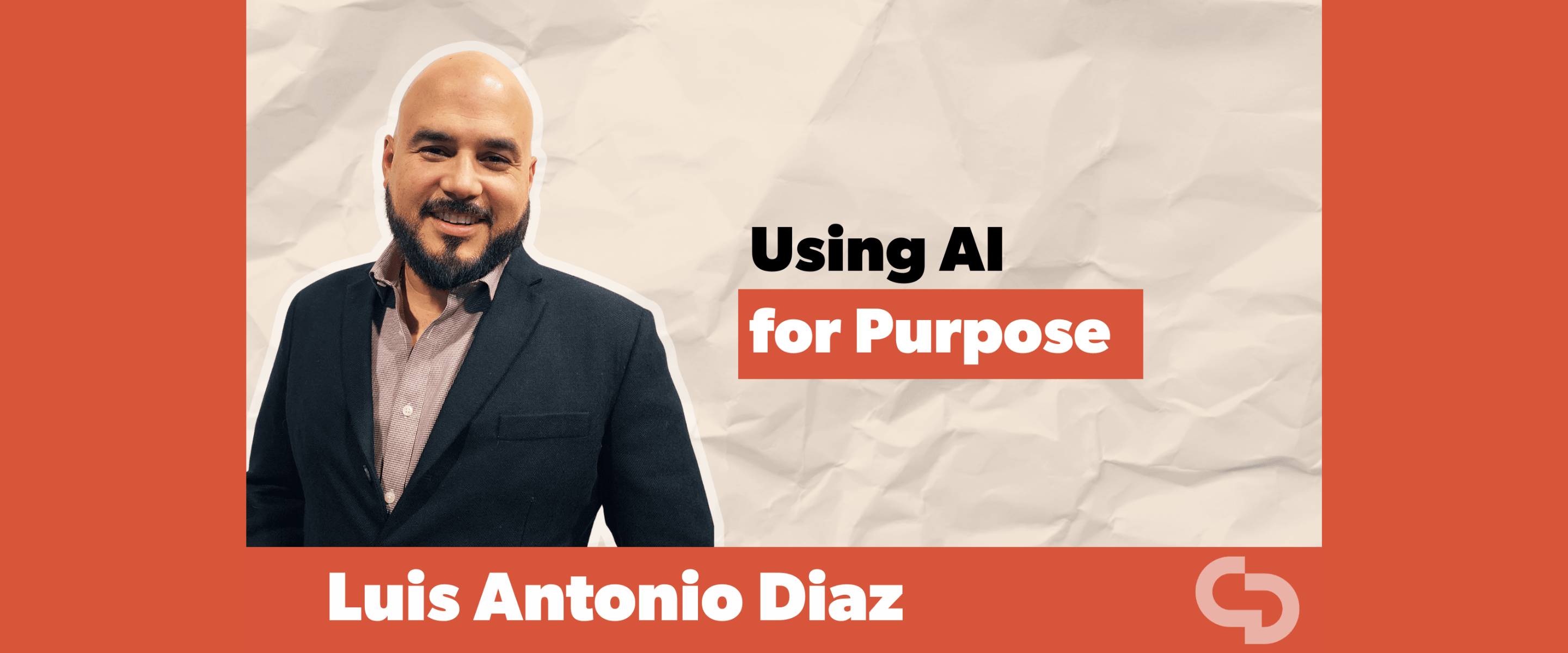
Today we had the pleasure of talking to Luis Antonio Diaz, who is a strategic planner, AI tool developer, procurement expert dedicated to advancing digital accessibility for disabled and neurodiverse communities. As a founder of Blue Creative, he led the creation of Neural AI, an award-winning AI-powered web accessibility tool recognized for making an inclusive digital experience more achievable for organizations worldwide. Lewis brings over a decade of experience bridging technology and governance. He has advised Quebec government ministers and held key procurement and advisory roles at the United Nations and the International Civil Aviation Organization. His deep understanding of public sector compliance and digital transformation has made him a trusted voice for institutions modernizing their operations through AI-driven innovation. In addition to his corporate and government work, Lewis is a graduate-level instructor at McGill University, where he mentors emerging leaders in strategic communications and digital strategy. A frequent international speaker and recognized thought leader, he has been honored with multiple awards, including the Technopreneur of the Year of the Global Recognition Award in 2024. Lewis continues to pioneer AI-driven tools with the launch of their new AI model, Offerio AI, an AI-powered proposal generator for small businesses and the full Offerio AI suite for government and enterprise users. These products continue to shape the future of data sovereign, inclusive digital experience, and workflow automations. Let’s get into the conversation. Welcome to the show, Lewis. How are you doing today?

Luis: 1:39

I’m great. Thank you for having me. Super excited to see both of you, Lea and Dom.

Dom: 1:43

And Lewis, welcome to the show. I had the pleasure of meeting you in Calgary during the Stampede. What captivated me was that you’re building North America’s first business-specific AI model. So why that and why not just settle for what Google or ChatGPT has?

Luis: 1:57

It’s a very interesting question, and I like that we’re going straight to the meat of things. Let me start with a story. So, when I came back to Blue Creative, and that’s a story we’ll probably touch on later, I realized that we had a big challenge at our company. Our company does a lot of RFPs, request for proposals for people who don’t know what that is. So, it’s government tenders. And so the number one challenge that we were facing was, you know, I don’t see a lineup of you know grad students coming out of college university saying, hey, I want to be a proposal writer. I want to write tenders. That does not exist. And so having a great team of AI specialists at the company, I said, hey, this is a problem. This is an applied problem that we can solve. And so we put our minds and our expertise to building a tool that could help companies like ours answer proposals to government tenders without it taking so much time. Because our proposals would take about 160 hours plus. So we were doing one a month, maybe one and a half a month. Oh, and behold, and I’ll, you know, I’m sure you’re gonna have questions for it, but I’ll jump to the end of the story, one of those like choose your own endings type books. But uh as we’re entering the phase where we’re in now, we’ve realized that we wanted to build the wheel, but we built the car to put the wheel in it. So what we did is we build an engine out of our own AI model that understands business and business processes as well as government processes. So at the present time, it can understand over 65 different types of corporate documents from which it’ll actually understand, learn, and the technical term is vectorize. So imagine you you Dom, you go to sleep and I erase your memory, and then I just feed you 10 things, and that’s all you know the minute you wake up. Well, that’s what we’re doing with AI. We’re vectorizing the data, so it’s a step above from what ChatGPT and Gemini and all those um um LLMs are doing because what they do is they skim data. And again, uh, you know, for any techie that’s listening out there, I’m very being very general. I can go to technicalities, but I’m being very general. So um it it kind of skims your data when you go through the public available LLMs. And what we needed was something that um provided an accurate, uh accurate source of truth. Um, I needed something that would understand the company, would become the company, would only talk about the company, would not make stuff up like ChatGPT has a tendency to do. Um and would tell you, hey, you’re asking me a question I don’t know about. So how about you give me some more information? So we’d create a gap analysis on the data that it had in order to become smarter.

Dom: 4:57

So now it doesn’t just make stuff up in that case, like it’ll know when it knows, it knows when it doesn’t know in that case.

Luis: 5:04

Correct. And it says, listen, I have no idea what you’re talking about, I need more training. And so at that point, um the LLM now becomes a reliable partner in business processes, and that’s what we call it set up in a closed loop. So it’s in a private server, the data is not shared publicly, it doesn’t go to some server and Cupertino or wherever a um Chat GPT is based out of, and it doesn’t use your data to train public models because there is this belief that I I truly believe in it as well, that there is IP seepage when you’re giving data uh to ChatGPT, which is the reason why a lot of government offices are talking and implementing policies where you know um public officers cannot upload personal identifiable information or even contracts to a ChatGPT model. Because a lot of people in the government space will be like, why do I have to review these two contracts? I’m just gonna upload them to ChatGPT and say, hey, compare and contrast, tell me the gap difference. ChatGPT is great for that. I mean, it’ll do a very good job unless you’re paying the full version of the enterprise, and then it goes really into detail. But what it’s actually doing is taking that data and learning from it. And so now this private contract and all the complications and intricacies of that contract are now in the public domain. And when you sign up to ChatGPT, you accept these terms and conditions. So that’s the challenge that a lot of people don’t understand is well, why can’t they use ChatGPT? Well, you shouldn’t. I mean, yes, get recipes, get the top five bars in your local area, um, you know, but when it comes to business and when it comes to um government operations, um they have a responsibility to keep the data private on both sides tender and client, users, residents, etc. And that’s where we saw an opportunity and decided to build Oferio, which is the AI model that we have.

Dom: 7:02

So it sounds like you’ve extended you built a tool for the your main business being a creative shop to do RFPs, and that tool is so good, now it’s become its own business unit, would you say? Or yes, or its own office.

Luis: 7:16

And we are looking at uh probably down the line, you know, spinning it off into its own entity just because it is um uh unique enough from our current operations. I mean, Blue Creative is um Web Technology 4.0 agency. Um we work mostly with government, um, school boards, public institutions, and what we do is we I call it we build websites plus. So it’s not just a website, it’s not just your regular WordPress. There’s automation, there’s AI, there’s connectivity to third third application, third-party applications, like from Salesforce to QuickBooks to you name it, right? And uh we we’re very good in our domain. We’re an award-winning agency, we’ve done a lot of good work uh on both sides of the border. Um, and um part of our services include you know hands-on management, or I mean what I call hands-off management, which means the client has no work to do, we take care of everything, we help our clients you know with updates of the website, making sure that their content’s up to date, make sure that their IT infrastructure online is working accurately so that there is no hacks and attacks and denial of services. Because we also provide hosting services for them. So that’s why we’re a web 4.0 agency. But understanding that AI is not just the future, it’s now. Um, we realize that we really had to do a very important shift. Um, so Offerio RFP is our module for proposal writing, but Offerio AI is the engine behind the other products that we have, which is Offerio Pro and Offerio Government. Now, obviously, Offerio Pro is for enterprise, Offerio Government is for government. And uh I mean the objective here is ethical AI. We want to 10x people. We don’t want people to lose their jobs, we want people to get better at their jobs, and we want people to do less of the boring thing and more become a subject matter expert in their domain. I mean, we all have a job, and 70% of our job is nonsense, and we’re sure we could automate somewhere somehow. Offerio can now do that. And the remaining 30 now becomes your 70%.

Dom: 9:29

Yeah, so when I met you in Calgary, Calgary being an oil and gas town, which is Yeah. So that’s government contracts, I think. Um, yeah, I find it interesting. And I suppose my interest is from entrepreneurs to start one thing and then end up somewhere else. So what kind of captivated captivated me during the conversation was just your kind of history from government to blue creative to I think you’re off to some oil and gas uh meeting to pitch Offerio. So I was just quite captivated by your how did you end up there? Like how did you end up here versus like from doing at do being at a creative agency? So it’s interesting now I understand the story. Yeah, I mean, um when we first started um Blue in 2012, um it was a different time.

Luis: 10:17

Let me regal you with stories of old, when in 2012 the biggest thing in the market was social media, and everybody was trying to get on social media and doing social media management, social media advertising, SEO, um organizations like Wix were starting to come in, WordPress was starting to become a thing. That that was 13 years ago, so it seems like not that long ago, and yet it’s so far away. I mean, I was 10, so that sounds like very thank you, thank you for making me feel young. Um but uh but that was the challenge that back then things were very different. Um, so we started in that space, we started in helping uh companies, organizations go into the domain of the dot-com. So go into e-commerce, which was a big thing with starting. Shopify was just starting, another Canadian great who’s just starting back then. And uh they started the same way. They started by creating their own product for their own. I do believe, don’t quote me on this, but it was skateboard and surf, no, ski stuff. There you go. They were making ski stuff, and none of the e-commerce tools worked for them, and then they built their own, and then they ended up pivoting and selling it to other companies so that they could have their shops online. So that’s kind of been a little bit of our journey where we’ve realized that hey, um, we’re good at what we do, but there’s this challenge in the market, and uh with every with all chaos, we see opportunity. And that’s where we took our opportunity.

Lea: 11:54

Wow. So I do want to walk back a little bit. You kind of touched on ethical AI. So when we met the other day, you were actually saying the difference between general versus specific AI. So, which one, in your opinion, is more ethical and how has that come into play with Offerio AI, but also with one of your new tools, NeuroAI, which I found super interesting. And it’s the first accessibility tool for neurodiverse communities in Canada and the US. So can you tell us a bit about NeuroAI? I know we’ve already touched on Offerio AI and how it manages to be ethical, but I found NeuroAI super interesting because I’m like, you’re directly dealing with a community that you know you want to protect and you want to make sure that their data is safe. So, how which one was built first and what was the bridge between the two?

Luis: 12:37

Absolutely. So let me first touch the general versus specific. So, and and I’m gonna tiptoe around this one because this one will probably trigger a lot of conspiracy theorists out there, and with good reason. But uh the argument in the market right now is that we have enough um AI advancements to actually 10x everybody, all humanity. Um, with specific today.

Dom: 13:02

Just without any without going to super general intelligence, we don’t need we don’t we don’t have to go to that level.

Luis: 13:07

Okay. Correct. And that’s the challenge where a lot of people are pushing technology for the sake of pushing technology, and that super general AI or artificial intelligence is what people believe will bring about, you know, the Terminator, the the singularity moment where we will now have a challenge of some uh of an entity that thinks faster than us and does things better than us. So that’s that argument. Now I’m gonna I I don’t have I guess for me that’s above my pay grade to talk about that specific subject. I can talk about specific targeted AI because I believe that that’s where industry needs to look at. Um, you know, in conversations that I have with industry players and people who just want to get involved, um, there is a sense of FOMO, fear of missing out, where it’s like, well, but ChatGPT just came out with the new version. And GRA came out with a new version. But but does it solve your current business problems? And so that’s specific AI where it’s developed for a specific process for a specific solution that brings um uh brings solutions to your let’s call it day-to-day problems or your automation issues, um, etc. And that’s where we are right now, where we have enough technology. Now, how we apply that technology differs from company to company. Majority of companies out there are using uh a connectivity to Chat GPT or what we call an API in order to say we have AI. And it’s very simple, it’s very like ask me a question, I’ll give you an answer. So um it’s not really advanced, right? It it’s advanced if we compare it to 10 years ago. But when we’re looking at it now, what can ChatGPT do? Can do a lot, but when you put it into a platform, if there is no process behind how it’s using AI, it means nothing.

Dom: 15:08

It’s just no sort of when they talk about AI wrapper, an AI wrapper, is that sort of that almost.

Luis: 15:13

I mean AI wrappers do more. Okay. Think of it this way um you have an accounting software, and now you have an AI tool where you can ask it, you know, find me this file. Well, what you just did is used AI to create a better feature for search. Is that useful? 100%. Is it game-changing? Probably not. Yeah, but somebody’s selling it out there as we have AI in our accounting software. Yeah, okay. So it’s it’s more of a um a marketing ploy more than anything. What you’re talking about is a wrapper where um the website seems to be doing a lot, but it’s basically a front end and it connects to an API to Chat GPT. There is more technology there than in other applications. Um, and when it comes to how we’re using AI, um NeuroAI came before Othereo, and NeuroAI was a partnership that we did um where we wanted to test how good our AI skills were. And so, because of that, we did we we worked on this project where uh, and just as a correction, we’re the only neurodiverse tool that is Canadian. There is competitors out there that have you know equally as good, you know. I want to say ours is better, but I won’t start that argument here. Um tool, but they’re American, they’re Israeli, they’re European. We’re the only one in Canada. So, you know, if you’re in if you’re in Canada, buy Canadian, that’s all I’m saying. But um the the challenge there is as time and as time progresses, um, we’re starting to see a trend in the market. Uh the size of the population that is considered neurodiverse that is diagnosed is one out of five. Well, but it could be up to three out of five for the ones that are not diagnosed.

Dom: 17:09

And so just for the sake of argument, can you give me what’s what’s your definition of neurodiverse? Just for like my it’s not my definition.

Luis: 17:18

Um, it is an actual established definition, so it’s anybody that’s off that that goes through that journey of neurodiversity, and there’s many different aspects. It could be, you know, as I want to say non-complex as um uh ADHD or ADD.

Dom: 17:37

I might fit I might fit into that camp, I think. So would I say you should say my desktop I can’t find it because it’s so messy, you can’t find anything.

Luis: 17:44

Well, you know what they say, messy desktop organized brain, right? So and I live by that one. Um but it’s it’s to that level of the spectrum to all the on the other side where we have people who are epileptic, um, colorblind, or telponic, um, who have who are legally blind, who have cognitive or motor skill impediments. Um, and so that is a spectrum of neurodiversity currently. And so imagine you’re a municipality, and your municipality has a hundred thousand people as a population, and your website is not updated with the latest tools to make it accessible.

Luis: 18:28

If you go by the math, 10,000 people in your municipality cannot access your website. So they won’t know when garbage pickup is, what community services you provide, where the community center is, what uh benefits they can bring to their family, taxis and details, etc. And if we go by the uh statistics that are informal, it could be up to 50,000 people in your community that have some sort of neurodiversity. I mean, three out of five, that gives you about 60%. Yeah, so I’m off by 10. So 60,000 people have some sort of diagnosed or undiagnosed um neurodiversity. So, how does that translate to day-to-day? If you’ve ever gone to a website and you’re like, I just for some reason I can’t read this website, it just makes no sense to me. Well, guess what? There’s something in that website that’s just not vibing with you. You may be or you may not be neurodiverse, but the design of the website is clashing with what you want to see or you want to feel. And so, because of that, if you’re actually neurodiverse and you’re actually, let’s call it dyslexic, and you have a non-accessible font, well, guess what? You’re not reading anything on that website. If you’re colorblind and there’s yellow everywhere, or blue everywhere, or red everywhere, you’re missing out on elements. And so the truth is, are we as a business community or as a public service, like a public institution, like a government, library, school board, etc., really fulfilling our mission if we cannot connect with 100% of our population?

Dom: 20:04

Yeah, fair.

Luis: 20:05

That was the premise of NeuroAI. Okay.

Lea: 20:08

Wow. So basically, if I’m understanding correctly, it’s kind of embedded into a website to make it more accessible. So, like, how would that look like? Is it kind of like a toggle that you press, or it’s a menu, and you can select, oh, I have dyslexia, this would, you know, tweak it so that I can read it, or whatever other neurodiverse um diagnosis that you could have, right? That you could go and select and then it can make it accessible to you.

Luis: 20:34

Absolutely. And um you you explained it great. So the the tool is in two parts. The first part lives in the back end where it continuously monitors and fixes the website for minor um accessibility issues. Those accessibility issues are usually, in the large part, focused on alternative text and tags and area modifications that will allow for keyboard navigation, for screen readers, as well as for other key elements for people that may be disabled. And then beyond that, on the front end, we have a widget that when toggled, which like you said, Leia, um, allows, I I say empowers the user to modify their journey on your website based on their need, be it neurodiversity or not. I mean, you know, I’m I’m I’m I’m years old, I’m not gonna say my age, and uh, you know, my my I I want to blame my fading eyesight on computers uh at my young 20s. And so because of that, um when I go to a website that has one of our tools, I just click on a big white cursor, and it helps me see the cursor much better. And those are simple things that when we did a focus group, it was funny, almost 90% of the people in the room said that that tool, that particular part and the other parts were very useful, but yet there was only three or four out of twelve that were diagnosed neurodiverse. So when we looked into it further, it has something to do with fading eyesight, just comfort level, etc.

Dom: 22:12

Just because it’s good UI in that case. So it’s just in general you’d have good usability, even if you don’t have neurodiversity, you could just still have good usability for the site.

Luis: 22:23

Of course. I mean, we have uh on our tool, we have features for um macular degeneration, so it makes you know elements brighter, bigger, and has things for glaucoma. Um actually, funny enough, that um that focus group happened in Edmonton. So I was in Edmonton and we did it in Edmonton.

Lea: 22:40

No, that’s really cool. I feel like in-person events have been adapting a lot more with you know things like low simulation rooms or I’ve been to concerts where like at the start of the show they’re like, does anyone need a low simulation kit? You know, with like ear coverings and things like that. So I hadn’t honestly, I didn’t know that’s exactly what Neuro AI did. I think that’s super cool. I’d love to see it on more websites. I think that’s kind of like the direction that we should all be heading in, you know, as our physical spaces adapt, so should our spaces online, right? Like it only makes sense.

Luis: 23:08

Absolutely. And you know what’s funny is that um usually in Canada we lead the pack, and for neurodiversity, we’re actually falling behind the Americans, which is kind of crazy. Yeah, so in the United States, um, there’s something called uh the American Disability Act, or the ADA for short. Specifically, it’s a section 508 in Title II of the ADA, which now as of April of next year will um remove the legal protections on municipalities, public institutions, etc., um, so fire departments, sheriff’s office, school boards, etc., and they have to have a web accessibility program, or else they could be liable to penalties, fines, as well as lawsuits from private individuals. And in the US, there is a litigious culture, and as we see year after year, the amount of lawsuits from private citizens is going up every year almost double. Every year almost doubles because some are legitimate claims, some are just ambulance chasers. Um in Canada, the tip of the spear is is is uh Ontario. They came up with the AODA Act, and as of January of this year, they are supposedly starting to implement fines and penalties. From the information that we’ve gathered, they’re kind of being soft this year, but will double up their efforts next year. And so at that point, you have municipalities that have to start looking at accessibility; you have enterprises that have to start looking at it. Accessibility, and and our number one target in Ontario, which is school boards, which we work with a couple, that’s where it is, because um if a child is neurodiverse, one out of the two parents is neurodiverse. And so if we’re wondering why there isn’t enough involvement of parents in schools, it’s because they don’t have access to that type of level of communication or access to information to feel welcome to be able to join the discourse at that point. And that’s what we’re trying to do one website at a time. It’s a good mission. It’s a good mission. The odd thing is this um unless you’re affected by neurodiversity, it never crosses your radar. And I started noticing more when I started seeing my aging parents when they have, you know, uh problems reading content. Um, you know, we’ve always said that my dad was ADD, um, never diagnosed, but that’s a thing, you know. People of our previous generation, they’re like, I’m not ADD, I don’t need to get diagnosed, right? Versus now everybody’s like, I need to get diagnosed, and there’s even false false diagnosis somewhere.

Lea: 25:46

Self-diagnosis is huge with Gen Z, I can confirm.

Luis: 25:49

Correct. And it’s like, ah, just call me ADD, right? So um seeing that this is becoming more of an open dialing conversation, it is the time for organizations and you know provinces in Canada to be able to start looking at it. I mean, the laws in British Columbia, in Alberta, in uh Quebec, which would you you’d believe they’d be stronger, they they lack teeth. So I would be on the lookout for that. But not only that, I would also try to be a trailblazer if you’re a municipality or school board. Don’t wait till somebody forces you to do it, because the reality is you’re there to serve the people, and if you’re not accessible, you’re not serving anybody.

Lea: 26:32

And if we walk back now a little bit, so you said that you started Blue Creative in 2012, so it’s been quite a while. Over like this past over a decade, what would you say were the couple of years in Blue Creative that were the toughest? Like, was it building it? Was it a couple years in? You kind of just hit a wall. Like, what was a tough time in building that company? Putting you on the spot, right?

Luis: 26:54

Yeah, no, that’s a that’s a that’s a very good question. The truth of the fact is very few of the most successful companies in the world started with something and ended with that same something and became multinational players because of that one thing. And I think that’s been the journey for for Blue Creative. We started in the in the space of um working with more niche markets and trying to bring them online and helping them with digital presence, digital ecosystems, etc. And as we saw uh and as we grew, we saw that this was not just a problem in the specific niche markets that we were working in. Um these problems went all the way up to government. And if anything, government is the slowest mover, particularly in Canada, unfortunately. And so um after a couple of pivots, we realized one, we have to pick a direction um for our core offerings, and then we can choose industries afterwards.

Dom: 28:00

And that’s like how long you were in business before that sort of pivot point came up? Like how long are you doing what you were doing before you that a hobble was present?

Luis: 28:10

Between 2012 and 2015, we pivoted three times. All right.

Luis: 28:13

We pivoted three times, we had no choice, and we realized you know, this this market has no money, this market thinks they know everything and they can’t do anything. And it was just it was it was very, very, very funny, very weird. And um at a certain moment I I took a step back and said, these same issues that I’m seeing with you know Joe’s burger and Daddy’s cupcakes and you know Annie’s Couture, um were the same issues I was facing when I was in government. And I was like, there’s gotta be something here. And then I remember, oddly enough, this is a funny story. Um have you ever seen the movie War Dogs?

Lea: 28:56

I have, yeah. With Miles Teller, right?

Luis: 28:59

And correct. Yes. And they start doing bids and tenders for guns and bullets, and I’m like, well, heck, I used to do that. There’s that’s true, that’s how government purchases. And I started doing a deep dive, not from a government side, because that’s where I was before, but from a vendor side. How can I get involved? And did a lot of deep dives, took a couple of workshop courses with chambers of commerce, some were great, some were a complete waste of time. But you know, you don’t know until you take them, right? And then I realized that this was a very big opportunity for us because there wasn’t that many players back then. Back then, we were competing um with what I like to call Starbucks designers for small business. So, you know, we had an infrastructure, we had an office, we had insurance, we had employees, we had payroll, and we were competing against a one man or one woman show who goes to a Starbucks at 10 a.m. with her laptop, takes a look at the city.

Dom: 29:57

With the name Starbucks, yeah, okay, it makes sense.

Luis: 29:58

Exactly. And then just starts creating a bunch of Wix websites and then we’re competing and they’re like well I can get my website cheaper here why would I have to pay you this amount of money and so what we realized is we weren’t we weren’t playing the same game. We had to go to a market that appreciated our our our setup and that was government because government needs insurance needs process needs policies needs you know bonds at times and we’re actually working on a proposal now haven’t seen one in a while but it’s a small town in the United States and they need a bond for the per for 10% of the bid that you’re going to put so if it’s a hundred thousand dollar bond you have to put ten thousand dollars down. So it’s it’s crazy and so none of the small designers can do that.

Dom: 30:40

We could that’s when we went into that market it seems like I I find it interesting when how entrepreneurs end up where they are because there’s always every every entrepreneur I know has always been successful based on their experience. And that sounds like an obvious thing to say but to me it seems like you triangulated your experience in government understanding purchasing um the capability that you had around web design and sort of creative and the agency and then okay we could take this capability and you could see a gap in the market where no one else had kind of that blue ocean idea right no one actually was really in that space would that be a kind of a fair assessment it’s a fair assessment.

Luis: 31:21

Right now if you go into uh any tender page there’s you know between 50 and 80 small medium agencies that are bidding but when we started bidding in this market you know there wasn’t many and we were winning quite a large number of contracts um we also have to understand the context where Canada is is is completely different than the United States when it comes to bidding tenders. So let’s put it into perspective um the North American market when it comes to government tenders is worth about three trillion dollars a year that’s a huge marketplace. The Americans love working in-house and so if you go to a tender you’ll see opportunities like if you are a veteran-owned company if you’re a minority and disenfranchised organization if you’re woman led and owned they have by law a percentage of contract values that they have to give to them it varies but you know the the from what I’ve gathered it’s about 30% which means if a municipality or a state has a budget hundred million dollars 30 million has to be earmarked to one of these three markets so they’re encouraging the entrepreneurialism unfortunately in Canada it’s not the same way. In Canada you know we we tend to compete with the big players and so we’ll see players that you know don’t code a single line but their accounting agencies or I’m not gonna name names but you know they’re they’re they’re consulting firms will win the contract and turn around to companies like us and say hey we’ll give you the contract we’re gonna keep 60% off the top just for compliance verification auditing etc and so um in Canada we seem to see a push for bigger companies and got and governments want to centralize the orders. They prefer to work with one provider for many things they usually like to play with the bigger players and so you’ll see it in the demands for an RFP. We’ll ask for things like insurance coverage for $10 million. Well if you need a liability insurance for 10 million then you have to have the bank role to cover it. And so that immediately cuts out you know half of the small medium players in the market or other types of requirements that really make no sense. I remember getting and again I’m not gonna I’ll say this not the center but I got a um a government agency from Ontario who contacted us invited us to a bid and um they required a sort of um specific um security protocol test which we could get for our own entity and that is no problem but they wanted specifically for their process and that cost was fifteen eighteen thousand but the value of the contract was about eight nine thousand so why am I going to lose money to do this contract oh for the benefit and the reputation of working with us doesn’t work that way and so that’s a couple of the challenges that we’re that we’re seeing in Canada which you know um that was another reason why the whole Offerio RFP came about is because in democratizing the access to bids you will make it more competitive market. You will see a more competitive landscape at the end of the day that’s what we want and and that’s kind of the unfortunate position because we’re caught in between two markets. We are a Canadian company that does bids in the US and at times what we see is they encourage small medium businesses to win contracts. They want to give the contracts to small media businesses I don’t feel the same way in Canada for the most part I mean there’s exceptions and I can’t generalize and there is no quote unquote hard evidence but when you see the RFPs and when you see the the winners who are always the same it kind of gives a tell that you know what what’s going on here.

Dom: 35:15

That’s the really you know like like business as hard as it is and you think if government could help smart and medium medium sized enterprises get more work and get probably decent margin work so they can scale up you do increase the overall GDP of the country right like you get more output I think by doing that rather than just concentrating power to the few.

Luis: 35:40

Well and that’s the objective and that’s what you want to do and that’s real I want to say the real open market um I I find that the next eight years are going to be very transformative in Canada. We’re gonna see which direction we’re gonna go we need to go back to basics we need to go back to understanding and appreciating that you know 80% of the population is hired by small and medium businesses and um you know we need to focus on that in order to make you know Canada what it was before a country that was strong a country that had you know very stable economy um that wouldn’t be pushed around by other markets. And I think that that’s where we’re at. That’s why we’re at that you know pivotal position where I hope that the powers that be now that I’m not in government you know are trying to do that.

Lea: 36:28

Well I was gonna say we’re gonna need another call off the mic where you can really name names and give us the real concept um but you did mention government so that is where you started your career. So you’re from Quebec originally right I am.

Luis: 36:43

Yeah so how did you get into government how many years did you work there for which you know government agencies did you work for or cabinets absolutely so um I graduated um university in a time of much upheaval um I did political science uh specialization in international relations a second degree in public policy and a minor in in in business marketing and I gradu uh well I was about to graduate and I graduated without any perspective of work Soviet Union had crumbled a couple of years ago there was nobody was hiring geopolitical specialists a lot of my friends were ending up you know as Border Patrol or customs which they’re great jobs but it’s not what I wanted um I wanted to be part of the diplomatic corps it never happened they had a hire freeze of about five six years and so I was like what do I do um I’m the result of good mentors and good internships I had some great professors at Concord University in Montreal where um through their letters of recommendation their efforts and my efforts I was able to get an internship in um in the Netherlands of all places at the um at the United Nations Association of the Netherlands which organized an annual conference for the youth of the world where um they would provide policy um policy propositions that would then be submitted to the General Assembly in New York um so I started at you know working in the educational side of the world very young um it was very funny because I was you know whatever 22 23 and I’m you know supposed to be working with students for 2021 22 so the dynamic was very weird but it was very good it was a very good opportunity very um a very unique experience I was in the Netherlands for a lot of you know very momentous situations and you know in the in the world of politics I stayed I did that for about two and a half years almost three and then I went to Ottawa for um for the at the United Nations Association of Canada and um loved Ottawa but it wasn’t for me at that point. I was a bit too young I was a bit too single I want to say it was just not much to do in Ottawa um and uh an opportunity came knocking where um the uh cabinet of the Ministry of Immigration and Cultural Communities um reached out and said we’re looking for somebody with your profile with your background with the multiple languages that you work on and we need somebody who can be an advisor. And that was one of the coolest opportunities and one of the first times that I got involved really in in more national politics rather than international. It was a great time it was also a complicated time because I was in Quebec for the um reasonable accommodation conversation when they were talking about what is reasonable accommodation for immigrants and what you know what is allowed what is not that was the sort of the ground ground level of the conversation of making Quebec a lake uh or non-secular province um and um and yeah and then did that for a while um jumped around to a couple of different organizations in I want to say in partisan politics at that point um it’s I it’s natural in Canada to go from government to partisan politics um and then got invited to do a couple of um mobilizations at a federal level so I became a campaign manager uh at a federal level um as well as a provincial level so I remember one year um we had just finished running an election for the provincial liberals which was who I was working for in Quebec and it is the night of the results and it’s 9.30 we’re listening to the results and I get a call three calls at the same time like oh this must be an emergency and I pick up the phone it’s like hey and it’s like hey so I don’t want to hear any excuses I know the election in Quebec is done I’m seeing the results right now take three days off and I need you to become a campaign manager for these candidates in the Quebec area for you know a federal party and I’m like call me tomorrow we’ll discuss it it wasn’t even done one already called me for another and you know unlike American politics where it’s like a year or two of campaigning it’s 33 days and it’s 33 days where you’re working 18 hours you know you’re doing door to door and the placement of ads and managing and events and rallies so it it takes a lot out of you and I think that that in itself in such a compressed time period gave me so much so much information so much knowledge so much understanding to the human psychology as well because one of my professors said once um political science is a study of of the human direction when it comes to politics but understanding that is like trying to understand the shapes of clouds it’s very ambiguous and and I realize that at an early age particularly when we have such you know polarized voting you know in the West Coast we have blue and the east coast we have red in the middle we have polka dot I like to call it polka dot um so yeah so it was very interesting um left for a bit and then went back to the United Nations and I worked at the uh international civil aviation organization out of Montreal my job was to work with ministers of transport um coast to coast to coast my market was particularly South America so I worked Argentina Peru some Mexico um definitely Uruguay Brazil and a bit of the United States because of my English and um that’s when I first started seeing RFPs and that’s how I started understanding that you know procurement processes were because our task I I worked for technical cooperation uh so the technical cooperation bureau was in charge of ensuring that um aviation practices are implemented throughout the world in all the participating countries my division was Latin America and the US so we had to make sure that there was you know um air flight control training security training um even when they I wanted to build a new airport um a lot of governments when they wanted to avoid corruption or the potential of corruption they would come to us and say hey you be the project manager so we would issue the procurements we would issue the contracts we would issue the whole process and that was in itself a great opportunity to understand the dynamics of procurement um cash flow management on these contracts um and and seeing both sides of the world vendors and uh you know in inside the uh very slow government process that’s quite the journey to go from basically it seems like campaign management which would be marketing which maybe explains part of how you ended up up with the creative creative to procurement for BRKO I think that you’d be working for it explains a lot of how you ended up where you are just based on dabbling all the in all the different buckets if you will so one of the one of the interesting things is Tom you mentioned that you know a lot of what I’ve done makes up who I’ve become I graduated university in a time when things were very core and now it’s a little bit more of the art of the possible so um I consider myself a uh strategic communications expert that’s what I am my hobby has always been you know in the in the nerdosphere where you know I always coded and I always did all that and that’s been my passion since I can recall. And so that’s you know obviously leveling up through there that’s where we are today. But my academic background has been you know uh the communications side and the strategic planning and the crisis management and so people say well you know you took crisis management as a degree well it didn’t exist when I was in school and so that’s why I did the courses that I did I did you know the international relations the diplomacy program and I did public policy and then I did a grad um grad course in public relations and then um that was the experience equals me today. And I think that if you um if you open your vision and you open yourself some one of my good friends once said if you’re if you’re open to the art of the possible then you’re not limited to what’s in front of you and that’s what I realized a long time ago that is that you know I needed something I would go and I would learn it. I would adapt it I would apply it and then I would become a subject matter expert in it. And the number one challenge that I find nowadays is um I tend to work with a lot of Gen Z and millennials and and whatnot and um the the best conversation is one where I had recently where they said uh where I said this is the standard for whatever X and the answer would be but but who determines the standard what agency did we approach for them to certify this standard well there is no agency that has identified this standard and when they do do it that’s just going to be a money grab you know unless it’s something um that’s highly technical like engineering or whatnot there is no standard and I refer to this for example when I hear things like oh we are a WordPress certified agency. Who certified you know and and I I see that a lot in tenders you know like um you know government offices will be like we want a Drupal certified agency. Well the Drupal certified agency goes to get certified at the Drupal nonprofit organization which works based on donations. So you have to donate $1,000 $1000 in order to get certified and then you have to give free time to the Drupal organization from your coders to improve on the what is supposed to be free software. Actually I wasn’t that and so nobody talks about that but it was like oh we want a Drupal certified agency have to be gold certified gold certified means you donated $15,000 to the Drupal nonprofit association and then you donated a thousand hours of your developers times in one year in order to improve the software is that really a certification yeah exactly sounds like Mother Rap. Yeah 100% and that’s kind of the challenge where now that we work in a space where um we’re pushing technology because we’re building stuff that hasn’t exist anymore or that doesn’t exist period not anymore just doesn’t exist like in artificial intelligence the challenge is getting people that one um understand what the art of the possible means not just for Batum but what it actually means and who are encouraged by finding and making things work even though out of ten tries nine times it’ll fail. So people come to our I have a question when people come to our office I say listen I want to hear about the failures not because I’m gonna fire you it’s because I that’s research for us and I need to know what failed because then that makes that success that much more valuable. And we work in a space where technology is changing every week.

Dom: 48:41

So that kind of brings up I think two things maybe I can talk a bit about your covert experience but yesterday we’re talking about um let’s say hard times in business and you mentioned that there’s a a group that you either belong to or talk to where you have to have you have to have four things that have had to happen that you’ve gone through in life in order to uh belong and they’re all this hardship based so since we’re talking about hardship and how that frames your perspective on the art of the possible it tells a little bit a bit more about that.

Luis: 49:15

It’s not an official group it’s a group that I’ve made with a with a couple of friends and the reason why is uh because um in the past I I’ve been working on a on a small podcast with a couple of um um business professionals that I’ve known for years and also um a teacher at McGill University as I am at the graduate level and there is one thing that remains true which is it’s lonely at the top and people who don’t see that is because they’re not high enough to see it yet. The minute they get to that position they’ll understand. And what do I mean by that? Very simple you’re married your spouse your significant other may love you but may not understand a single thing that you do and they will listen out of courtesy they will listen out of moral support out of love and passion for your passion but that does not mean they’re gonna give you the best advice let’s put it into into perspective you’re an entrepreneur and as an entrepreneur every day that you open your office is a risk a risk of not getting paid a risk of getting sued a risk of having staff not show up a risk of many many different things but you’re still putting in the labor you’re still putting in the capital that person is married to a nine to fiver who wakes up goes to the office clocks out at the end of the day every two weeks get his paycheck think of how that conversation is going to go if the entrepreneur goes home and says I had a rough day darling I got these guys who don’t want to pay I have this thing and I have that other thing and so at that point the challenge is this you are opening up to your significant other they want to listen but what they’re hearing is we’re not secure we’re not safe we’re not okay and so at that point the challenge doesn’t create a happy household correct or a secure household at least right well that’s it so how much support can you get the number one go-to answer is going to be like quit what you’re doing go get a job yeah yeah yeah right and so that conversations go much different if that guy or that girl goes and talks to another entrepreneur who has been through that who is going through that who has already done that journey and so it it’s not that the the the advice that comes from the spouse comes from a bad place it comes from a place of fear and it comes from a place of unknown and one it comes from a desire to be secure. So that challenge in itself puts a lot of undue pressure on the entrepreneur because now their their day-to-day is uncertain and they don’t feel like they have the support even though the spouse feels like they’re supporting them. So who does that person go talk to? And that’s why I kind of made this this sort of unofficial group of of misfits that I call where you know they have to be at the same level they have to be at the same level in order to be at the same level you have to have had one of these four major life changing like situations and that’s what we’re talking about that’s what you were mentioning Don which is one of them is you know have done a very large merger and acquisition or exited a large in a large fashion one of your startups. That in itself is a huge moment because in a merging acquisition well you’re trying to you know sift through the BS you’re trying to peel the layers on that onion to understand what makes that business tick and how it’s valuable to you. And then all the ups and downs on the legalities of buying that and anybody that’s bought a business can understand that that’s not an easy process. When you sell a business you’re detaching yourself from your potential baby as an entrepreneur. And what you think it’s worth is not what the world thinks it’s worth trying to navigate through that journey trying to navigate through the chasms of failed sales and you know do you stay as an employee or do you stay as a consultant or do you just there’s so many different dynamics there that happen. The other one is have you ever been sued and why does that matter it matters because we see a lot of television and we think ah a lawsuit is a lawsuit but nothing changes your day-to-day like receiving a bailiff at your house at 10 p.m you’ve been served and your lawsuit is for five million ten million dollars and now you’re like what the heck yeah yeah holy come all do I do now and your first thought is your family your house your retirement what do you do how do you bring this up to your spouse that whole conversation of you should have gotten a job will definitely come back to you at that point um and so and then navigating that journey and then hopefully you’re successful you know if if if you did no wrong to to get out of that situation. That’s where you have DNO insurance directors and offices where you would have directors and officers insurance to some degree a bit of a to a certain point to a certain point um but I mean depending who you owe money to they’re very sneaky at circumventing that um and then a bankruptcy that’s a big one that’s a big one bankruptcying your baby bankruptcy your company um that’s a very big big thing because it’s not only how you shut it down it’s essentially the death of your project and how you cope with that how you relate to that and the the associated feelings of failure and how do you you know go to your friends go to your family go to your networking events and say hey you know the business closed at that point you’re just saying that you failed. And I’ll plug for corporate DM and just say hopefully you’re in incorporated and you had some shelter it wasn’t like all personal right well I I mean in Canada it’s not that easy compared to the US in the US yeah there’s there’s certain shelters in Canada if you owe money to the government if you owe money to hydro or if you owe money to a utility or a bank they can still chase you even personally so the type of protections that we teach students at university don’t really exist in Canada which makes building a business in Canada that much more challenging that much more difficult. And so these are things that people don’t say like I’ve had tons of conversations with people that say hey I got a great idea I’m just gonna write a you know business plan I’m gonna go to the bank I’m like tell me how that goes because that’s never worked for me. Not in Canada in the US in smaller markets it does still work but not in Canada. It’s basically how much is your net worth do you own a house we’ll give you collateral in the house here’s your loan start up your business but guess what your business fails your collateral was your house we want your house wow yeah well on that good note I’m gonna do a rough transition to COVID because clearly you’re someone who isn’t scared of challenges isn’t scared of uncertainty because while you were building Blue Creative you took a hiatus to go be COO of W Medica during COVID correct correct so out of all the kind of positions someone could have during the pandemic I would imagine that working in medical supplies would have been an insane challenge.

Lea: 56:48

How was that?

Luis: 56:49

It wasn’t a challenge uh in the traditional sense um one of the reasons why I joined W Medica was because of the fact that a lot of government procurement was required. Okay I didn’t make that connection at all yeah our number one that in Canada there’s only 12 clients for medical and it’s every province. Well in the US there’s millions of clients so in Canada you if you’re in the medical space you’re selling to your province to the next province and maybe to health Canada. So our job when I joined was to essentially negotiate contracts with Health Canada and or their subsidiaries that were buying for Health Canada as well as as well as Sante Quebec and be able to uh produce for them the products that we were doing which were essential products for frontline workers so at that point the challenge really became managing the scale because you know we’d produce I don’t know 1000 units and be like we want 50. We’d get to 50 they want a hundred we get to a hundred we want a million and you’re like where does it stop you know and uh I remember a couple of my first roles was scaling the company and opening up um two other factories so and within six months or within no within three months we had three working factories in Quebec um and we were one of the few companies was actually hiring while everybody else was firing people. I got COVID at the factory we had to shut down and we got the first instance the the the rough one the one that had no vaccine for it so I was uh you know two weeks totally you know sleeping for like 16 17 hours waking up being on the phone for four and then it was rough but you know what it was uh it was quite the opportunity rough and scary especially before the vaccine putting yourself in the front lines and really fighting kind of does remind me of a concept you brought up earlier which is you didn’t refer to yourself earlier sorry not in this podcast but when we chatted before you refer to yourself not as a CEO but as a firefighter so can you explain that to me a little bit more um I I I truly believe that if you’re a good leader if you’re a good CEO or COO you’ll never get the accolades you you’re not there and you could take a three-day vacation and nobody would notice and that’s if you’re doing your job properly because you’re there to facilitate other people’s work and you want to make sure that other people are performing are 10xing so that the company can meet its objectives my job is to lubricate all the cogs so that everything works and so if I’m getting the call I’m not getting the call because we we did something great I’m getting the call because something’s not working and now we have to go and address it and fix it and essentially that’s why I’m a firefighter.

Lea: 59:47

I like that that would make for a great LinkedIn bio firefighter slash CEO. That’s a great one and just to kind of wrap up our conversation so now you’re also working as an educator at McGill can you tell me about The classes you’re teaching, how you can possibly find time to also teach throughout all the other things that you have to do. Like, what made you be like, I want to give back to the next generation and share the knowledge that I’ve gathered?

Luis: 1:00:13

Um, I don’t make it a secret when I tell people that I am the result of good mentors, good internships. And a lot of the mentors that I had were my my professors. I had some really cool instructors who really changed the way I saw the world and who really made me see things from a day that I do. Um back then we didn’t even have social media, so I can only imagine how it is today. Um and so the challenge I find nowadays is breaking through the noise. Um I wanted to become a not a full-time professor, but rather a visiting lecturer, and I I have a good arrangement with McGill. Um and the reason for that is because I’m still in industry. And so when I learned the best or the most when I was in school was from uh professors that were in industry or had made a huge impact in industry. I remember at Concordia I had a professor who was an Army Corps engineer and he consulted for the Pentagon as well as the D. Um I had another one who was part had been part of the United Nations uh human rights council and all these other things. So I I learned not from the books, but from their stories. And that’s where the real learning happens. I mean, and and that that’s more uh evident today, where you can just go on YouTube, you can go to master class, you can go to Gami or a bunch of other online platforms, and you can get the content of the course. So what really makes a difference between just taking a course online and standing in front of somebody and taking the course is the experience that they bring. And I think that I’m still in a good position because I’m still at the front lines to be able to bring back these and make them almost as case studies. And I think that’s where people learn. And what they don’t know is that I learn from them because at the graduate level, these people also come with a lot of experience, a lot of world experience from their own niche markets, and so I get to learn from them and I get to understand the current trend and the current, you know, generalized thinking. Um and that’s why I do it. I do it for those who it’s it’s it’s an education for me, but it’s also because I I believe I’m doing a service by not teaching, but by talking about what I’ve lived through. So it’s almost the discourse, like it’s the conversation.

Dom: 1:02:49

Almost like therapy that you’re having. Well was that define it’s just the discourse, it’s the conversations that it’s that real-time conversation, almost like what we’re having here. You have a real-time-time conversation that goes back and forth. Absolutely. And in that process, it’s richer than parasocial, one way where someone’s talking to me, but I don’t get to talk back to them. So I think we’re missing that.

Luis: 1:03:12

I I I think that um we don’t learn the way we used to, and I don’t think we ever learned properly back then either, where someone was just talking down to us, and we just write and scribble and write and scribble, and then we just regurgitate all the things that we learned. Um I remember um I went to school in the Dominican Republic, I went to high school in the Dominican Republic, and I went to a private school, I was very blessed to go to an American school down there, and I had a Canadian uh math teacher, and he got into trouble because we’d go into class, and back then the whole rave was the TI, the Texas Instruments graphing calculator, but people discovered how to write notes in it. And so what he was doing was just taking the calculators away from people and not letting them use them during the exam or resetting them. But me and a bunch of, you know, what I colloquially call the Geek Squad, we were able to code the formulas into the into the device. So we were able to keep our calculators and then teachers, uh sorry, teachers and parents complained. And he stood up for us and he said, What they did was take the formulas of what they learned and applied it. They didn’t copy-paste it. It would behoove me to actually penalize them for that. So that’s why I let them keep their calculators.

Lea: 1:04:41

I was putting on you in high school, you could have helped me cheat.

Luis: 1:04:46

Well, but that was one of the starts for me of wanting to be able to say, hey, you know what? It’s not what you learn is how you apply it. And that that was one of the first moments that I said, hey, it’s how you apply things, it’s how you can execute them. Well, people have great ideas every day, but you know, getting them, building them, and scaling them, that’s that’s where the challenge is.

Lea: 1:05:06

For sure. Like I started university in 2020. So like during COVID, my first year, year and a half was like fully online. And as I was actually going into lectures, like in person, the amount of people who have their laptops open and are shopping, they’re watching a soccer game, they’re watching hockey, they’re texting their friends. Like, I find that we really have to like learn how to really pay attention to what’s happening in front of us, and our professors also need to learn how to make it interesting enough that we’re actively listening. And I find that like guest lecturers, like what you’re doing is also a great way of getting people interested in person. Cause like some of our professors in business were like 70s, like like they hadn’t been in the workforce for like the past 20 years, and they’re teaching us about human resources. And I’m like, well, like we don’t have the same issues now that you guys had like 20 years ago, right? So it’s nice to have someone who’s actually there in the workforce come in. Like, that’s always what I found to be the most interesting as a student. So it’s great that you’re taking the time to teach the next generation, you know, and share your knowledge.

Luis: 1:06:03

I teach uh I teach one or two classes a year, so it’s not much, but I do teach, and you’re absolutely right. That was one of the challenges of why um, at least in the undergrad, I went to Concordia versus McGill. McGill had, you know, the reputation, but had legacy professors, and at Concordia they had in-industry professors. And my mom told this day, is like, you should have gone to McGill. And I was like, hey, I got a better education out of Concordia. I went back to McGill. I got a grad degree out of math out of McGill, and then I teach at McGill, and I love McGill. Um, but at that stage of my life, it wasn’t what I needed.

Dom: 1:06:38

So I have a just a random question. Um, yeah, just because from Montreal in marketing, uh I don’t know a marketing nerd or brand nerd. So do you know anyone from Sid Lee? Because if you took Canada and being creative shops, Sid Lee is like up there for the like one of the best agencies in the country, I think. So I’m just curious, have you have you run into anyone from Sid Lee in your travels? Of course, Sid Lee.

Luis: 1:07:01

I’ve also met people from Taxi, I’ve also met people from um, I yeah, there’s a couple of others.

Dom: 1:07:09

Yeah, and I still have friends that work at these agencies as well. Um any learnings from them? Like what make them what would you say would make them better agency than than others?

Luis: 1:07:23

Um I’m probably gonna get into trouble for this one. We can we can cut it if you don’t want it. No, but I mean what what I what I realized early on was why I didn’t want to stay in a creative marketing space for me was and I wanted to go into more of the innovative space, was because the reputation that you build as a professional in the creative space and um the benefits that that brings has nothing to do with the agency. Give you an example Agency one is running a great campaign for Tim Hortons, and they have the creatives there. And then agency two wins next year the contract for Tim Hortons or God forbid Duncan Donuts when I was in Canada. Yeah, they will go and they will poach the creator from agency one because he has the experience and handle the contract from Tim Hortons, and they will pull to the other agency. So at the end of the day, the seniors were always the same. They were getting pulled left, right, and center. So one year they’re working at Siddley, the other year they’re working at Taxi, and then they got wiser and they just became consultants and contractors, and so they would just get hired, and then the Sidleys and the Tais and the other agencies would just do the heavy lifting. And they would have a you know star creative director for that one campaign or for that one contract, but then the bulk of the work was done by juniors, and you know, do they need to go through that boot camp? Absolutely, it’s a great boot camp, but nobody’s gonna last 20 years in that boot camp, so you know, it’s a great school, but a lot of people would leave three, four, five years after to go to client or to become contractors. Yeah, okay. Um, there’s no learning there, it’s just more of a I like to say, you know, I like to know which way the wind’s blowing before I walk into a shit storm, so I’m not looking straight at it. And if I know what I’m walking into, I know I can make an informed decision. The worst thing is to go into a situation and you have no idea what’s happening. But that’s only reserved for the people who just graduated. They gotta learn somehow, right?

Lea: 1:09:31

So I’m listening, I’m listening. Um but as we wrap up the episode, Lewis, um we like to end our episodes by asking our guests three key lessons that you’d like entrepreneurs and innovators to take from your journey.

Dom: 1:09:45

It sounds like more than three, but yeah, we try and limit it to three.

Luis: 1:09:49

I I mean some of them are are are um I guess one of the one of the sayings that I’ll say is is kind of like people know it, but people don’t understand it, I guess, as much. But don’t be the smartest person in the room. Number one key thing. Um, you know, if you’re building the right team, then you’re probably not the smartest person in the room. You’re just probably the the um the person that can um I want to say is more um effective at doing things. You’re not the smartest, but you know how to get things done. Because you’re bringing a t a whole table of experts that really need to be able to guide the conversation, and you need to be there to facilitate that conversation to get to success. That’s that’s uh the first takeaway. The second takeaway, the art of the possible. I have yet to see that geometry law that my professor was hammering down that I failed so many times, which was the shortest point between point A and B is a straight line that connects them. That does not happen in business, right? And so you have to be very well aware that um you have to be open to the art of the possible. For me, um, I don’t accept the word no at our companies. I just say no is an easy way out. You can say yes, but tell me the but and let’s see if it makes sense. But no is not an option. That’s that’s the not in your not in your vocabulary. No, it can it can’t. It can’t, particularly in the space that we’re in, where we’re always developing and innovating and pushing the um pushing the ante. We have to always find a yes, that’s what we get paid for. Um and the third thing is you’re you’re never too old to learn. Um, particularly now. I mean, most people my age would be like too old for AI. And the reality is um the cycles are getting shorter and shorter. Before cycles were 40 years and then 20 years and then 10 years, where the technology would change so dramatically that you felt like you had to go back to school or you had to learn something. Then it was five years. Now, one year, two years tops, where what was technology last year is not technology today. And so you have to have that eternal spirit of wonder and awe and desire to learn, or else you’re gonna get stagnant and you’re just gonna get washed away with the currents of change.

Lea: 1:12:25

Well, those are great. Honestly, thank you so much. An honorable mention to know which way the wind’s blowing when you walk into a shitstorm, because that’s definitely gonna be one of my top takeaways from the episode.

Luis: 1:12:36

That one I learned from politics, where it’s like walk into an office, know what’s happening before.

Lea: 1:12:43

That’s a great one. Well, thank you so much for your time with us today. We really had a great conversation. Is there anything that you would like to plug for our listeners before we end the episode today?

Luis: 1:12:52

Um, I’d love to uh plug Offerio RFP if you’re a small medium company that’s trying to sort of enter the government tender space, check it out. It really 10xes companies and organizations, reduces the legwork of having to do proposals, brings proposal creation to a couple of hours, and really increases the opportunity and the chances of being successful. We’re all in it together. I’m really a true believer of bringing business away from Bay Street and bringing it to Main Street. And I think that you know, by doing something like this, it’s very important to level the playing field and to empower the small and medium businesses that keeps Canada moving on a daily basis to level up and compete. And that’s that’s what we’re doing at Offerio.

Lea: 1:13:38

That’s amazing. Thank you so much.

Dom: 1:13:41

Pleasure having you on the show, and hopefully we’ll get you back here sometime in the not too distant future.

Luis: 1:13:46

Absolutely Dom. Hopefully, next time we’ll be in person.






 Twitter / X
 Facebook