Léa: 00:00
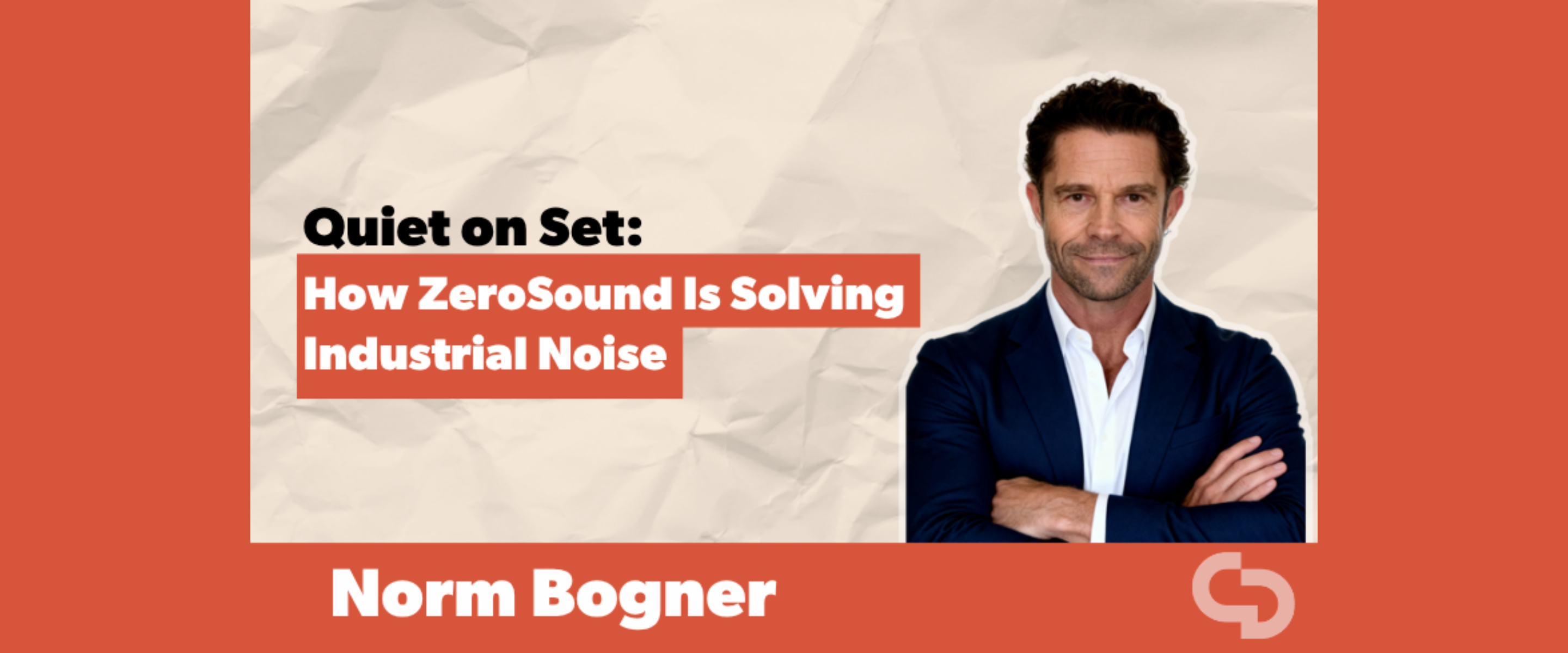
In this episode, we're talking to Norm Bogner. Norm is a seasoned executive and entrepreneur whose career spends more than 25 years in four continents. Right out of school, Norm co-founded a North Alberta Institute of Technology partnered startup that brought accredited computer training to the Philippines, giving him an early taste for both entrepreneurship and international business. That international bug took him through consulting roles in Munich with Fortune 500 clients and eventually back to Canada, where he made the leap from startup life all the way to the executive leadership team at Drop Energy from ATCO Energy, a 5,000-person company. Norman's now CEO, co-founder, and president of ZeroSound, the world's first company to make active noise control work at industrial outdoor scale and is commercially deployed across Latin America and the US. Oh, and he's also the founding partner in Wolf's Head Wine, a 94-point-rated Napa Cabernet, available at restaurants right here in Calgary. Let's get into it.

Dom: 00:56
Hi, I'm Dominic. I'm an entrepreneur, and like most entrepreneurs, have severe ADHD and just love talking to other entrepreneurs about their journey. Welcome to the show.

Léa: 01:05
Hi, and I'm Léa, his co-host. I'm a recent grad with no intentions of ever being an entrepreneur. And this is Corpi DM. And today we're joined by Norm. Norm, how are you doing today?

Norm: 01:14
Excellent. Thanks for having me. Welcome to the show.

Léa: 01:16
I'm glad we finally got you booked because Norm, you're actually a good friend of Dom's. How did the two of you meet? Over Rose.

Norm: 01:22
Well, actually. Doesn't surprise me to be. Shockingly, no. We actually uh share a friend in common and we got to know each other. And this was in the early days of Zero Sound, and we needed some work done effectively and inexpensively. And Dom was kind enough to help us and and really help us with our brand strategy, even at the beginning, just professionalize us from the get-go.

Léa: 01:46
So this would be in like 2017, 2018? Yeah.

Norm: 01:50
2018, 2019, something like that.

Léa: 01:52
Coming up on 10 years of friendship in a couple of years, huh?

Norm: 01:54
There we go. There we go.

Léa: 01:55
No, we were joking around about how you're also hard to book for an episode. You're always on the go. You were supposed to be in Australia, but you were in Edmonton a couple days ago. You're leaving in two days. What other trips do you have planned for your business in the upcoming months?

Norm: 02:08
There is a lot going on with Australia. The trip that we had planned for last week was a key demo with a number of clients and government groups, and we'll uh move that into late August. And so that's on the go. We have groups uh deploying right now in in the states in Texas and also at the Rome Airport, which is an active uh project that we have going, almost completing uh here in the next two weeks. So there's a lot what we do at Zero Sound, and we'll get of uh of course into what we do, but it's so global, it's not border specific, it's not culture specific. This is noise and noise pollution and the impacts of industry meeting population. And so the amount of inbound leads that we get is is crazy. So it's it's really about then us targeting scalable clients, and those happen to be international.

Léa: 03:00
There's noise everywhere, you can't escape it.

Norm: 03:02
Every minute, every second, yeah, every day.

Léa: 03:05
So when you were at AMII last year, which is last year, last week, um Alberta Machine Institute. Yep.

Norm: 03:11
Alberta Machine Learning Institute, yeah.

Léa: 03:13
So you were one of the key speakers, right? At Upper Bound. What was that like? What was your what was your talk

Léa: 03:17
 about?

Norm: 03:18
Talk about was um integrating AI and now AI is just so it's like saying the internet back when the internet came out.

Léa: 03:25
 I don't remember that.

Norm: 03:26
You've got some of us maybe dating ourselves. But from uh it's it's integrating machine learning and for our our project with AMII, and AMII is one of Canada's best kept secrets. It's a global powerhouse in terms of machine learning and integrating and creating artificial intelligence. Some of the foundational elements of Chat GBT, for example, were created by the foundation group in Amy. And so this has been a 20-year investment by the Canadian, uh the federal government and the provincial government. So kudos to somebody visionary that's yeah, I mean, and they they they kept it kept it uh the investment over successive governments. So that's pretty impressive. But with that, we had a project with Amy because we use a neural network, so to say, when we uh monitor our environment for zero sound, and we can leverage reinforcement learning in a very unique way. And that was a project with Amy that they wanted to us to speak about with them.

Dom: 04:31
Is that project complete? Like, have you completed that now?

Norm: 04:34
We did that last year, and it one of the interesting things is the that AI isn't the messiah, it it worked, the reinforcement side of it worked, didn't work as well as what we were doing yet, and so that was also a key learning that that's why you do these projects. You could get very good suppression with single signals, but all of a sudden the reinforcement learning couldn't understand all the parameters that were going on because what we do is so unique, so it's never been trained on this before.

Dom: 05:07
Can you guys just digrasp it? Is that trainable? Like, is that something you guys can get?

Norm: 05:11
It is trainable, and then we will make sure that we that's part of our black black box. But so internally with our own internal library from an AI perspective, yeah, we're that's where we're leveraging that and product development. So it is trainable on that, but there's so many little nuances to it that it's it's not there yet. Not saying it can't get there, but it's uh that was part of the reason why they wanted us to present. It's like, okay, here's a real world integration, a real world solution. They had something before, and we still do, yeah. And how did it work and what didn't work? Yeah, and so it was a a good check-in. But I think there was 11,000 registered at the Amy uh conference last year. That's like a big room that you just show me. Yeah, big room, and they've got one huge room but different stages, and they all have every international. Yeah, it's like that silent no, and it was sold out.

Léa: 06:11
Yeah, when you told me about it, I was like, Can I get last-minute tickets to go see Norm? No, I would have had to find them months ago.

Norm: 06:16
And and then you're a red stage, a blue stage, or a green stage, and so then people sit down and then they their headphones light up yellow, green, blue, or whatever the color is. But it's intimidating as a speaker because if you're the blue guy and then all of a sudden every everyone's in front of you and switches to red, you know. You know you've lost them. They may have been on their phone anyway, but this is visual. You could just poke at those shit.

Dom: 06:42
Panic.

Norm: 06:42
Yeah. Yeah. Yeah. So it was it's great exposure for us considering where we started and how it's come. It's it's an interesting check-in to go, wow, they're asking us to come here to speak about something that's not being done globally.

Dom: 06:57
So that's what zero sound is. So you get into the journey of how

Dom: 07:00
 you got to the stage, I think.

Léa: 07:01
Yeah. So what was your first taste of entrepreneurship? How old were you? What was it? Did you work for a startup or did you found your own business?

Norm: 07:09
Yeah, interesting. My parents have always been on the entrepreneurial side, so I guess I grew up around it. Um, right out of school uh or university, I graduated with my honors degree in history, which we can all understand the utility of that, except it was a great precursor for law school. So got into law school, chose not to go, and then which I thank God I didn't, and great degree, but just not for me. Um, but then started a uh got together with a group. We started a computer training institute with Nate, Northern Alberta Institute of Technology in Ebonton, um, computer training institute in the Philippines, where Filipino graduates could get North American accreditation, come to Alberta to work because at that time there was a huge labor shortage. So I was part of that group. That's where I got the international bug, got the IT technology bug. This is back in the internet days. Pre-internet, yeah, early internet days. Yes, let's talk about so sort of in the in the mid-90s. So this was pretty advanced stuff, and so that was the first taste of entrepreneurship and the black eyes, scars, and trips and falls that you have to make.

Léa: 08:33
What made you see your parents as entrepreneurs and make you want to do the same thing? Because obviously it's a really cool job. You have a lot of flexibility, but it's also an exhausting job.

Norm: 08:42
Yeah, you know, it just seems sort of natural, and they were they both had fixed jobs, set jobs, teachers, or otherwise real estate agents, but it was always hustle.

Léa: 08:52
Oh, interesting.

Norm: 08:54
Mom is a hustler, like the my grandpa, same thing. Like farmers came out of nowhere and then retire multimillionaires, they just did it. So it was it was that that sense of hustle, but I also understood the pain points now that I look back on it. Then just mouth breathing and had no idea.

Léa: 09:14
Yeah.

Dom: 09:15
I could see such a good thing.

Léa: 09:18
I'll go. Um, so at which point did you go from working into the startup industry to working at a 5,000-person company at drop energy from Atco? Was that not long after you worked at Nate, or did you work abroad at the time?

Norm: 09:31
Quite a journey in between the two. So that was uh finished with the Phil Canada Institute of Technology, is what it was called. And then had that IT bug or that technology bug, went back and did an after-degree in programming or relational databases and stuff. And that's where I realized I could do it, but I could the the difference between someone who could do it and then also speak to the business side of it was a gap, right? Oh, I'm sure there's such a need for that. Yeah. And I just naturally fit into that. And plus, there was guys way better at that than me, but please keep doing what you're doing in the corner. Don't help. And and so that sort of set the stage for what I where my niche fit. And then I had the opportunity to move to Munich and uh work for Deloitte, uh, consulting on the strategy side, not the audit side. And this is IT strategy from that side, and that's Fortune 50 clients, complete global reorgs, everything from system into military.

Dom: 10:34
To some degree, that's right. Because you'd have that IT background, working with enterprise size size clients, which you do today. So in a way, it's coming full circle, like from being a scrappy startup, yeah, do something, and then learn how to go sell to big business, and then you're another.

Norm: 10:51
You just realize you don't have to be the expert in that. And we always had a joke at Deloitte, and it was there there was times literally, I was 15, 20 minutes ahead of the client in terms of the understanding. Now that may not be the right thing to say, but that's how it was. Yeah and you're Beast or Fan, and you're you're right there. You're the one leading this deployment, yeah, or speaking to the client about the deployment. And you so much pressure an hour or two before you were not really conversant in Sebl. It's a CRM. Okay. So what's Cebel do? Well, you're presenting the 13 country rollout and why it's a good good idea. Now we had experts in behind the scenes, but then I was the vote that you're the face of it. I was part of the face of it. Don't want to get too too self-important. But it was still there was a pressure cooker. So there's so much Cap Gemini Deloitte. That was uh living and working in Munich, so that was being not speaking German, all of a sudden, then you need to learn a language.

Dom: 11:48
So how old have you been at that time?

Norm: 11:50
Like how at that time would have been um 28, 27, 28.

Dom: 11:58
Fabulous.

Léa: 11:58
Oh yeah.

Norm: 11:59
But it was, and this was before smartphones, yeah, dating again, but it was there wasn't oh you can't Google it. You can't Google what does this mean? You were just and I'm I'm not a potted plant at a social event, but I was just looking around wondering what the hell is going on. And you can 20 minutes, then you're good, you could understand. And half an hour, then you're dead tired. And then it was two hours, and then you could laugh when other people were laughing. So you were knew that your cadence was okay. You couldn't contribute. But anyway, so that's where that you cut that, you cut your teeth on that stuff. So then moved back here. Uh, it was either Calgary or Vancouver, grew up in Edmonton, it was never gonna be Edmonton again. Hey, hey, hey, I know. Hey, look, look, I've got my Orange Oilers band still up. Okay, okay, keeping you down, yeah. And uh then worked for a smaller uh group that did fuel management and had their own bespoke technology, and I was the international development VP and and also a partner or shareholder, and so it was a small group. We all of a sudden spread that from Canadian base, then across Canada. I opened up our US offices and about to go international, and then we got bought out by private equity. Oh, nice big group out of uh Toronto TorQuest. So then I learned, okay, this is how business works, this is how you know there was a lot of small, big, and really big, really big. And and what I skipped before that, even just right after graduation from the technology side, worked for a TELUS mobility dealership here in Calgary. Oh, nice. And I set up our first e-commerce platform before TELUS had it, which I didn't realize at the time, but it was kind of like, hey, that's a flight. Yeah, cool. It they went nowhere, but it still worked.

Dom: 13:57
Yeah.

Norm: 13:57
So then that got bought out from the private equity side, had opportunities to run and turn around a couple businesses here in Calgary, and then a couple startup things came after that, and then Atco came calling, and that's where I did the uh launch, and I was the president of Atco Energy when Atco Energy was launched. So I was brought in to reinvigorate um the Atco that energy side of things, just bring up the let's call it the the awareness, the technology, or whatever. At the time I was considered one of the young ones. And I know we all dig into that. So so at that rate, so again, huge learning. That is a pressure cooker. After that, then you realize, hey, I can go into any boardroom anywhere from what I've done. I'm not you're not gonna be scared or figure it out. I've I've been torn down and and had to pick myself back up so many times, it's then it becomes a little more well, it's less intimidating.

Dom: 15:04
Yeah, maybe not easy, but doable.

Norm: 15:06
Right. Yeah, yeah.

Dom: 15:08
So after Atco,

Dom: 15:10
what was next?

Norm: 15:11
In Atco, I was this is when the the genesis of zero sounds. So my co-founder, Ray Sobel, and Ray is a now in his his mid-70s. We'll get into to Ray in a little bit. I'm well, I'd like to. It's uh he was look, he lives in Naramada. He was looking out his screen, uh, Naramata BC, wine country, for those that don't know.

Léa: 15:32
Okay, I was like Naramada.

Norm: 15:33
Yeah, sorry. So the Okanagan, but in wine country's there on his on his deck, and the Harleys are driving by and pissing him off.

Dom: 15:42
And he thought, you know, it's this screen could block my son.

Norm: 15:46
Yeah, if there's gotta be a better way. And he has multiple patents under his name already, but he grew up in sales, so he's one of the unique geniuses that can speak to people about that, but also is just so cerebral. It's like, you know, at a molecular level, if we energize the electrons in this way, then we can start to should be able to suppress the sound. So dusts off his physics books, knows the theory will work, goes to a friend at UBC and they confirm the theory would work, but then he wants to energize a string to create a harmonic in a controlled way. So if you can control that, then you could suppress sound if you wanted to. But technology hadn't caught up. No, no uh process or the processing power, uh, microphone. Anyway, the technology just wasn't there. So he shelved it. So I guess that was close to 15, 18 years ago. And then as smartphones continue to go, he he contacts me, and this is 2017 or so at ATCO. I'm earning a very good salary. I've got a good gig, and said, I've got this sound thing. Yeah, great. Explains it. Explains it. I think this is this sounds like I get it. So first of all, okay, I get it. So that's it's a start. It's a problem that needs to be solved. So let's there's no esoteric imagine, if you will. Here's the problem. Yeah. And like Ray, I've done the popper poor thing. And Ray and I met actually, I skipped that on we tried a couple startups before that, poorly funded, didn't work, failure, failure, but we always kept in touch. So had some black eyes on on that, but great learnings. And then I said, Hey, I'll be on your advisory board. His intent was for me to run it. Yeah. And no initially, he he admits that, and I already knew that, but I'm I can't be a popper poor guy anymore. I've got a burn rate going here and a pretty good lifestyle. But if we have enough money in the kitty and otherwise, you know, it I'll come well, let's talk about it later.

Dom: 17:55
Yeah, yeah.

Norm: 17:56
So, but then it kept going, and then he's like, Well, I wanna. Oh, my other thing was third-party validation. So I know it works from your perspective, but let's get someone accredited to do this. So we went to a few places, ended up with Sate, whom we still have an incredibly close relationship with, but their PhD at their advanced research research labs, and uh Bob Davies is his name, and he'll he'll he's heard this story a bunch of times, but he said, guys, it's not gonna work. And here's this PhD in engineering, tell telling two non-engineers that it'll work. Yeah, Ray's confident, he's like, No, the physics works, just do it. Here's here's the money. You don't have to prove and say it's not working if it's not working. Yeah, but and then two weeks later, and I say this all the time, Bob's words were, hey man, uh, holy shit, it works. His exact words. And Bob is still on our advisory board and one of our key proponents today, which is great because he saw it from the get-go.

Dom: 18:57
He's like the nation at first. Yep.

Norm: 18:59
And there's so many from the engineering side and otherwise, because what we do uh with active noise canceling, excuse me, active noise control is is so complex that there's incredible physics physics hurdles to overcome that haven't been overcome. GE has tried, Siemens has tried, like the big boys have tried, not done it. So anyway, skipping ahead, and this is a super long answer to the question, but then like you know, this ETCO thing, fantastic learning, but it's time to. I was the kind of an entrepreneur, went from the president of ECO Energy to their, I started the new ventures and commercialization group, and then thought, you know what, this is maybe not the best fit. And then they thought the same. So it's amicable, it's all good. And okay, Ray, let's let's try this.

Léa: 19:49
That's brave going from a really solid position where you don't have to worry about financing your business, you don't have to be worried about paying employees to co-founding Zero Sound. Do you know what's the exact moment that made you change your mind from that initial note array to saying, you know what, yeah, I am on board?

Norm: 20:06
It was interesting because it when I moved from Munich to Vancouver, the group that got sold, where I was the head of their international development, that was in fuel management. So I had another group asking me about fuel management and startup side of things. It was similar, and I could leverage a ton of tribal knowledge, so to say. Or I could go to Zero Sound, of which this is brand new tech, there's no hardware, there's no software, this is something someone hasn't done before, but we've shown that it could work. And then it was just a matter of gut, talked to a lot of people, and this seemed to have more lakes in in my mind, in terms of getting from here to here is going to be incredibly difficult. But then the world's our oyster when we can get there. So I thought, again, you gotta just do, and then I got off my hands and started doing.

Dom: 21:03
So that gap, like what did you imagine? How long do you think it was gonna how long that time did you think it would take for you to get from there to what you just described?

Norm: 21:11
The standard, you know, three, four years. Let's how three to five years is what every entrepreneur starts and says. Build it, build it up to a certain level, and then A, B, C, or D, get to scale, and you can exit, you can be earning good money or whatever. And so we're coming on seven years now, and as we were joking before, the seven-year overnight success story. We're out of startup, that that incredible gap of uh pre revenue to trenches, yeah. Yes. And and now we're in the scale up phase, and so that's a fantastic new set of problems. But starting out, that was man, this was again Ray looking through his screen door at energizing a screen, and you know, we Can suppress many.

Dom: 22:02
That norm is walking around with a screen going like, imagine this is gonna block sound at an industrial sized scale and selling that. Which comes back to, I think, you know, the experience of walking into a boardroom and not really being 15 minutes ahead of the next guy, right? Or being able to sell to once like iced to Eskimos.

Norm: 22:20
I and I still have it as actually in my bag. It's a swatch of a screen.

Léa: 22:25
Oh.

Norm: 22:26
And that was my that was my people must have looked at you like hello. And then they wrapped their heads around it, and we had, you know, got a few million in um accredited investors based on that concept, this screen, and then there's the belief. So our early investors, I just my hats go off to them. Hats, or maybe just the hat. Yeah. But just in terms of their their thoughts, they bel their belief, and she, you know, I'm gonna make sure that they do well.

Léa: 23:01
Took a leap of faith. Yeah. What was the biggest challenge with selling something so brand new to the market? Because like you said, some really big players tried and failed. How come they failed? But Ray and you, a really small team from Alberta, succeeded in something that many others have tried.

Norm: 23:15
Right, right. Yeah. And if it's it's one of the sillier questions, and the VCs constantly ask that. And there's you can rate VCs just like anyone. There's a lot of incredibly average ones, and the good ones are great. And then there's just a bunch. So how come no one else is doing this? Is one of the most intelligent, clearly kidding, questions. I don't know why anyone else. It's very hard. I don't know why you didn't have spaghetti for breakfast, but you didn't. So can we get back to what we're doing? Yeah, we're doing it. And is it a big company that gets in their own way? They're not nimble enough, they just didn't have the access, the compute, the timing. I don't know. And I'm just happy they didn't. And they recognize, like we've signed a and released an MOU with GE, for example, who is one of the big boys that tried to do this and couldn't.

Dom: 24:09
I tried the norm because I go I built on a budget a pretty crappy website. It's decent. I've seen it. I'll say it was good, like uh SEO, how we trimmed what they do. But from a site build point of view, I'd be like, this is not my best work on that side of the house. But then back to what Norm is saying at the beginning, their leads, the quality of the types of these that would come in. So I've I'd run paid campaigns for clients in larger sectors and more money in prettier sites. But it just speaks to the uniqueness and the need of the product that your inbounds are just it's ridiculous. It's ridiculous, the types of people that contact you. So G'd be one of almost hundreds of enterprise-sized clients saying we need help. So it comes back to your question, like why no one else has done it. And I I I'll give Norm props. I think it's like maybe it's a Western Canadian thing, Vay Canada, way you've had the West. But I think it's just sheer tenacity. Most people would not have the guts or the balls or whatever to stick it out. Like they just quit because I've done long enough to see all the ups and downs. And that's why for the last few minutes, you gotta come on the show and tell the story because it's like no one could believe that you can actually that we as Albertans could pull this off. That's my two cents, but it's my tops and baths.

Norm: 25:23
Well, appreciate that and bang on. Yeah, and that's that's exactly that. You there were so many times of like forget it. This is not gonna work. Everything from the tech doesn't work up until the next breakthrough, but you can't hope isn't a strategy really, and so you can't

Norm: 25:40
 work on that, but you actually still have the belief you know the fundamentals work. So wrong people, right people, and then you just evolve those at times. And what I'll I'll say too, from from Ray's perspective, and one of the biggest challenges is that just as COVID was breaking out, and I noticed this with Ray when we were talking, and he'd be a little absent-minded. I thought, what's what's up? And I was about to sit down with him, say, hey, what you okay? And then he said, Hey, I've been diagnosed with brain cancer. So this is just when everything is shutting down for COVID. Literally, everything shuts down, and he was in surgery a day or two later. I had an 18-month 3% chance of 18 months to live.

Dom: 26:27
So yeah.

Norm: 26:27
So, and then yeah, skipping to the end, and then he's the outlier now, and it's six, seven years later, and he's he's that success story. So that's fantastic. But at the time, here's the inventor of the tech. We're partners in this, and he's got an existential problem. So this is not a a pity party. And it's like, where are we, how are we doing this? You you can't keep the company going. Well, we did, and Ray has his health absolute priority, and same, you know, I want him obviously to keep going, and that I guess maybe the tenacity too. I didn't want that to fail on my watch. So when he recovered, that he could see his baby.

Dom: 27:09
Yeah, in progress.

Norm: 27:11
So that was another, yeah. For zero sound, it was also an existential threat. Like we were, I can't tell you how many times I've been or just gone without salary, or we're right at the wire. As you get more people, you can't cover this salary for others. I did that a few times, but after a while, you don't have to wait. No, means that's then then that's crazy. So it's the romantic story of the entrepreneur side, it sucks. It's it's horrible. There you go. It's it's it's not romantic. No, no, yeah, unless there's exodus, right? Yeah, but you know, then you're on the other side, okay. It's good, but man, you wouldn't wish that on anyone. Impacts relationships, you you feel alone because only you can solve this in general. Uh I'll take that back, you know. But there's just the pressures on you.

Léa: 28:01
You feel so alone, yeah. Yeah.

Norm: 28:03
And that then impacts relationships. I'm sure that impacted my divorce um as well as part of it. So it's there's the the non-romantic version of the entrepreneurial side, it's incredibly lonely. And it's never not on your mind. Because otherwise, hey, if I don't make this work, well, it's gonna collapse. I know I'll find I would find something, but you have people relying on you, yeah. Would and would I be happy? Would I be, and I don't like failure. So that wouldn't wash.

Dom: 28:37
So let's just come back to happiness for a second. So you took your ad code in the to the cushy job that you had, right? Where you had, you know, employee expense account and great salary and like uh and to this journey, which side would make you happier? I mean, like it's probably a bit put maybe self-evident, but without question.

Norm: 28:56
Look, I could have found a way to fit into the corporate hierarchy hierarchy and just go with the flow and you put your hand up at the right time for the successes and make sure you keep that thing steady and low when the failures happen, right? And that's that's big corporation 101. But if I'm starting their new venture and commercialization group, I was always already their entrepreneur, I was already trending myself out of that environment. So that's where I was meant to go and to be. And it's it's a fun way to be able to flex the creative muscles because every day we're inventing every day. And I tell our employees now we're we're 14, which is still crazy to think about. Um, and it's not a badge of honor, by the way, to not, or I mean to have many people. I'd like to have the few as possible. There's a bone yard of hey, we're expanding, look at our new office, and otherwise, it's that's that's embarrassing when people do that to me anyway. But you just you you grow, you understand what what that growth means then to to others, and that challenge, yeah.

Dom: 30:10
It's so kind of a curious question because I've known the the business and the brand long enough. So I think there's always a point where entrepreneurs are think it's a single path. And so since we've I've known you that you were on I think initially it was more of an anti-siren sort of play, and then you went and there's sort of this notion of well, it's a speaker, it's an anti-speaker, but I could take a fabric on a painting and turn that into a speaker. And so there's all these options that you would have within what the business could or couldn't do. So, how do you how do you find navigating the choices which were either defined success or failure based on the choices that you just made? Like how do you like discern between the shiny penny, doing too much, and focusing on what you need to do?

Norm: 30:52
And yeah, I don't and I'll come back to that then that that question in a second, because I just realized that I hadn't what does zero sound do? So

Norm: 31:00
 we're we're in it we're in a bouncing around us back to basics. It's a it's a we're an the anti-noise company. And what that means is uh we have a number of different taglines or relatable elements. We're the earbuds for industry, your noise-suppressing earbuds, without the earbuds. So what we do when industry and population meet, the population, communities, residents are exposed to dangerous noise pollution. They're the first ones to impact. Industry's already expanded. Communities and otherwise then are impacted by this. And how do you undo that? And there isn't really a solution out there for industrial noise. It's called low frequency noise. Walls, barriers, berms don't work. Frequently, the frequency level is too low. Yeah, it just goes through them. It's like trying to stop the wind with a chain link fence. It's not overly effective. And so what we've done is we're a software-enabled hardware that suppresses the noise real time over thousands of frequencies at the speed of sound to suppress and protect communities. And so that need, that problem is global. And that's what zero sound, and that's where we're unique. No one is doing what we're doing globally, multiple patents in and around that, both from the uh from the hardware side, the microphone side, and then a lot of black box black box knowledge and bespoke, call it tribal knowledge, then as well. So, with that, there are so many use cases, it's dizzying. When you talk or I talk to VCs, tell us about your total addressable market. Give us your service addressable market, all the yada yada checkbox. And yeah, I know they gotta do that. But I mean, like, give me another minute and then you're gonna ask me how I focus. And without question. There are so many use cases, it's it's dizzying. Everything from well utility noise to oil and gas to traffic noise, we've live nation, uh, outdoor concert venues, indoor restaurant noise. Anyway, you name it. If it's annoying, an annoying sound is a noise. And so noise is part of the Air Pollution Act, and it's it's today's secondhand smoke. And so that is something that is just becoming more and more to the forefront. You hear this with the data center issues, very current now, supporting the AI and the AI infrastructure. This AI infrastructure, data centers, their number one need is power, but their number one complaint is noise. So that what they do is build more utility substation infrastructure. Well, those make noise on their own. This utility infrastructure that needs to be dedicated to the data centers, so our grid doesn't get overly taxed, needs somewhere to store that energy. So that's battery energy and storage. And guess what? Best makes noise on its own. So all three of these things overlap, and they're great individual uh markets. But there's something, and that's where zero sound can shine at this low frequency noise. So it's how do you focus? But I just I guess I'm alluding to that we're a horizontal solution to these verticals, multiple verticals problems. The same general SKU algorithm and otherwise can address data centers, utilities, battery energy storage, fracking, and uh up, so call it fracking, so upstream and midstream. Yeah, just the general urban infrastructure. And so we had previous to that, we had when you and I early on, we had got into siren suppression to protect first responders inside the cab from uh dangerous siren exposure, which is over for workers who are continuously. And so their hearing was damaged.

Dom: 35:01
Yeah, fire firemen typically don't have good hearing. Oh, yeah. Because they're sitting inside a noisy cab.

Norm: 35:06
Yeah, and it's so it's a safety impact, it's a long-term health impact, and otherwise, and we could call it a pivot, we could call it otherwise, but early on in the days, we had one of our key people who was a career captain in the Calgary region fire department who had a relationship with the largest siren manufacturer, and that group had their own soundproof chamber testing and all this other stuff. He said, You could actually do that. So I'm actually So then they funded that. And we said, okay.

Dom: 35:34
Did some of that like work and research help like the technology you have today? So in other words, was it not a loss, but more like could you do was that sort of a bit of an RD test bad that said, okay, like and it seems to me if I'm wrong, but suppressing sound in your ear ears, simpler. Suppressing sound in an engine cab, one problem. Suppressing sound in a large industrial scale urban environment, a different problem because the sound and the dynamics are different, right? Right. So was that initial work that you did around uh sirens? Was that a throwaway or was that actually something you could like?

Norm: 36:08
It's so complimentary, and that's why you think you you feel that you're distracted and getting back to your how like how do you focus? But there's points of all of this RD, it relates. So the siren learnings were incredible so that we could understand what we do with incredible high velocity or high volume uh noise. Okay, yeah. Then at the same time, what where did our algorithm fall short? But it was also different because this is a digital sync signal that we already know is being created. So we could take our latency issues out of it because we already know what's coming, and that's at light speed versus the speed of sound. So we had we have some time here to work this out. So it was a different way of looking at it, but it's so complementary, and that's where these multiple use cases, which can appear from the outside scattered, again, that horizontal solution to these vertical problems are all that RD is very complementary, and I have to remind the guys too. Good, like done is good enough, like just or sorry, done is better than perfect. Yeah, and just we don't need the Ferrari for a go-kart race, and we're already driving a high-end BMW. This is okay, let's get it out there and do it, and we just have to keep incrementally learning to be that much better. Projects like the Amy project or with other clients that pay to play and come to the front of the line. We will be that's our RDs, but they have to fund.

Dom: 37:44
Like if you think if you if you think of sort of like let's say I took a GE and they're like create a product team, they go and go and do something, and they're not entrepreneurial, they're not scrappy. So they're never gonna go, they're like give me tasked with I'm gonna solve this wide-field environmental noise problem. Right. And they're gonna focus on that. And it could be, well, by trying to solve the fire engine problem first, and then Amy problem, and sort of stacking these different experiences, maybe that's why you are where you are, and no one else has got there.

Norm: 38:12
Right.

Dom: 38:13
So being like a big enterprise project, you're being scrappy about it.

Norm: 38:17
We are where we are, and we would actually be still a lot further ahead with the siren side, and all of a sudden the partnership falls apart. Well, great. Now what? Now what? And that was a restructuring on their side. That wasn't anything that was done or otherwise. So then where's your pivot? But then take our learnings, and we've gone from a a screen, a window screen, to something then that evolved to a ruggedized

Norm: 38:46
 outdoor weather minus 60 to plus 60 system that can then be deployed in various use cases. So then what are the priority use cases? With all the inbound that you referred to, with these blue chip clients, and these are household names that we all have all heard of, then who can scale? If you can't, the biggest scale comes to the front of the line. Land and expand, get your foot in the door, paid proof of concept. We're not doing this for free. If you're interested, pay to play. That POC number of weeks, then you get in, and this is what we're working towards based on the success factors. So that's how we really prioritize. And now it's getting to a point of there's fortunately a lot of those. And then it's a matter of okay, it's just how is that pecking order figure out? Look, we're we're not in the chips yet. We're scaling up, bills are or the burn is just that much higher. Yeah, the pressure is different, problems are different. Yeah, it's a lot more fun than keeping the lights on.

Léa: 40:00
Yeah.

Dom: 40:00
And it's not the business strategies, but as it is that, like, okay, well, now I've proven something, and how do I get someone else to pay for something to prove it a bit more out? And so that's you get clients as you're gonna get it.

Norm: 40:10
And we've leveraged the it's a there's no secret sauce to this one in terms of grants and getting grants, and you and I've laughed over this over a wine or two, but it's we're good at that. It's because we started small, we made them look good. Okay, here's a five or ten thousand dollar grant to get your patents in order or whatever. But okay, and you keep going and it's sequential, and it's good money after good money. You have to also show that you're executing.

Dom: 40:41
So which so this is like that would be a non-dilutive finance play, right?

Norm: 40:45
Yep, 100%. And these are grants. So this every early shareholder holder is you can't get too cute with equity and say, no, I'm gonna keep it all. Well, that doesn't that doesn't work. Yeah, but chucking it around like poker chips doesn't work either.

Dom: 40:59
Doesn't work either. So along those lines, because obviously then in that case, it seems like your investors are small and you're they're not over you to say, this is how I want you to grow the business, and I want to series that you know, go from my seed round to an A round to a B round and sort of force decisions. So do you find how you're building the business is actually probably harder in you, but better overall as the business grows?

Norm: 41:22
It's it's better for the company, yes. Completely, it's not easier on me at all. If you've got investors with some deep pocket pockets, we've got a small cap table. Um I'm proud of that, but we're not again too cute with equity. We understand that dilution, but when shit hits the fan and you need some other pockets to come up, everyone's like, Well, sorry, giving you what we could. Well, great.

Dom: 41:50
Now what?

Norm: 41:52
Then back to if I don't figure out a way, then this thing is is dying. So that's there's a balance there, and so yeah, from non-dilutive, it's fantastic for all investors, and for me, okay, I'm majority shareholder. But when you have a problem and you need some deeper pockets that is only that are, you know, it's only solved by money and time, then that is a challenging way to go. For zero sound, I don't believe in this alphabet type of round. Uh I guess we're late seed now, and I know that we'll need to raise more, but I'm not saying I have the answer, but A, B, C, or D, I I don't feel that that's the answer, but I could be wrong. The all of a sudden, when you get into decent revenues and a few million and otherwise, which is where we're at, then debt isn't the four-letter word that it used to be. Yeah. Because early on, debt means personal guarantees and all this other stuff. Hell no. That is never, I've already got enough risk going on. I'm not signing those or so. I just, that's me. That's our our our CFO who's fractional. Um, you know, we punch above our weight with our advisory board uh and otherwise. And so, you know, these are things I just wouldn't do. And so grants come in, but you have to put up. And all of a sudden then the grants go from five to ten to a few hundred thousand, and then we're working some in the in the millions. But we're still making every step of the way, making those government agencies look good because they're supporting a growing company that went from nothing, 14 to uh 20 employees, and this is the story as it is supposed to be an international growth. Yeah.

Léa: 43:48
Yeah. Speaking of international growth, so there's a lot of excitement for Zero Sound right now in Australia. Could you explain to us a bit about the lobbyist group, what it means for Zero Sound and its future, and how it could be implemented in projects?

Norm: 43:59
You bet, you bet. Australia is a very unique example of what we were talking about this this infrastructure, AI infrastructure, and just let's call it utility

Norm: 44:10
 urban infrastructure. Their grid, electrical grid, is antiquated. It's built along the coast.

Dom: 44:18
That's where all the population is.

Norm: 44:21
There's nothing in the center. But to build power lines, transmission lines, incredibly capital and labor intensive, it's just not a quick pivot. They are moving ahead, they have a huge renewable goal of I think it's around 75%.

Dom: 44:38
Oh, wow.

Norm: 44:39
By 2030. That's coming up. But part of that challenge, yeah, and part of that challenge is then land use for these renewables. So then they put a solar farm in the center. Or well, it'll it could be not in the center, no, but still in the periphery, right? But they need to capture this power. And so they've got the solar wind to an extent, which we don't deal with. But these solar farms then collect the power, so then they go to a battery, energy, and storage. And remember what I said before.

Léa: 45:13
They're allowed.

Norm: 45:14
They have their own challenges with inverters and cooling. Okay. And then they're supplementing the grid, which they want to expand, so they're building more substations to have points. Make noise. And that was our first deployment for substations, a major major group out of Chile. And so Australia is a perfect opportunity for us. The government has their their objectives, but land use to get all of this done has its own regulations, and these regulations are in their own way to use this land.

Dom: 45:47
And it's the government's objective to make it happen. So even responsible.

Norm: 45:51
They're frankly in their own way. Yeah. And so they've got a few hundred million dollars of projects being held up by noise. So enter zero sound, which has not been considered.

Dom: 46:04
And so back to this noise of like that low-level hum. I'm assuming these battery stations have that hum that barriers don't exactly.

Norm: 46:11
An excellent point, and this goes back to where the walls don't work. Low frequency noise is typically under 500 hertz, more like under 250 hertz. Walls and otherwise start to kick in at 700 and some hertz. And so there's a huge gap there, and the walls just simply don't work. And so there isn't a solution. The regulations were written for an antiquated solution. So what the government is doing now in in South Australia is rejigging the regulations to suit us.

Léa: 46:44
Oh wow.

Dom: 46:44
So for them to serve their public policy, support their own regulations, they have to have you.

Norm: 46:51
Yes.

Dom: 46:52
More or less.

Norm: 46:52
More or less. And so that's where the opportunity lies, and that's where Australia is a very okay, it's it's great, it's halfway around the world. This is a complete pain in the ass logistically and and otherwise. We'll set up our regional HQ that we're doing there. We'll men uh assemble. We're more assembly than manufacturing. We do that here in Calgary, um, globally, as it stands. So proud Canadian, Albertan.

Dom: 47:16
So you're gonna get the next cool IT, maybe?

Norm: 47:19
Ideally.

Dom: 47:21
Nope. So like so what are these they were bought, right? Or they're sold a bit?

Norm: 47:26
Yeah, that was in the I think for close to 500 billion. Yeah.

Léa: 47:32
Cool IT. So what did they do?

Norm: 47:33
So that's liquid immersion for for data centers and for computer cool rather than each vac. Yeah. Incredible success story. It's it's fantastic. Then that shows when when groups are, in my opinion, smart enough to get out of their own way. And this is what I learned from the my the founder of the fuel management company out of Vancouver. When we got bought out by private equity, he's like, Normie, you build it to sell it. And this was he sold it for 80 million. Build it to sell it and be smart enough to get out of your own way. Sold to private equity, and within it was under two years, that 80 million was 180 million. So we took some chips off the table.

Dom: 48:14
Wait, left left to bid into ride?

Norm: 48:16
Left it, let it ride, and then it shows you when again, be smart enough to get out of your own.

Léa: 48:21
Some humility, yeah.

Norm: 48:22
Yet there's groups with the horsepower, the infrastructure, the global connections to really put the you know, poor nitrous on the opportunity, and that's that's something that's stuck with me. So you you show enough windshield time as an entrepreneur, and then get out of your own way, then good enough. And for me, that's getting people always ask it, ask what's what's the exit. To me, it's getting to choice. I don't know if that's

Norm: 48:50
 IPO. I don't know if that's doing that example of hey, all investors, we've made some good cash, you can leave it, you can exit, you could do whatever you want, or you could even just sell a specific vertical. Oh, yeah. And take the chips off the table and keep keep building. Yeah. So there's a whole bunch of things, and to me, that's get to that choice. Because to to pretend that I have that all fully baked is disingenuous.

Léa: 49:19
It's a good goal, it's a good way of putting it. Um, we could keep talking about this forever, and we'd love to have you back on the podcast to dive more. Yeah if we continue down again.

Norm: 49:27
Judging Kathy, sorry.

Léa: 49:28
That's okay, but uh to wind down the episode, I'd like to talk to you a bit a bit about what one of your habits. So you own which one, you know.

Dom: 49:35
Other than drinking rose?

Léa: 49:37
Well, it is kind of related to rose. So you're a part owner, is that correct, of a of a Napa winery?

Norm: 49:44
Correct.

Léa: 49:44
Are you just not busy enough that you're like, oh, I'll start another business, you know, too much free time.

Norm: 49:48
Yeah, it was uh by virtue of who you know and then and neighbors who had been exposed uh to to Napa. Um they knew a hundred-point winemaker, and there was some property on the gray market, in other words, it wasn't listed yet or otherwise, but it had gallo on one side, gallo on another. We knew the land was ideal, and uh the winemaker didn't have enough money to buy it, but he had a good relationship with my buddy, who was my neighbor, and he's like, you know what, let's get a few of us together and do this. And I didn't know anything about the wine business, but what I did know is they stopped making Napa real estate quite a long time ago. So the old Mark Twain quote. But it's why don't we do it? The worst that happens, we've got a guy who knows how to make wine, so it's not domin on the back of a napkin going, here's a good idea. And if everything goes horribly, you still have the land, you can sell it. There you go. So that was 12 years ago, and so it's it's called Wolf's Head.

Dom: 51:00
That's very wolf, I can attest to that. Wines.

Norm: 51:03
Yeah, yeah. We've got a tasting room in Napa as well, and it's a fun creative side of things. There's some of us partners, it's just a small handful of us Calgary-based partners, but we own that Napa wine. And we sold the land, and then we have again access to all of our the grapes that we want. Great wine makers, and we make everything from roses to your lighter whites, bigs, and it's back to big Napa cabs. And then we've even pivoted to start bringing in cabs and merlots under the Wolf's Head banner, and our making from Argentina. So the vintage group is super supportive with us here in Calgary, and you can get it at uh Willow Park, you can get it at Merchants. So there's a number of Teatro, there's a whole host of you know, the Luca, that's still part of the vintage group, a whole host of uh people that support us. But the best part of my experience with that is when the main wine partner who had a fantastic has a fantastic wine palette, the winemaker, and then me as John Q public, we blended

Norm: 52:16
 our own from a whole series of of different barrels that we had. So we sat there, overlooking a vineyard. It's like a chemistry experiment with the pipettes and going through another three percent Merlot or two percent petit verdeaux, and we've got this cab anyway. And so we made that, and it was an artistic kind of flex, and you don't know how it was gonna work out, and it's it's then one of our best sellers. So it that was just part of fun and it's a different gear, similar, but it's a completely different gear.

Léa: 52:48
Yeah, still uses your skill, but it's something a little more relaxed, a little more for fun. I'll have to find one of those one of those stores I can grab a bottle on my way back to Edmonton to drink once I'm back home. Um but to wrap up the episode, I'd like to ask you if there's one piece of advice that you'd like to give your younger self. Think of Norm when he decided not to go to law school, take a different path.

Norm: 53:06
Is there one piece of advice that you'd really like to have that piece of advice, and it wouldn't have been going back that early, because the risk taking was there, but it was then then trust. I mean, it was my mom who who had said it to me, okay, well, you're a VP. Well, you should be a president then soon. I'm like, no, no, no, no. I'm better off behind the scenes or whatever. There's that element of belief that in trusting your gut, like you need to have enough experience to know that I've seen this before and this is bullshit or something like that, and trust that gut. So just go back and say, trust your gut earlier.

Léa: 53:40
Okay.

Norm: 53:41
Yes. That's good advice.

Léa: 53:43
That is good advice. I'll take that. Well, thank you so much for joining us, today, Norm. We had a great conversation. Is there anything other than zero sound and wolfhead that you'd like to plug today?

Norm: 53:52
I think I appreciate the time, guys.

Léa: 53:54
Okay, thank you so much.

Norm: 53:55
We're gonna have you back.

Léa: 53:56
Yeah, I like it. Talk again soon.

Norm: 53:58
Awesome.

Dom: 53:58
Thanks, Norm.






 Twitter / X
 Facebook